Und dann auf "Zum Home-Bildschirm [+]".

Stöbern
genialokal zum Startbildschirm hinzufügen
Installieren Sie die genialokal App auf Ihrem Startbildschirm für einen schnellen Zugriff und eine komfortable Nutzung.
Installieren Sie die genialokal App auf Ihrem Startbildschirm für einen schnellen Zugriff und eine komfortable Nutzung.

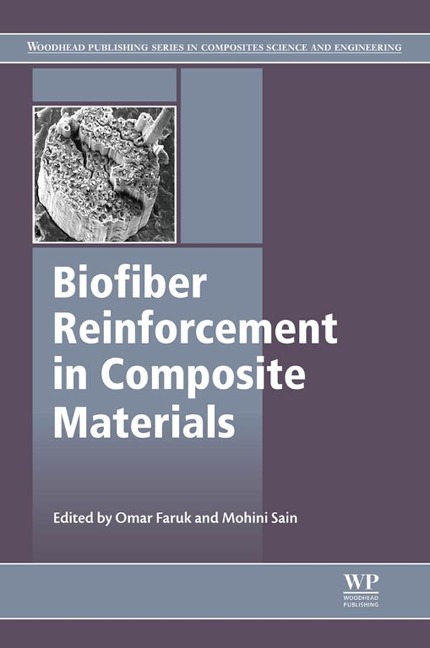
Natural fiber-reinforced composites have the potential to replace synthetic composites, leading to less expensive, stronger and more environmentally-friendly materials. This book provides a detailed review on how a broad range of biofibers can be used as reinforcements in composites and assesses their overall performance. The book is divided into five major parts according to the origins of the different biofibers. Part I contains chapters on bast fibers, Part II; leaf fibers, Part III; seed fibers, Part IV; grass, reed and cane fibers, and finally Part V covers wood, cellulosic and other fibers including cellulosic nanofibers. Each chapter reviews a specific type of biofiber providing detailed information on the sources of each fiber, their cultivation, how to process and prepare them, and how to integrate them into composite materials. The chapters outline current and potential applications for each fiber and discuss their main strengths and weaknesses.
- The book is divided into five major parts according to the origins of the different biofibers - bast, leaf, seed; grass, reed and cane fibers, and finally wood, cellulosic and other fibers including cellulosic nanofibers.
- This book provides a detailed review on how a broad range of biofibers can be used as reinforcements in composites and assesses their overall performance
- The chapters outline current and potential applications for each fiber and discuss their main strengths and weaknesses
- Contributor contact details
- Editor biographies
- Woodhead Publishing Series in Composites Science and Engineering
- Preface
- Part I: Bast fibres - 1: The use of jute fibers as reinforcements in composites - Abstract
- 1.1 Introduction
- 1.2 Composition and properties of jute fibers
- 1.3 Processing and properties of grafted jute fibers
- 1.4 Processing and properties of alkali-treated jute fibers
- 1.5 Characterization of jute fibers
- 1.6 Manufacture of jute fiber composites
- 1.7 Preparation and properties of irradiated jute composites
- 1.8 Preparation and properties of oxidized jute composites
- 1.9 Preparation and properties of mercerized jute composites
- 1.10 Preparation and properties of jute composites modified by other processes
- 1.11 Types and properties of hybrid jute composites
- 1.12 Applications of jute composites
- 1.13 Conclusion
- 2: The use of flax fibres as reinforcements in composites - Abstract
- 2.1 Introduction
- 2.2 Key fibre properties
- 2.3 Cultivation and quality issues
- 2.4 Processing as a fibre reinforcement for composites
- 2.5 Integration into the matrix
- 2.6 Assessing the performance of the composites
- 2.7 Applications
- 2.8 Summary: strengths and weaknesses
- 2.9 Future trends
- 2.10 Sources of further information and advice
- 2.11 Acknowledgements
- 3: The use of hemp fibres as reinforcements in composites - Abstract
- 3.1 Introduction
- 3.2 Hemp fibre
- 3.3 Key fibre properties
- 3.4 Cultivation and quality issues
- 3.5 Processing of hemp as fibre reinforcement for composites
- 3.6 Surface modifications of hemp fibre and their effects on properties
- 3.7 Fibre-matrix interaction
- 3.8 Current applications of hemp fibres
- 3.9 Future trends
- 3.10 Summary
- 4: The use of ramie fibers as reinforcements in composites - Abstract
- 4.1 Introduction
- 4.2 Ramie fiber properties
- 4.3 Improving fiber/matrix interfacial bonding
- 4.4 Ramie fiber-reinforced polymer composites
- 4.5 Factors affecting composite mechanical properties
- 4.6 Other studies of ramie fiber-reinforced composites
- 4.7 Applications
- 4.8 Conclusions
- 5: The use of kenaf fibers as reinforcements in composites - Abstract
- 5.1 Introduction
- 5.2 Processing of kenaf fibers
- 5.3 Matrices for kenaf fiber-reinforced composites
- 5.4 Fabrication of kenaf fiber-reinforced composites (KFRC)
- 5.5 Performance of KFRC
- 5.6 Applications of KFRC
- 5.7 Conclusion
- Part II: Leaf fibres - 6: The use of sisal and henequen fibres as reinforcements in composites - Abstract
- 6.1 Introduction
- 6.2 The microstructures of sisal fibres
- 6.3 The mechanical properties of sisal fibres
- 6.4 Manufacture of sisal fibre-reinforced composites
- 6.5 Mechanical properties of sisal fibre-reinforced composites: interfacial properties
- 6.6 Mechanical properties of sisal fibre-reinforced composites: interlaminar fracture toughness
- 6.7 Mechanical properties of unidirectional sisal fibre-reinforced composites
- 6.8 Effect of fibre twist on the mechanical properties of sisal fibre-reinforced composites
- 6.9 Durability of sisal fibre-reinforced composites: effects of moisture absorption
- 6.10 Effects of ultraviolet (UV) light on the mechanical properties of sisal fibre-reinforced composites
- 6.11 Applications of sisal fibre-reinforced composites
- 6.12 Conclusion and future trends
- 6.13 Acknowledgements
- 7: The use of pineapple leaf fibers (PALFs) as reinforcements in composites - Abstract
- 7.1 Introduction
- 7.2 The pineapple plant
- 7.3 Pineapple production
- 7.4 Pineapple culture in Brazil and worldwide
- 7.5 Fiber extraction
- 7.6 Potential of fiber production plant
- 7.7 Fiber properties
- 7.8 Pineapple leaf fiber (PALF)-reinforced polymer composites
- 7.9 Application of pineapple fibers and composites
- 7.10 Conclusions
- 8: The use of banana and abaca fibres as reinforcements in composites - Abstract
- 8.1 Introduction
- 8.