Und dann auf "Zum Home-Bildschirm [+]".

Stöbern
genialokal zum Startbildschirm hinzufügen
Installieren Sie die genialokal App auf Ihrem Startbildschirm für einen schnellen Zugriff und eine komfortable Nutzung.
Installieren Sie die genialokal App auf Ihrem Startbildschirm für einen schnellen Zugriff und eine komfortable Nutzung.
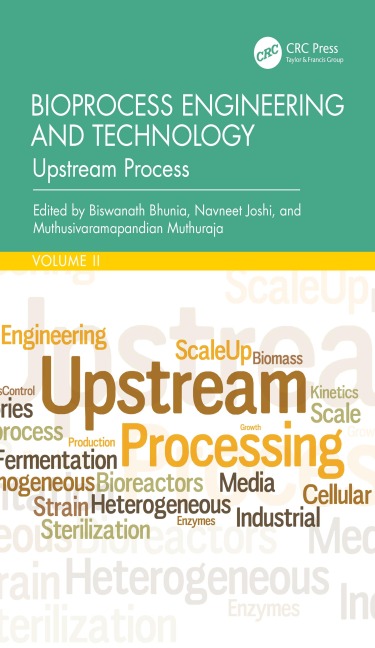
This book discusses the various cellular interventions that are required for the upstream processes in bioprocess engineering such as growth requirement of different cell types, their maintenance, and various recombinant strategies/tools available to identify and develop a cellular factory for high-level synthesis of a desired product. Bioprocess Engineering and Technology: Upstream Process also deals with the various types of reactors, process design and development (media, conditions, mode of operation, sterilisation, selectivity), reactor design and construction, scale-up, process analytical technologies, and process control. The book examines upstream processes which include the selection of cell factories and strain engineering approaches, enzyme kinetics, growth kinetics, fermentation, downstream processing, process design, reactor design, and scale-up. It also includes case studies that will assist readers to develop the upstream processes involved in an industrial-scale bioprocess. This book is intended for students and researchers looking to develop the upstream processes involved in an industrial-scale bioprocessing operation.
Biswanath Bhunia is currently working as Assistant Professor in the Department of Bioengineering, National Institute of Technology Agartala, India, with over 12 years of experience in the field of Biochemical Engineering and Biotechnology. He earned his PhD from National Institute of Technology Durgapur, where he specialized on the production and characterization of microbial enzymes, especially alkaline proteases. Development of sustainable bioprocesses for various bioproducts using microbial platforms is the focus of his lab. In order to create a cleaner and greener future, his group is also working to remove emerging pollutants from the environment using principles of biochemical engineering. He is also interested in the pathway analysis of complex diseases based on multiple biological networks. He has authored over 100 peer-reviewed journal articles, contributed over 20 book chapters, and co-holds a patent in enzyme production. Navneet Joshi is currently working as Assistant Professor (Biotechnology) in the Department of Bioscience, SLAS, Mody University of Science and Technology, Lakshmangarh, Sikar, Rajasthan, India. He did his Ph.D. at University of Rajasthan India on microbial bioprocess biotechnology/Agri- Agri-biotechnology and molecular biology with special reference to molecular characterization of industrial isolates. Muthusivaramapandian Muthuraj is a bioprocess engineer, currently working as Assistant Professor in the Department of Bioengineering at the National Institute of Technology Agartala, India, with over ten years of experience spanning academia and industry. He holds a Ph.D. in Biosciences and Bioengineering from IIT Guwahati, where he specialised in various biochemical and system biology approaches to augment productivity of biomolecules. His prior industrial role at Sterling Biotech involved upstream bioprocess development and scale-up for bioactive compounds like coenzyme Q10 and hyaluronic acid. His research interests include algal biofuel production, bioprocess engineering, and metabolic engineering. He has authored over 30 peer-reviewed journal articles, contributed over 10 book chapters, and co-holds a patent in sustainable algal biomass production.
1- Introduction to Industrial Scale Bioprocess 2- 3- Conventional and Modern Genetic Approaches for Improvement of Industrially Important Strains 4- Media Designing for Industries 5- Sterilization 6- Selection of Bioreactors 7- Design and Kinetics of Homogenous Biochemical Reactors 8- Design and Kinetics of Non-Homogenous Biochemical Reactors 9- Mechanical Aspects of Reactor Design and Scale up 10- Process Control Engineering and Analytical Techniques
Dieses eBook wird im PDF-Format geliefert und ist mit einem Adobe Kopierschutz (DRM) versehen. Sie können dieses eBook mit allen Geräten lesen, die das PDF-Format und den Adobe Kopierschutz (DRM) unterstützen.
Zum Beispiel mit den folgenden Geräten:
• tolino Reader
Laden Sie das eBook direkt über den Reader-Shop auf dem tolino herunter oder übertragen Sie das eBook auf Ihren tolino mit einer kostenlosen Software wie beispielsweise Adobe Digital Editions.
• Sony Reader & andere eBook Reader
Laden Sie das eBook direkt über den Reader-Shop herunter oder übertragen Sie das eBook mit der kostenlosen Software Sony READER FOR PC/Mac oder Adobe Digital Editions auf ein Standard-Lesegeräte mit epub- und Adobe DRM-Unterstützung.
• Tablets & Smartphones
Möchten Sie dieses eBook auf Ihrem Smartphone oder Tablet lesen, finden Sie hier unsere kostenlose Lese-App für iPhone/iPad und Android Smartphone/Tablets.
• PC & Mac
Lesen Sie das eBook direkt nach dem Herunterladen mit einer kostenlosen Lesesoftware, beispielsweise Adobe Digital Editions, Sony READER FOR PC/Mac oder direkt über Ihre eBook-Bibliothek in Ihrem Konto unter „Meine eBooks“ - „online lesen“.
Schalten Sie das eBook mit Ihrer persönlichen Adobe ID auf bis zu sechs Geräten gleichzeitig frei.
Bitte beachten Sie, dass die Kindle-Geräte das Format nicht unterstützen und dieses eBook somit nicht auf Kindle-Geräten lesbar ist.