Und dann auf "Zum Home-Bildschirm [+]".

Stöbern
genialokal zum Startbildschirm hinzufügen
Installieren Sie die genialokal App auf Ihrem Startbildschirm für einen schnellen Zugriff und eine komfortable Nutzung.
Installieren Sie die genialokal App auf Ihrem Startbildschirm für einen schnellen Zugriff und eine komfortable Nutzung.
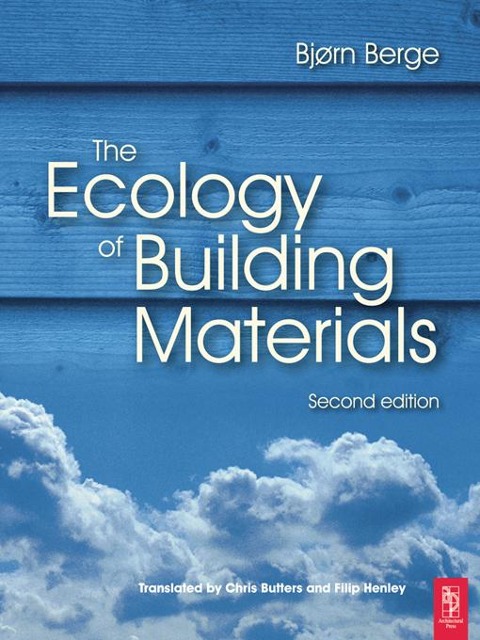
The Ecology of Building Materials explores key questions surrounding sustainability of building materials. It provides technical data to enable design and building professionals to choose the most appropriate materials for a project: those that are least polluting, most energy efficient, and from sustainable sources. The book also gives information and guidance on a wide range of issues such as recycling, detailing for increased durability and Life Cycle Analysis. Berge's book, translated from the Norwegian by Chris Butters and Filip Henley, offers safe and environmentally friendly material options. It provides an essential and easy-to-use reference guide to this complex subject for the building industry professional. New to this edition: . Thorough exploration of building materials in relation to climate change issues . Extensive updating of basic data, as well as the introduction of a wide range of new materials . Methods for recycling and reuse of materials . More information on the interaction between materials and the indoor environment, ventilation and energy use . Full colour text and user-friendly larger format Bjørn Berge is a practicing architect, researcher and lecturer. Since the 1970s, he has written several books on building ecology for the Scandinavian public. He is one of the founders of Gaia Architects who have developed a wide range of pioneering techniques in sustainable building.
Bjørn Berge, Chris Butters, Filip Henley
Part 1 Eddies and Water-Level Markers: Environmental Profiles and Criteria for Assessment; Chapter 1 Resources; Chapter 2 Pollution; Chapter 3 Local Production and the Human Ecological Aspect; Chapter 4 The Chemical and Physical Properties of Building Materials; Further Reading for Part 1; Part 2 The Flower, Iron and Ocean: Raw Materials and Basic Materials; Chapter 5 Water and Air; Chapter 6 Minerals; Chapter 7 Stone; Chapter 8 Soil Materials; Chapter 9 Fossil Oils; Chapter 10 Plants; Chapter 11 Materials of Animal Origin; Chapter 12 Industrial By-Products; Further Reading for Part 2; Part 3 The Construction of a Sea-Iron-Flower: Building Materials; Chapter 13 Structural Materials; Chapter 14 Climatic Materials; Chapter 15 Surface Materials; Chapter 16 Windows, Doors and Stairs; Chapter 17 Fixings and Connections; Chapter 18 Paint, Varnish, Stain and Wax; Chapter 19 Impregnating Agents, and How to Avoid Them Further Reading for Part 3;
Dieses eBook wird im PDF-Format geliefert und ist mit einem Adobe Kopierschutz (DRM) versehen. Sie können dieses eBook mit allen Geräten lesen, die das PDF-Format und den Adobe Kopierschutz (DRM) unterstützen.
Zum Beispiel mit den folgenden Geräten:
• tolino Reader
Laden Sie das eBook direkt über den Reader-Shop auf dem tolino herunter oder übertragen Sie das eBook auf Ihren tolino mit einer kostenlosen Software wie beispielsweise Adobe Digital Editions.
• Sony Reader & andere eBook Reader
Laden Sie das eBook direkt über den Reader-Shop herunter oder übertragen Sie das eBook mit der kostenlosen Software Sony READER FOR PC/Mac oder Adobe Digital Editions auf ein Standard-Lesegeräte mit epub- und Adobe DRM-Unterstützung.
• Tablets & Smartphones
Möchten Sie dieses eBook auf Ihrem Smartphone oder Tablet lesen, finden Sie hier unsere kostenlose Lese-App für iPhone/iPad und Android Smartphone/Tablets.
• PC & Mac
Lesen Sie das eBook direkt nach dem Herunterladen mit einer kostenlosen Lesesoftware, beispielsweise Adobe Digital Editions, Sony READER FOR PC/Mac oder direkt über Ihre eBook-Bibliothek in Ihrem Konto unter „Meine eBooks“ - „online lesen“.
Schalten Sie das eBook mit Ihrer persönlichen Adobe ID auf bis zu sechs Geräten gleichzeitig frei.
Bitte beachten Sie, dass die Kindle-Geräte das Format nicht unterstützen und dieses eBook somit nicht auf Kindle-Geräten lesbar ist.