Und dann auf "Zum Home-Bildschirm [+]".

Stöbern
genialokal zum Startbildschirm hinzufügen
Installieren Sie die genialokal App auf Ihrem Startbildschirm für einen schnellen Zugriff und eine komfortable Nutzung.
Installieren Sie die genialokal App auf Ihrem Startbildschirm für einen schnellen Zugriff und eine komfortable Nutzung.
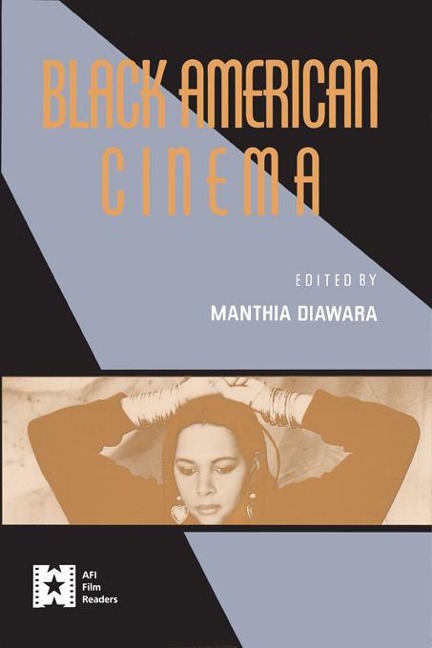
This is the first major collection of criticism on Black American cinema. From the pioneering work of Oscar Micheaux and Wallace Thurman to the Hollywood success of Spike Lee, Black American filmmakers have played a remarkable role in the development of the American film, both independent and mainstream. In this volume, the work of early Black filmmakers is given serious attention for the first time. Individual essays consider what a Black film tradition might be, the relation between Black American filmmakers and filmmakers from the diaspora, the nature of Black film aesthetics, the artist's place within the community, and the representation of a Black imaginary. Black AmericanCinema also uncovers the construction of Black sexuality on screen, the role of Black women in independent cinema, and the specific question of Black female spectatorship. A lively and provocative group of essays debate the place and significance of Spike Lee Of crucial importance are the ways in which the essays analyze those Black directors who worked for Hollywood and whose films are simplistically dismissed as sell-outs, to the Hollywood "master narrative," as well as those "crossover" filmmakers whose achievements entail a surreptitious infiltration of the studios. Black AmericanCinema demonstrates the wealth of the Black contribution to American film and the complex course that contribution has taken. Contributors: Houston Baker, Jr., Toni Cade Bambara, Amiri Baraka, Jacquie Bobo, Richard Dyer, Jane Gaines, Henry Louis Gates, Jr., Ron Green, Ed Guerrero, bell hooks, Phyllis Klotman, Ntongele Masilela, Clyde Taylor, and Michele Wallace.
Manthia Diawara is Professor of English at the University of Pennsylvania.
Part 1 Black Aesthetics; Chapter 1 Black American Cinema, Manthia Diawara; Chapter 2 "Twoness" In the Style of Oscar Micheaux, J. Ronald Green; Chapter 3 Fire and Desire, Jane Gaines; Chapter 4 Oscar Micheaux, Thomas Cripps; Chapter 5 The Black Writer in Hollywood, Circa 1930, Phyllis Klotman; Chapter 6 Is Car Wash a Musical?, Richard Dyer; Chapter 7 The Los Angeles School of Black Filmmakers, Ntongela Masilela; Chapter 8 Reading the Signs, Empowering the Eye, Toni Cade Bambara; Chapter 9 Spike Lee at the Movies, Amiri Baraka; Chapter 10 Spike Lee and the Commerce of Culture, Houston A. Jr. Baker; Chapter 11 The Ironies of Palace-Subaltern Discourse, Clyde Taylor; Chapter 12 Looking for Modernism, Henry Louis Jr. Gates; Part 2 Black Spectatorship; Chapter 13 Black Spectatorship, Manthia Diawara; Chapter 14 The Harlem Theater, Dan Streible; Chapter 15 The Black Image in Protective Custody, Ed Guerrero; Chapter 16 The Construction of Black Sexuality, Jacquie Jones; Chapter 17 Race, Gender and Psychoanalysis in Forties Film, Michele Wallace; Chapter 18 Reading through the Text, Jacqueline Bobo; Chapter 19 The Oppositional Gaze, Bell Hooks;
Dieses eBook wird im PDF-Format geliefert und ist mit einem Adobe Kopierschutz (DRM) versehen. Sie können dieses eBook mit allen Geräten lesen, die das PDF-Format und den Adobe Kopierschutz (DRM) unterstützen.
Zum Beispiel mit den folgenden Geräten:
• tolino Reader
Laden Sie das eBook direkt über den Reader-Shop auf dem tolino herunter oder übertragen Sie das eBook auf Ihren tolino mit einer kostenlosen Software wie beispielsweise Adobe Digital Editions.
• Sony Reader & andere eBook Reader
Laden Sie das eBook direkt über den Reader-Shop herunter oder übertragen Sie das eBook mit der kostenlosen Software Sony READER FOR PC/Mac oder Adobe Digital Editions auf ein Standard-Lesegeräte mit epub- und Adobe DRM-Unterstützung.
• Tablets & Smartphones
Möchten Sie dieses eBook auf Ihrem Smartphone oder Tablet lesen, finden Sie hier unsere kostenlose Lese-App für iPhone/iPad und Android Smartphone/Tablets.
• PC & Mac
Lesen Sie das eBook direkt nach dem Herunterladen mit einer kostenlosen Lesesoftware, beispielsweise Adobe Digital Editions, Sony READER FOR PC/Mac oder direkt über Ihre eBook-Bibliothek in Ihrem Konto unter „Meine eBooks“ - „online lesen“.
Schalten Sie das eBook mit Ihrer persönlichen Adobe ID auf bis zu sechs Geräten gleichzeitig frei.
Bitte beachten Sie, dass die Kindle-Geräte das Format nicht unterstützen und dieses eBook somit nicht auf Kindle-Geräten lesbar ist.