Und dann auf "Zum Home-Bildschirm [+]".

Stöbern
genialokal zum Startbildschirm hinzufügen
Installieren Sie die genialokal App auf Ihrem Startbildschirm für einen schnellen Zugriff und eine komfortable Nutzung.
Installieren Sie die genialokal App auf Ihrem Startbildschirm für einen schnellen Zugriff und eine komfortable Nutzung.
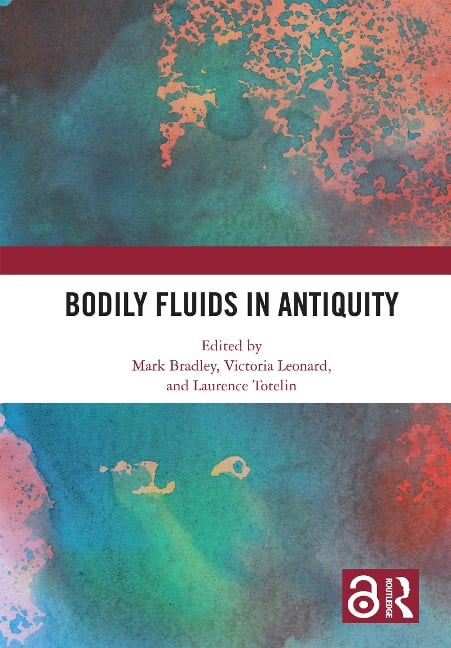
From ancient Egypt to Imperial Rome, from Greek medicine to early Christianity, this volume examines how human bodily fluids influenced ideas about gender, sexuality, politics, emotions, and morality, and how those ideas shaped later European thought. Comprising 24 chapters across seven key themes-language, gender, eroticism, nutrition, dissolution, death, and afterlife-this volume investigates bodily fluids in the context of the current sensory turn. It asks fundamental questions about physicality and fluidity: how were bodily fluids categorised and differentiated? How were fluids trapped inside the body perceived, and how did this perception alter when those fluids were externalised? Do ancient approaches complement or challenge our modern sensibilities about bodily fluids? How were religious practices influenced by attitudes towards bodily fluids, and how did religious authorities attempt to regulate or restrict their appearance? Why were some fluids taboo, and others cherished? In what ways were bodily fluids gendered? Offering a range of scholarly approaches and voices, this volume explores how ideas about the body and the fluids it contained and externalised are culturally conditioned and ideologically determined. The analysis encompasses the key geographic centres of the ancient Mediterranean basin, including Greece, Rome, Byzantium, and Egypt. By taking a longue durée perspective across a richly intertwined set of territories, this collection is the first to provide a comprehensive, wide-ranging study of bodily fluids in the ancient world. Bodily Fluids in Antiquity will be of particular interest to academic readers working in the fields of classics and its reception, archaeology, anthropology, and ancient to Early Modern history. It will also appeal to more general readers with an interest in the history of the body and history of medicine. Chapter 10 of this book is freely available as a downloadable Open Access PDF at http://www.taylorfrancis.com under a Creative Commons Attribution-Non Commercial-No Derivatives (CC-BY-NC-ND) 4.0 license.
Mark Bradley is Professor of Classics and Associate Pro-Vice-Chancellor at the University of Nottingham, UK. Together with Shane Butler (Johns Hopkins University, USA), he is editor of a series of volumes on 'The Senses in Antiquity' for Routledge, for which he has contributed a volume on Smell and the Ancient Senses (2015). Victoria Leonard is a Research Fellow at the Centre for Arts, Memory and Communities at Coventry University, and at the Institute of Classical Studies, University of London. Her research focuses on the late antique and early medieval western Mediterranean. She has published on religious conflict, gender and violence, and ancient historiography. Laurence Totelin is Reader in Ancient History at Cardiff University, UK. She has published widely on Greek and Roman botany, pharmacology, and gynaecology.
List of figures; List of tables; Acknowledgments; Contributors; Introduction, Mark Bradley, Victoria Leonard, and Laurence Totelin; Part I The language of fluidity; 1. Fluid vocabulary: flux in the lexicon of bodily emissions, Amy Coker; Part II A woman in flux; 2. A valid excuse for a day off work: menstruation in an ancient Egyptian village, Rosalind Janssen; 3. Uterine bleeding, knowledge, and emotion in ancient Greek medical and magical representations, Irene Salvo; 4. Puellae gently glow: scent, sweat, and the real in Latin love elegy and Ovid's didactic works, Jane Burkowski; 5. Overflowing bodies and a Pandora of Ivory: the pure humours of an erotic surrogate, Catalina Popescu; Part III Erotic and generative fluids; 6. The eyes have it: from generative fluids to vision rays, Julie Laskaris; 7. 'Infertile' and 'sub-fertile' semen in the Hippocratic Corpus and the biological works of Aristotle, Rebecca Fallas; 8. Say it with fluids: what the body exudes and retains when Juvenal's couple relationships go awry, Claude-Emmanuelle Centlivres Challet; 9. Flabby flesh and foetal formation: body fluidity and foetal sex differentiation in Ancient Greek medicine, Tara Mulder; 10. One-seed, two-seed, three-seed? Reassessing ancient theories of generation, Rebecca Flemming; 11. Phalli fighting with fluids: approaching images of ejaculating phalli in the Roman world, Adam Parker; Part IV Nutritive and healthy fluids; 12. A natural symbol? The (un)importance of blood in early Greek literary and religious contexts, Emily Kearns; 13. Taste and the senses: Galen's humours clarified, John Wilkins; 14. Breastmilk, breastfeeding, and the female body in early Imperial Rome, Thea Lawrence; 15. Breastmilk in the cave and on the arena: early Christian stories of lactation in context, Laurence Totelin; Part V Dissolving and liquefying bodies; 16. Tears and the leaky vessel: permeable and fluid bodies in Ovid and Lucretius, Peter Kelly; 17. Seneca's corpus: a sympathy of fluids and fluctuations, Michael Goyette; 18. Bodily fluids, grotesque imagery, and poetics in Persius' Satires, Andreas Gavrielatos; Part VI Wounded and putrefying bodies; 19. 'Efflux is my manifestation': positive conceptions of putrefactive fluids in the ancient Egyptian coffin texts, Tasha Dobbin-Bennett; 20. The physiology of matricide: revenge and metabolism imagery in Aeschylus' Oresteia, Goran Vidovic; 21. Open wounds, liquid bodies, and melting selves in Early Imperial Latin literature, Assaf Krebs; Part VII Ancient fluids: afterlife and reception; 22. The reception of Classical constructions of blood in Medieval and Early Modern martyrologies, Anastasia Stylianou; 23. 'Expelling the purple tyrant from the citadel': the menstruation debate in book 2 of Abraham Cowley's Plantarum libri sex (1662), Caroline Spearing; 24. Opening the body of fluids: taking in and pouring out in Renaissance readings of Classical women, Helen King; Envoi, Mark Bradley and Victoria Leonard; Index
Dieses eBook wird im PDF-Format geliefert und ist mit einem Adobe Kopierschutz (DRM) versehen. Sie können dieses eBook mit allen Geräten lesen, die das PDF-Format und den Adobe Kopierschutz (DRM) unterstützen.
Zum Beispiel mit den folgenden Geräten:
• tolino Reader
Laden Sie das eBook direkt über den Reader-Shop auf dem tolino herunter oder übertragen Sie das eBook auf Ihren tolino mit einer kostenlosen Software wie beispielsweise Adobe Digital Editions.
• Sony Reader & andere eBook Reader
Laden Sie das eBook direkt über den Reader-Shop herunter oder übertragen Sie das eBook mit der kostenlosen Software Sony READER FOR PC/Mac oder Adobe Digital Editions auf ein Standard-Lesegeräte mit epub- und Adobe DRM-Unterstützung.
• Tablets & Smartphones
Möchten Sie dieses eBook auf Ihrem Smartphone oder Tablet lesen, finden Sie hier unsere kostenlose Lese-App für iPhone/iPad und Android Smartphone/Tablets.
• PC & Mac
Lesen Sie das eBook direkt nach dem Herunterladen mit einer kostenlosen Lesesoftware, beispielsweise Adobe Digital Editions, Sony READER FOR PC/Mac oder direkt über Ihre eBook-Bibliothek in Ihrem Konto unter „Meine eBooks“ - „online lesen“.
Schalten Sie das eBook mit Ihrer persönlichen Adobe ID auf bis zu sechs Geräten gleichzeitig frei.
Bitte beachten Sie, dass die Kindle-Geräte das Format nicht unterstützen und dieses eBook somit nicht auf Kindle-Geräten lesbar ist.