Und dann auf "Zum Home-Bildschirm [+]".

Stöbern
genialokal zum Startbildschirm hinzufügen
Installieren Sie die genialokal App auf Ihrem Startbildschirm für einen schnellen Zugriff und eine komfortable Nutzung.
Installieren Sie die genialokal App auf Ihrem Startbildschirm für einen schnellen Zugriff und eine komfortable Nutzung.
Ihr gewünschter Artikel ist in 0 Buchhandlungen vorrätig - wählen Sie hier eine Buchhandlung in Ihrer Nähe aus:

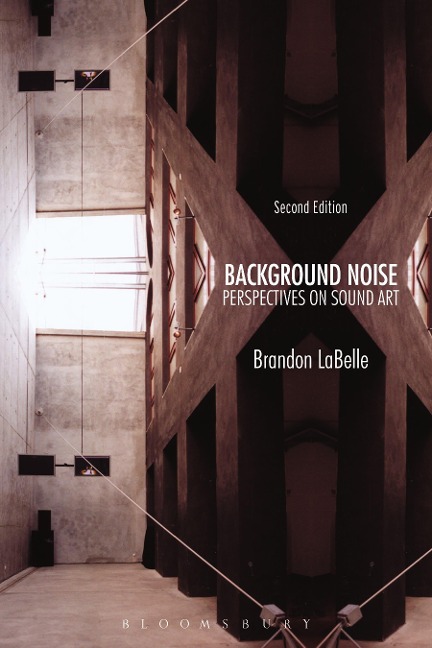
Background Noise follows the development of sound as an artistic medium and illustrates how sound is put to use within modes of composition, installation, and performance. While chronological in its structure, Brandon LaBelle's book is informed by spatial thinking - weaving architecture, environments, and the specifics of location into the work of sound, with the aim of formulating an expansive history and understanding of sound art. At its center the book presupposes an intrinsic relation between sound and its location, galvanizing acoustics, sound phenomena, and the environmental with the tensions inherent in what LaBelle identifies as sound's relational dynamic. For the author, this is embedded within sound's tendency to become public expressed in its ability to travel distances, foster cultural expression, and define spaces while being radically flexible. This second expanded edition includes a new chapter on the non-human and subnatural tendencies in sound art, revisions to the text as well as a new preface by the author. Intersecting material analysis with theoretical frameworks spanning art and architectural theory, performance studies and media theory, Background Noise makes the case that sound and sound art are central to understandings of contemporary culture.
Brandon LaBelle is an artist, writer and artistic director of The Listening Biennial and related Listening Academy. His work focuses on questions of agency, community, and poetics, which results in a range of collaborative and extra-institutional initiatives. In 1995 he founded Errant Bodies Press, an independent publishing project. His publications include: Dreamtime X (2022), Acoustic Justice (Bloomsbury 2021), The Other Citizen (2020), Sonic Agency (2018), Lexicon of the Mouth (Bloomsbury 2014), Acoustic Territories (Bloomsbury 2010, 2019), and Background Noise (Bloomsbury 2006, 2015).
Acknowledgements Preface to the Second Edition Introduction: Auditory Relations Fade In Part 1: 4'33": Sound and Points of Origin Introduction to Part 1 Chapter 1 Sociality of Sound: John Cage and Musical Concepts Chapter 2 Exposing the Sound Object:Musique Concrète's Sonic Research Chapter 3 Automatic Music: Group Ongaku's Performative Labors Part 2: Box with the Sound of Its Own Making: From Gags to Sculptural Form Introduction to Part 2 Chapter 4 Rhythms of Chaos: Happenings, Environments, and Fluxus Chapter 5 Minimalist Treatments: La Monte Young and Robert Morris Chapter 6 Conceptualizations:Michael Asher and the Subject of Space Part 3: I Am Sitting in a Room: Vocal Intensities Introduction to Part 3 Chapter 7 Performing Desire/ Performing Fear: Vito Acconci and the Power Plays of Voice Chapter 8 Finding Oneself: Alvin Lucier and the Phenomenal Voice Chapter 9 Word of Mouth: Christof Migone's Little Manias Part 4: Public Supply: Buildings, Constructions, and Locational Listening Introduction to Part 4 Chapter 10 Tuning Space:Max Neuhaus and Site-Specific Sound Chapter 11 Other Architectures:Michael Brewster, Maryanne Amacher, and Bernhard Leitner Chapter 12 Composing Intensities: Iannis Xenakis's Multimedia Architectures Part 5: Soundmarks: Environments and Aural Geography Introduction to Part 5 Chapter 13 Seeking Ursound: Hildegard Westerkamp, Steve Peters, and the Soundscape Chapter 14 Language Games: Yasunao Tone and the Mechanics of Information Chapter 15 Complicating Place: Bill Fontana and Networking the Soundscape Part 6: Global Strings: Interpersonal and Network Space Introduction to Part 6 Chapter 16 Interactions: Achim Wollscheid's Production of the Local Chapter 17 Global Events: Atau Tanaka and Network as Instrument Chapter 18 Live Streams: Apo33 and Multiplying Place Fade Out Conclusion: Auditive Pivot Appendix: Peripheries - subnature, phantom memory, and dirty listening List of Works Cited Index