Und dann auf "Zum Home-Bildschirm [+]".

Stöbern
genialokal zum Startbildschirm hinzufügen
Installieren Sie die genialokal App auf Ihrem Startbildschirm für einen schnellen Zugriff und eine komfortable Nutzung.
Installieren Sie die genialokal App auf Ihrem Startbildschirm für einen schnellen Zugriff und eine komfortable Nutzung.
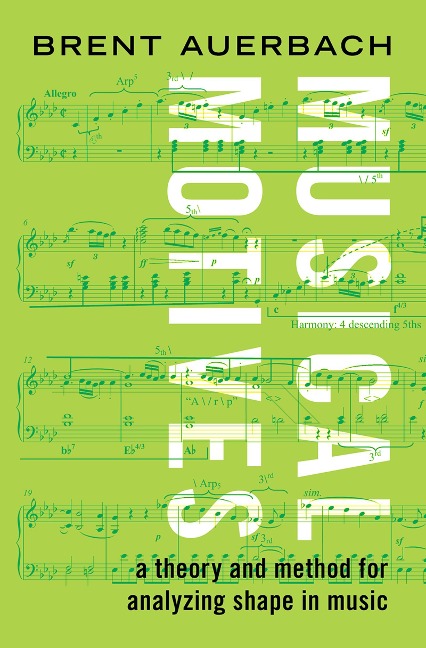
All music fans harbor in their memories vivid fragments of their favorite works. The starting guitar solo of "Satisfaction" by the Rolling Stones, the da-da-da-DUM gesture that opens Beethoven's Fifth Symphony, the lush swelling chords of a beloved movie soundtrack: hearing the briefest snippet of any of these is enough to transport listeners into the piece's sonic and emotional world. But what makes musical motives so powerful? In Musical Motives, author Brent Auerbach looks at the ways that motives - the small-scale pitch and rhythm shapes that are ever-present in music - unify musical compositions and shape our experiences of them. Motives serve both to communicate basic musical meaning and to tie together sound space like the motifs in visual art. They present in all genres from classical and popular to jazz and world music, making them ideally suited for analysis. Musical Motives opens with a general introduction to these fundamental building blocks, then lays out a comprehensive theory and method to account for music's structure and drama in motivic terms. Aimed at both amateur and expert audiences, the book offers a tiered approach that progresses from Basic to Complex Motivic Analysis. The methods are illustrated by small- and large-scale analyses of pieces by Mozart, Beethoven, Handel, Chaminade, Verdi, Radiohead, and many more.
Brent Auerbach, Associate Professor of Music Theory, University of Massachusetts Amherst Brent Auerbach is Associate Professor of Music Theory at the University of Massachusetts Amherst. His research focuses on formalizing the concept of the musical motive and extending its applications for analysis. Other research interests include the music of Brahms, the aesthetics of Baroque composition and counterpoint, harmonic sequences, and music theory pedagogy. Dr. Auerbach has published articles in The Journal of Music Theory, Music Theory Online, Theory and Practice, Intégral, and in The Routledge Companion to Music Theory Pedagogy, ed. by Leigh VanHandel (2020).
PART I: Establishing Grounds for a Discipline of Motivic Analysis Chapter 1: Introduction to Motives Chapter 2: A Brief History of Motives, Composition Chapter 3: A History of Motives, Theory and Analysis PART II: Methodology Chapter 4: A Universal Nomenclature for Pitch and Rhythm Motives Chapter 5: Basic Motivic Analysis (BMA) Interlude 1 - On the Role of Narrative in Motivic Analysis in General and Its Role in BMA in Particular Chapter 6: Exemplars of Basic Motivic Analysis Interlude 2 - Narrative Archetypes of Complex Motivic Analysis (CMA) Chapter 7: Complex Motivic Analysis 278 PART III: Analysis and Conclusion Chapter 8 - Analysis of Three Works in Contrasting Styles Chapter 9: Conclusion - The Future Promise and Persistent Limitations of Motivic Analysis Selected Bibliography Index
Dieses eBook wird im PDF-Format geliefert und ist mit einem Adobe Kopierschutz (DRM) versehen. Sie können dieses eBook mit allen Geräten lesen, die das PDF-Format und den Adobe Kopierschutz (DRM) unterstützen.
Zum Beispiel mit den folgenden Geräten:
• tolino Reader
Laden Sie das eBook direkt über den Reader-Shop auf dem tolino herunter oder übertragen Sie das eBook auf Ihren tolino mit einer kostenlosen Software wie beispielsweise Adobe Digital Editions.
• Sony Reader & andere eBook Reader
Laden Sie das eBook direkt über den Reader-Shop herunter oder übertragen Sie das eBook mit der kostenlosen Software Sony READER FOR PC/Mac oder Adobe Digital Editions auf ein Standard-Lesegeräte mit epub- und Adobe DRM-Unterstützung.
• Tablets & Smartphones
Möchten Sie dieses eBook auf Ihrem Smartphone oder Tablet lesen, finden Sie hier unsere kostenlose Lese-App für iPhone/iPad und Android Smartphone/Tablets.
• PC & Mac
Lesen Sie das eBook direkt nach dem Herunterladen mit einer kostenlosen Lesesoftware, beispielsweise Adobe Digital Editions, Sony READER FOR PC/Mac oder direkt über Ihre eBook-Bibliothek in Ihrem Konto unter „Meine eBooks“ - „online lesen“.
Schalten Sie das eBook mit Ihrer persönlichen Adobe ID auf bis zu sechs Geräten gleichzeitig frei.
Bitte beachten Sie, dass die Kindle-Geräte das Format nicht unterstützen und dieses eBook somit nicht auf Kindle-Geräten lesbar ist.