Und dann auf "Zum Home-Bildschirm [+]".

Stöbern
genialokal zum Startbildschirm hinzufügen
Installieren Sie die genialokal App auf Ihrem Startbildschirm für einen schnellen Zugriff und eine komfortable Nutzung.
Installieren Sie die genialokal App auf Ihrem Startbildschirm für einen schnellen Zugriff und eine komfortable Nutzung.
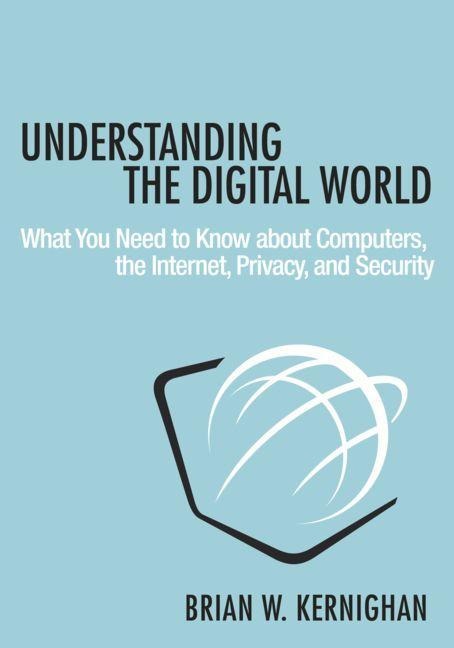

The basics of how computer hardware, software, and systems work, and the risks they create for our privacy and security Computers are everywhere. Some of them are highly visible, in laptops, tablets, cell phones, and smart watches. But most are invisible, like those in appliances, cars, medical equipment, transportation systems, power grids, and weapons. We never see the myriad computers that quietly collect, share, and sometimes leak vast amounts of personal data about us. Through computers, governments and companies increasingly monitor what we do. Social networks and advertisers know far more about us than we should be comfortable with, using information we freely give them. Criminals have all-too-easy access to our data. Do we truly understand the power of computers in our world? Understanding the Digital World explains how computer hardware, software, networks, and systems work. Topics include how computers are built and how they compute; what programming is and why it is difficult; how the Internet and the web operate; and how all of these affect our security, privacy, property, and other important social, political, and economic issues. This book also touches on fundamental ideas from computer science and some of the inherent limitations of computers. It includes numerous color illustrations, notes on sources for further exploration, and a glossary to explain technical terms and buzzwords. Understanding the Digital World is a must-read for all who want to know more about computers and communications. It explains, precisely and carefully, not only how they operate but also how they influence our daily lives, in terms anyone can understand, no matter what their experience and knowledge of technology.
Brian W. Kernighan
Preface xi
Introduction 1
Part I: Hardware 7
1. What's in a Computer? 11
1.1 Logical Construction 13
1.1.1 CPU 13
1.1.2 RAM 14
1.1.3 Disks and other secondary storage 15
1.1.4 Et cetera 17
1.2 Physical Construction 17
1.3 Moore's Law 21
1.4 Summary 22
2. Bits, Bytes, and Representation of Information 23
2.1 Analog versus Digital 23
2.2 Analog-Digital Conversion 25
2.3 Bits, Bytes, and Binary 30
2.3.1 Bits 30
2.3.2 Powers of two and powers of ten 31
2.3.3 Binary numbers 32
2.3.4 Bytes 34
2.4 Summary 36
3. Inside the CPU 37
3.1 The Toy Computer 38
3.1.1 The first Toy program 38
3.1.2 The second Toy program 40
3.1.3 Branch instructions 41
3.1.4 Representation in RAM 43
3.2 Real CPUs 43
3.3 Caching 46
3.4 Other Kinds of Computers 47
3.5 Summary 49
Wrapup on Hardware 51
Part II: Software 53
4. Algorithms 55
4.1 Linear Algorithms 56
4.2 Binary Search 58
4.3 Sorting 59
4.4 Hard Problems and Complexity 63
4.5 Summary 65
5. Programming and Programming Languages 67
5.1 Assembly Language 68
5.2 High-Level Languages 69
5.3 Software Development 75
5.3.1 Libraries, interfaces, and development kits 76
5.3.2 Bugs 77
5.4 Intellectual Property 79
5.4.1 Trade secret 80
5.4.2 Copyright 80
5.4.3 Patents 81
5.4.4 Licenses 82
5.5 Standards 84
5.6 Open Source 84
5.7 Summary 86
6. Software Systems 87
6.1 Operating Systems 88
6.2 How an Operating System Works 92
6.2.1 System calls 93
6.2.2 Device drivers 93
6.3 Other Operating Systems 94
6.4 File Systems 95
6.4.1 Disk file systems 96
6.4.2 Removing files 98
6.4.3 Other file systems 99
6.5 Applications 100
6.6 Layers of Software 102
6.7 Summary 104
7. Learning to Program 105
7.1 Programming Language Concepts 106
7.2 A First JavaScript Example 107
7.3 A Second JavaScript Example 107
7.4 Loops 110
7.5 Conditionals 111
7.6 Libraries and Interfaces 112
7.7 How JavaScript Works 114
7.8 Summary 114
Wrapup on Software 117
Part III: Communications 119
8. Networks 125
8.1 Telephones and Modems 126
8.2 Cable and DSL 126
8.3 Local Area Networks and Ethernet 128
8.4 Wireless 130
8.5 Cell Phones 131
8.6 Bandwidth 135
8.7 Compression 135
8.8 Error Detection and Correction 137
8.9 Summary 139
9. The Internet 141
9.1 An Internet Overview 142
9.2 Domain Names and Addresses 145
9.2.1 Domain Name System 145
9.2.2 IP addresses 146
9.2.3 Root servers 147
9.2.4 Registering your own domain 148
9.3 Routing 148
9.4 TCP/IP Protocols 150
9.4.1 IP, the Internet Protocol 151
9.4.2 TCP, the Transmission Control Protocol 152
9.5 Higher-Level Protocols 153
9.5.1 Telnet and SSH: remote login 154
9.5.2 SMTP: Simple Mail Transfer Protocol 154
9.5.3 File sharing and peer-to-peer protocols 156
9.6 Copyright on the Internet 157
9.7 The Internet of Things 159
9.8 Summary 159
10. The World Wide Web 163
10.1 How the Web Works 164
10.2 HTML 165
10.3 Cookies 167
10.4 Active Content in Web Pages 168
10.5 Active Content Elsewhere 170
10.6 Viruses, Worms and Trojan Horses 171
10.7 Web Security 173
10.7.1 Attacks on clients 174
10.7.2 Attacks on servers 177
10.7.3 Attacks on information in transit 179
10.8 Defending Yourself 179
10.9 Summary 181
11. Data and Information 183
11.1 Search 184
11.2 Tracking 188
11.3 Social Networks 193
11.4 Data Mining and Aggregation 195
11.5 Cloud Computing 197
11.6 Summary 202
12. Privacy and Security 203
12.1 Cryptography 204
12.1.1 Secret-key cryptography 205
12.1.2 Public-key cryptography 206
12.2 Anonymity 210
12.2.1 Tor and the Tor Browser 211
12.2.2 Bitcoin 213
12.3 Summary 215
13. Wrapping Up 217
Notes 221
Glossary 227
Index 233
Dieses eBook wird im PDF-Format geliefert und ist mit einem Adobe Kopierschutz (DRM) versehen. Sie können dieses eBook mit allen Geräten lesen, die das PDF-Format und den Adobe Kopierschutz (DRM) unterstützen.
Zum Beispiel mit den folgenden Geräten:
• tolino Reader
Laden Sie das eBook direkt über den Reader-Shop auf dem tolino herunter oder übertragen Sie das eBook auf Ihren tolino mit einer kostenlosen Software wie beispielsweise Adobe Digital Editions.
• Sony Reader & andere eBook Reader
Laden Sie das eBook direkt über den Reader-Shop herunter oder übertragen Sie das eBook mit der kostenlosen Software Sony READER FOR PC/Mac oder Adobe Digital Editions auf ein Standard-Lesegeräte mit epub- und Adobe DRM-Unterstützung.
• Tablets & Smartphones
Möchten Sie dieses eBook auf Ihrem Smartphone oder Tablet lesen, finden Sie hier unsere kostenlose Lese-App für iPhone/iPad und Android Smartphone/Tablets.
• PC & Mac
Lesen Sie das eBook direkt nach dem Herunterladen mit einer kostenlosen Lesesoftware, beispielsweise Adobe Digital Editions, Sony READER FOR PC/Mac oder direkt über Ihre eBook-Bibliothek in Ihrem Konto unter „Meine eBooks“ - „online lesen“.
Schalten Sie das eBook mit Ihrer persönlichen Adobe ID auf bis zu sechs Geräten gleichzeitig frei.
Bitte beachten Sie, dass die Kindle-Geräte das Format nicht unterstützen und dieses eBook somit nicht auf Kindle-Geräten lesbar ist.