Und dann auf "Zum Home-Bildschirm [+]".

Stöbern
genialokal zum Startbildschirm hinzufügen
Installieren Sie die genialokal App auf Ihrem Startbildschirm für einen schnellen Zugriff und eine komfortable Nutzung.
Installieren Sie die genialokal App auf Ihrem Startbildschirm für einen schnellen Zugriff und eine komfortable Nutzung.
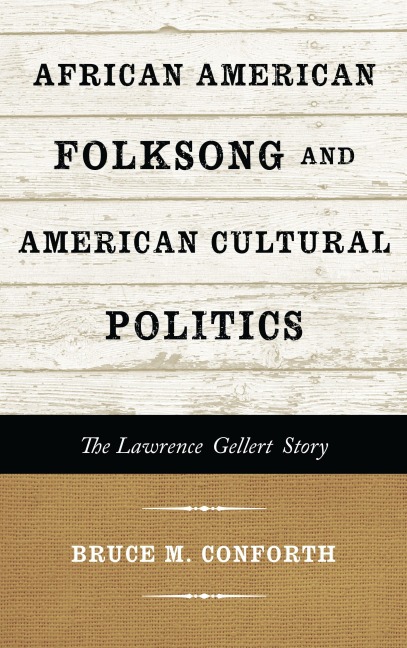
In African American Folksong and American Cultural Politics: The Lawrence Gellert Story, scholar and musician Bruce Conforth tells the story of one of the most unusual collections of African American folk music ever amassed-and the remarkable story of the man who produced it: Lawrence Gellert. Compiled between the World Wars, Gellert's recordings were immediately adopted by the American Left as the voice of the true American proletariat, with the songs-largely variants of traditional work songs or blues-dubbed by the Left as "songs of protest." As both the songs and Gellert's standing itself turned into propaganda weapons of left-wing agitators, Gellert experienced a meteoric rise within the circles of left-wing organizations and the American Communist party. But such success proved ephemeral, with Gellert contributing to his own neglect by steadfastly refusing to release information about where and from whom he had collected his recordings. Later scholars, as a result, would skip over his closely held, largely inaccessible research, with some asserting Gellert's work had been doctored for political purposes. And to a certain extent they were correct. Conforth reveals how Gellert at least "assisted" in the creation of some of his more political material. But hidden behind the few protest songs that Gellert allowed to become public was a vast body of legitimate African America folksongs-enough to rival the work of any of his contemporary collectors.
Had Gellert granted access to all his material, scholars would have quickly seen that it comprised an incredibly complete and diverse collection of all African American song genres: work songs, blues, chants, spirituals, as well as the largest body of African American folktales about Irish Americans (what were referred to as "One Time I'shman" tales). It also included vast swaths of African American oral literature collected by Gellert as part of the Federal Writers' Project.
In African American Folksong and American Cultural Politics, Conforth brings to light for the first time the entire body of work collected by Lawrence Gellert, establishing his place, and the place for the material he collected, within the pages of American folk song scholarship. In addition to shedding new light on the concept of "protest music" within African American folk music, Conforth discusses the unique relationship of the American Left to this music and how personal psychology and the demands of the American Communist party would come to ruin Gellert's life.
African American Folksong and American Cultural Politics will appeal to students and scholars in the fields of American social and political history, African American studies, the history of American folk music, and ethnomusicology.
Bruce M. Conforth grew up during the folk/blues revival of the 1960s as experienced in New York City's Greenwich Village. He received his PhD in ethnomusicology and folklore from Indiana University and served as the first Curator of the Rock and Roll Hall of Fame and Museum. He is now a member of the faculty of the American Culture Department at the University of Michigan, Ann Arbor.
Dieses eBook wird im PDF-Format geliefert und ist mit einem Adobe Kopierschutz (DRM) versehen. Sie können dieses eBook mit allen Geräten lesen, die das PDF-Format und den Adobe Kopierschutz (DRM) unterstützen.
Zum Beispiel mit den folgenden Geräten:
• tolino Reader
Laden Sie das eBook direkt über den Reader-Shop auf dem tolino herunter oder übertragen Sie das eBook auf Ihren tolino mit einer kostenlosen Software wie beispielsweise Adobe Digital Editions.
• Sony Reader & andere eBook Reader
Laden Sie das eBook direkt über den Reader-Shop herunter oder übertragen Sie das eBook mit der kostenlosen Software Sony READER FOR PC/Mac oder Adobe Digital Editions auf ein Standard-Lesegeräte mit epub- und Adobe DRM-Unterstützung.
• Tablets & Smartphones
Möchten Sie dieses eBook auf Ihrem Smartphone oder Tablet lesen, finden Sie hier unsere kostenlose Lese-App für iPhone/iPad und Android Smartphone/Tablets.
• PC & Mac
Lesen Sie das eBook direkt nach dem Herunterladen mit einer kostenlosen Lesesoftware, beispielsweise Adobe Digital Editions, Sony READER FOR PC/Mac oder direkt über Ihre eBook-Bibliothek in Ihrem Konto unter „Meine eBooks“ - „online lesen“.
Schalten Sie das eBook mit Ihrer persönlichen Adobe ID auf bis zu sechs Geräten gleichzeitig frei.
Bitte beachten Sie, dass die Kindle-Geräte das Format nicht unterstützen und dieses eBook somit nicht auf Kindle-Geräten lesbar ist.