Und dann auf "Zum Home-Bildschirm [+]".

Stöbern
genialokal zum Startbildschirm hinzufügen
Installieren Sie die genialokal App auf Ihrem Startbildschirm für einen schnellen Zugriff und eine komfortable Nutzung.
Installieren Sie die genialokal App auf Ihrem Startbildschirm für einen schnellen Zugriff und eine komfortable Nutzung.
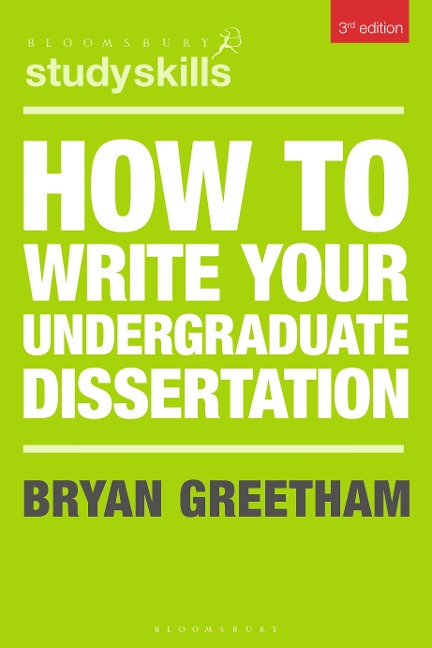
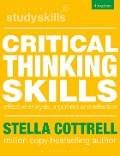
This practical guide takes undergraduate students step-by-step through the process of completing a dissertation, from the initial stages of generating original ideas and planning the project through to writing their first draft and critically reviewing their own work. It shows students how to choose the most appropriate methods for collecting and analysing their data and how to then integrate this research into their dissertation. Students will learn how to develop consistent and persuasive arguments and write up their research in a clear and concise style.
This book is an essential resource for undergraduates of all disciplines who are required to write a dissertation as part of their degree.
New to this Edition:
- Includes expanded material on research ethics
- Contains two new chapters on presenting research posters and delivering oral presentations
Bryan Greetham is an Honorary Fellow at the University of Durham, UK, and has previously taught at University of Newcastle, New South Wales, Australia. He is the author of How to Write Your Undergraduate Dissertation, Smart Thinking and How to Write Your Literature Review.
Acknowledgements
Introduction
PART I: EXAMINERS AND SUPERVISORS
1. Examiners - What Are They Looking For?
2. Working With Your Supervisor
PART II: GENERATING AND DEVELOPING ORIGINAL IDEAS
3. What Activities Suit You Best?
4. Types of Research
5. What Interests You Most?
6. Generating Your Own Ideas 1: Using Trigger Questions
7. Generating Your Own Ideas 2: Perspectives and Levels
8. Developing Your Ideas 1: Causal Relations
9. Developing Your Ideas 2: Conceptual Relations
10. Original Questions and Hypotheses 1: Using Analogies
11. Original Questions and Hypotheses 2: Working With Your Structures
PART III: DECIDING ON YOUR PROJECT
12. Searching the Literature 1: Knowing What to Look For
13. Searching the Literature 2: How to Search
14. Choosing the Topic 1: Feasibility
15. Choosing the Topic 2: Ethical Issues
PART IV: ORGANISING YOUR WORK
16. Planning Your Research
17. Managing Your Time
18. Your Retrieval System
19. Reading
20. Note-taking
PART V: DOING YOUR RESEARCH
21. Qualitative and Quantitative Research
22. Secondary Sources
23. Primary Sources 1: Quantitative Research
24. Primary Sources 2: Designing and Distributing Your Questionnaire
25. Primary Sources 3: Qualitative Research - Interviews and Focus Groups
26. Primary Sources 4: Qualitative Research - Case Studies and Observations
PART VI: PLANNING YOUR DISSERTATION
27. The Main Components and Introduction
28. The Literature Review
29. Research Methods, Findings, Conclusions and Appendices
PART VII: ORGANISING YOUR THINKING
30. Developing Consistent Arguments 1: The Components
31. Developing Consistent Arguments 2: The Connections
32. Using Evidence 1: Describing It
33. Using Evidence 2: Drawing Inferences
34. Using Evidence 3: Creating Causal Connections
35. Using Language 1: Clarity Jargon
36. Using Language 2: Clarity Manipulative Words
37. Using Language 3: Consistency
PART VIII: WRITING YOUR DISSERTATION
38. The First Draft
39. Style 1: Finding Your Own Voice
40. Style 2: Simplicity and Economy
PART IX: PLAGIARISM, REFERENCING AND BIBLIOGRAPHIES
41. Plagiarism
42. Referencing and Bibliographies
PART X: EDITING
43. Revision 1: The Structure
44. Revision 2: The Content
PART XI: PRESENTING YOUR WORK
45. Oral Presentations
46. Poster Presentations
Conclusion
Bibliography
Index.
Dieses eBook wird im PDF-Format geliefert und ist mit einem Adobe Kopierschutz (DRM) versehen. Sie können dieses eBook mit allen Geräten lesen, die das PDF-Format und den Adobe Kopierschutz (DRM) unterstützen.
Zum Beispiel mit den folgenden Geräten:
• tolino Reader
Laden Sie das eBook direkt über den Reader-Shop auf dem tolino herunter oder übertragen Sie das eBook auf Ihren tolino mit einer kostenlosen Software wie beispielsweise Adobe Digital Editions.
• Sony Reader & andere eBook Reader
Laden Sie das eBook direkt über den Reader-Shop herunter oder übertragen Sie das eBook mit der kostenlosen Software Sony READER FOR PC/Mac oder Adobe Digital Editions auf ein Standard-Lesegeräte mit epub- und Adobe DRM-Unterstützung.
• Tablets & Smartphones
Möchten Sie dieses eBook auf Ihrem Smartphone oder Tablet lesen, finden Sie hier unsere kostenlose Lese-App für iPhone/iPad und Android Smartphone/Tablets.
• PC & Mac
Lesen Sie das eBook direkt nach dem Herunterladen mit einer kostenlosen Lesesoftware, beispielsweise Adobe Digital Editions, Sony READER FOR PC/Mac oder direkt über Ihre eBook-Bibliothek in Ihrem Konto unter „Meine eBooks“ - „online lesen“.
Schalten Sie das eBook mit Ihrer persönlichen Adobe ID auf bis zu sechs Geräten gleichzeitig frei.
Bitte beachten Sie, dass die Kindle-Geräte das Format nicht unterstützen und dieses eBook somit nicht auf Kindle-Geräten lesbar ist.