Und dann auf "Zum Home-Bildschirm [+]".

Stöbern
genialokal zum Startbildschirm hinzufügen
Installieren Sie die genialokal App auf Ihrem Startbildschirm für einen schnellen Zugriff und eine komfortable Nutzung.
Installieren Sie die genialokal App auf Ihrem Startbildschirm für einen schnellen Zugriff und eine komfortable Nutzung.
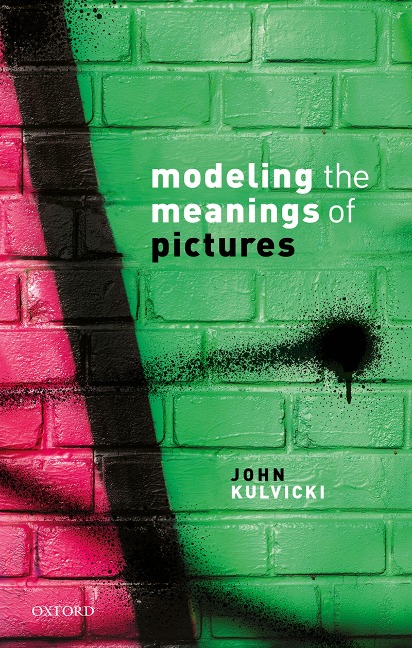
John Kulvicki offers an account of the many ways in which pictures can be meaningful which is inspired by the philosophy of language. Pictures are important parts of communicative acts, along with language, gesture, facial expressions, and props. They express wide ranges of thoughts, make assertions, offer warnings, instructions, and commands. Pictures are also representations. They have meanings, which help explain the range of communicative uses to which they can be put. Modelling the meanings of pictures is accounting for the ways in which pictures manage to be meaningful, with an eye toward how those meanings let us use them as we do.
By framing pictures with the philosophy of language, we acquire new perspectives on the many things we can do with them. Sometimes, pictures are used as descriptions--he looks like this!--while sometimes they are used more like singular terms--find him!, while showing a mug shot. Most picture-making cultures also have iconographies, but this is usually put to one side in discussions of pictures, if it is mentioned at all. Likewise, some uses of pictures, especially in advertising, are metaphorical, and very little has been said about metaphor in pictures. Pictures are also related in important ways to other kinds of representations like maps, and this book provides a new way of understanding what makes them alike and different. By showing that pictures are very different from languages, this book also shows that the tools developed with language in mind are not actually specific to linguistic phenomena.
John Kulvicki received his PhD from the University of Chicago and worked at Washington University in St Louis and Carleton University before coming to Dartmouth. He writes on the philosophy of perception and philosophy of art.
- Preface - 1: Pictures, communication, and meaning - 2: Character, content, and reference - 3: Parts of pictures - 4: Pictorial dthat - 5: Iconography - 6: Metaphor - 7: Direct reference in pictures and maps - 8: Distinguishing kinds by parts
Dieses eBook wird im PDF-Format geliefert und ist mit einem Adobe Kopierschutz (DRM) versehen. Sie können dieses eBook mit allen Geräten lesen, die das PDF-Format und den Adobe Kopierschutz (DRM) unterstützen.
Zum Beispiel mit den folgenden Geräten:
• tolino Reader
Laden Sie das eBook direkt über den Reader-Shop auf dem tolino herunter oder übertragen Sie das eBook auf Ihren tolino mit einer kostenlosen Software wie beispielsweise Adobe Digital Editions.
• Sony Reader & andere eBook Reader
Laden Sie das eBook direkt über den Reader-Shop herunter oder übertragen Sie das eBook mit der kostenlosen Software Sony READER FOR PC/Mac oder Adobe Digital Editions auf ein Standard-Lesegeräte mit epub- und Adobe DRM-Unterstützung.
• Tablets & Smartphones
Möchten Sie dieses eBook auf Ihrem Smartphone oder Tablet lesen, finden Sie hier unsere kostenlose Lese-App für iPhone/iPad und Android Smartphone/Tablets.
• PC & Mac
Lesen Sie das eBook direkt nach dem Herunterladen mit einer kostenlosen Lesesoftware, beispielsweise Adobe Digital Editions, Sony READER FOR PC/Mac oder direkt über Ihre eBook-Bibliothek in Ihrem Konto unter „Meine eBooks“ - „online lesen“.
Schalten Sie das eBook mit Ihrer persönlichen Adobe ID auf bis zu sechs Geräten gleichzeitig frei.
Bitte beachten Sie, dass die Kindle-Geräte das Format nicht unterstützen und dieses eBook somit nicht auf Kindle-Geräten lesbar ist.