Und dann auf "Zum Home-Bildschirm [+]".

Stöbern
genialokal zum Startbildschirm hinzufügen
Installieren Sie die genialokal App auf Ihrem Startbildschirm für einen schnellen Zugriff und eine komfortable Nutzung.
Installieren Sie die genialokal App auf Ihrem Startbildschirm für einen schnellen Zugriff und eine komfortable Nutzung.
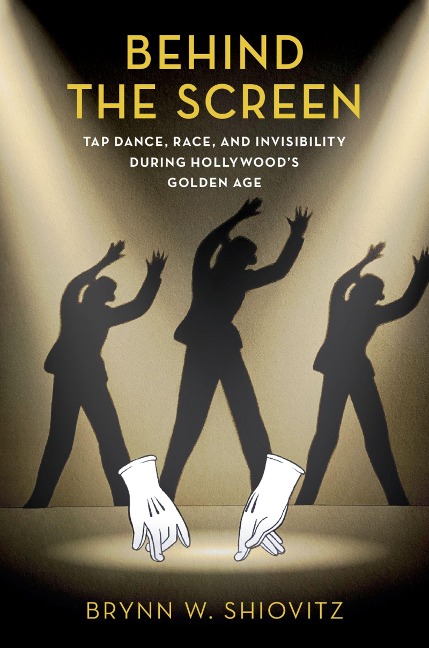
How and why was outdated racial content - and specifically blackface minstrelsy - not only permitted, but in fact allowed to thrive during the 1930s and 1940s despite the rigid motion picture censorship laws which were enforced during this time? Introducing a new theory of covert minstrelsy, this book illuminates Hollywood's practice of capitalizing on the Africanist aesthetic at the expense of Black lived experience. Through close examination of the musicals made during this period, this book shows how Hollywood utilized a series of covert "guises" or subterfuges-complicated and further masked by a film's narrative framing and novel technology to distract both censors and audiences from seeing the ways in which they were being fed a nineteenth-century White narrative of Blackness. Drawing on the annals of Hollywood's most popular and its extremely rare films, Behind the Screen uncovers a half century of blackface application by delicately removing the individual layers of disguise through close analyses of films which paint tap dance, swing, and other predominantly Africanist forms in a negative light. This book goes beneath the image of recognizable White performers including Al Jolson, Eddie Cantor, Fred Astaire, and Eleanor Powell, exploring the high cost of their onscreen representational politics. The book also recuperates the stories of several of the Black artists whose labor was abused during the choreographic and filming process. Some of the many newly documented stories include those of The Three Chocolateers, The Three Eddies, The Three Gobs, The Peters Sisters, Jeni Le Gon, and Cora La Redd. In stripping away the various disguises involved during Hollywood's Golden Age, Behind the Screen recovers the visibility of Black artists whose names Hollywood omitted from the credits and whose identities America has written out of the national narrative.
Brynn Wein Shiovitz is Lecturer in the Department of Dance at Chapman University and the editor of The Body, the Dance, and the Text: Essays on Performance and the Margins of History.
Acknowledgments Note on Language Preface Covert Minstrelsy: a Diagram Introduction: Masks in Disguise 1. Integrating the Screen: Sound Synchronization, Sonic Guises, and Pre-Code Blackface, 1927-1930 sing-along: Dinah, a Fleischer Screen Song 2. Optical Illusion and Design: Exposure Values, Protean Guises, and Eddie Cantor's Blackface 1930-1933 cartoon short: The Three Little Pigs, an excerpted Walt Disney Silly Symphony 3. Public Works and Accolades: Race Film, Southern Repossession, and the Rise of Bill Robinson, 1929-1935 dance break: Have You Got Any Castles, Featuring Buck and Bubbles 4. Bon Homage: Female Figures, the Tribute Guise, and Pre-War Departures, 1934-1939 travel ad: Skirting Censorship: Brownface and Technology in Transit 5. With a Glory Be: The Gabriel Variation, Jazz, and Everything in Between, 1934-1942 war bond ad: Any Bonds Today? Produced in Cooperation with Warner Bros. and U.S. Treasury Dept. Defense Savings Staff 6. Hays is for Horses: Cartoons' Crossover Appeal, Dis-figuration, and the Animated Bestiary 1934-1942 Coda. Enlisting the Tropes: Covert Minstrelsy in Action, 1942-1954 Appendix: Excerpts from the Production Code (1934-1954) Index
Dieses eBook wird im PDF-Format geliefert und ist mit einem Adobe Kopierschutz (DRM) versehen. Sie können dieses eBook mit allen Geräten lesen, die das PDF-Format und den Adobe Kopierschutz (DRM) unterstützen.
Zum Beispiel mit den folgenden Geräten:
• tolino Reader
Laden Sie das eBook direkt über den Reader-Shop auf dem tolino herunter oder übertragen Sie das eBook auf Ihren tolino mit einer kostenlosen Software wie beispielsweise Adobe Digital Editions.
• Sony Reader & andere eBook Reader
Laden Sie das eBook direkt über den Reader-Shop herunter oder übertragen Sie das eBook mit der kostenlosen Software Sony READER FOR PC/Mac oder Adobe Digital Editions auf ein Standard-Lesegeräte mit epub- und Adobe DRM-Unterstützung.
• Tablets & Smartphones
Möchten Sie dieses eBook auf Ihrem Smartphone oder Tablet lesen, finden Sie hier unsere kostenlose Lese-App für iPhone/iPad und Android Smartphone/Tablets.
• PC & Mac
Lesen Sie das eBook direkt nach dem Herunterladen mit einer kostenlosen Lesesoftware, beispielsweise Adobe Digital Editions, Sony READER FOR PC/Mac oder direkt über Ihre eBook-Bibliothek in Ihrem Konto unter „Meine eBooks“ - „online lesen“.
Schalten Sie das eBook mit Ihrer persönlichen Adobe ID auf bis zu sechs Geräten gleichzeitig frei.
Bitte beachten Sie, dass die Kindle-Geräte das Format nicht unterstützen und dieses eBook somit nicht auf Kindle-Geräten lesbar ist.