Und dann auf "Zum Home-Bildschirm [+]".

Stöbern
genialokal zum Startbildschirm hinzufügen
Installieren Sie die genialokal App auf Ihrem Startbildschirm für einen schnellen Zugriff und eine komfortable Nutzung.
Installieren Sie die genialokal App auf Ihrem Startbildschirm für einen schnellen Zugriff und eine komfortable Nutzung.
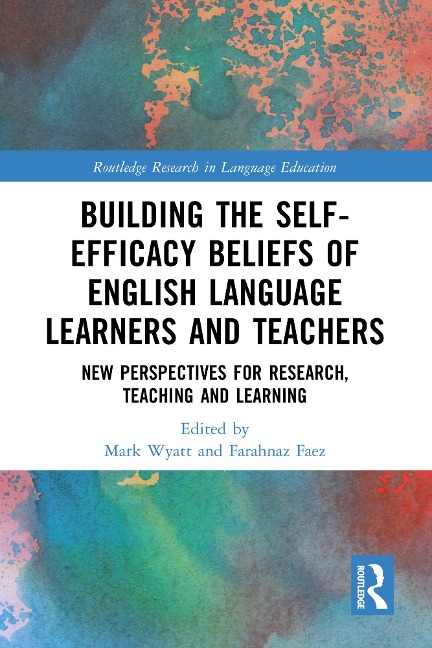
Building the Self-Efficacy Beliefs of English Language Learners and Teachers explores, juxtaposes and bridges two fields of research that have developed separately: the self-efficacy beliefs of English language learners and the self-efficacy beliefs of English language teachers. The aim is to expand understanding in each field and highlight how the two areas can mutually inform each other. This should encourage fresh perspectives, providing direction for researchers, and improving learning, teaching, and teacher education. Empirical research suggests that English language learners and teachers who believe they can fulfil a task are more likely to succeed than those who believe they cannot. Based on a deep understanding of how self-efficacy beliefs are formed and developed, this book illustrates how such beliefs can be supported and researched amongst English language learners and teachers. Bringing together the work of educators and researchers working in contexts including Algeria, Bulgaria, Canada, China, Iran, Israel, Japan, Türkiye, the UK, the USA, and Vietnam, this volume includes meta-analyses largely focusing on quantitative data and empirical studies employing qualitative approaches and mixed methods. Studies included examine factors impacting the development of language teachers' self-efficacy beliefs and investigate domain-specific dimensions of the self-efficacy beliefs of English language learners and teachers. This rigorous and original volume will appeal to an international readership of scholars, teachers, teacher educators, and researchers with interests in language education, teacher education, TESOL, linguistics, and educational psychology.
Mark Wyatt recently retired as Associate Professor of English at Khalifa University, United Arab Emirates. Farahnaz Faez is Professor in the Faculty of Education at The University of Western Ontario, Canada.
1. 1. Building English language learners' and teachers' self-efficacy beliefs Part 1: Synthesizing the literature to expand understanding of language teachers' self-efficacy beliefs 2. Language teacher self-efficacy surveys: What have we learned? Where are we going? 3. Language teachers' self-efficacy beliefs in the Turkish EFL context Part 2: Exploring factors impacting the development of English language teachers' self-efficacy beliefs 4. The formation of pre-service language teachers' self-efficacy beliefs: A case study 5. Novice EFL teachers' self-efficacy beliefs in the first year: an insight into the impact of task-, domain-, and context-specific factors upon perceptions of efficacy 6. Language teachers' self-efficacy beliefs evident in teacher-supervisor post-observation conferences in Iran 7. Support for career-long development of LTSE beliefs: Two Chinese EFL teachers' stories of professional development 8. Growing teacher research efficacy beliefs through Exploratory Practice: An autoethnography Part 3: Investigating domain-specific dimensions of English language learners' and teachers' self-efficacy beliefs 9. "I'm not a walking dictionary": Unpacking English language teachers' self-efficacy beliefs about teaching vocabulary 10. An exploratory study on teachers' and learners' self-efficacy beliefs in foreign language listening in Algeria 11. Changes in the academic writing self-efficacy beliefs of students in transition from high school to an English medium instruction university programme in Japan 12. Exploring language self-efficacy beliefs and technology-based learning strategies in an increasingly digitalized world Epilogue 13. Researching the self-efficacy beliefs of language learners and teachers: The roads ahead
Dieses eBook wird im PDF-Format geliefert und ist mit einem Adobe Kopierschutz (DRM) versehen. Sie können dieses eBook mit allen Geräten lesen, die das PDF-Format und den Adobe Kopierschutz (DRM) unterstützen.
Zum Beispiel mit den folgenden Geräten:
• tolino Reader
Laden Sie das eBook direkt über den Reader-Shop auf dem tolino herunter oder übertragen Sie das eBook auf Ihren tolino mit einer kostenlosen Software wie beispielsweise Adobe Digital Editions.
• Sony Reader & andere eBook Reader
Laden Sie das eBook direkt über den Reader-Shop herunter oder übertragen Sie das eBook mit der kostenlosen Software Sony READER FOR PC/Mac oder Adobe Digital Editions auf ein Standard-Lesegeräte mit epub- und Adobe DRM-Unterstützung.
• Tablets & Smartphones
Möchten Sie dieses eBook auf Ihrem Smartphone oder Tablet lesen, finden Sie hier unsere kostenlose Lese-App für iPhone/iPad und Android Smartphone/Tablets.
• PC & Mac
Lesen Sie das eBook direkt nach dem Herunterladen mit einer kostenlosen Lesesoftware, beispielsweise Adobe Digital Editions, Sony READER FOR PC/Mac oder direkt über Ihre eBook-Bibliothek in Ihrem Konto unter „Meine eBooks“ - „online lesen“.
Schalten Sie das eBook mit Ihrer persönlichen Adobe ID auf bis zu sechs Geräten gleichzeitig frei.
Bitte beachten Sie, dass die Kindle-Geräte das Format nicht unterstützen und dieses eBook somit nicht auf Kindle-Geräten lesbar ist.