Und dann auf "Zum Home-Bildschirm [+]".

Stöbern
genialokal zum Startbildschirm hinzufügen
Installieren Sie die genialokal App auf Ihrem Startbildschirm für einen schnellen Zugriff und eine komfortable Nutzung.
Installieren Sie die genialokal App auf Ihrem Startbildschirm für einen schnellen Zugriff und eine komfortable Nutzung.
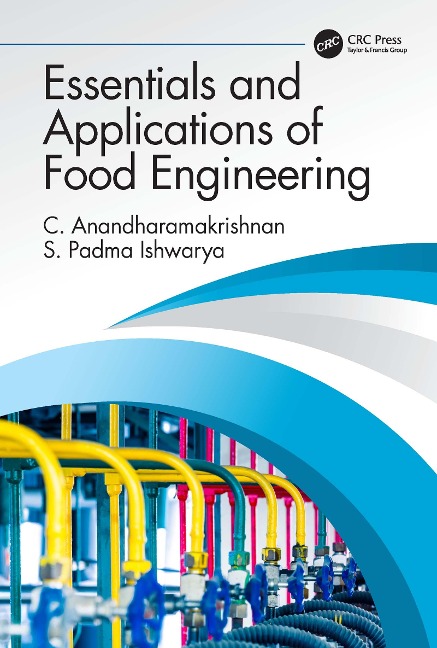
Essentials & Applications of Food Engineering provides a comprehensive understanding of food engineering operations and their practical and industrial utility. It presents pertinent case studies, solved numerical problems, and multiple choice questions in each chapter and serves as a ready reference for classroom teaching and exam preparations. The first part of this textbook contains the introductory topics on units and dimensions, material balance, energy balance, and fluid flow. The second part deals with the theory and applications of heat and mass transfer, psychrometry, and reaction kinetics. The subsequent chapters of the book present the heat and mass transfer operations such as evaporation, drying, refrigeration, freezing, mixing, and separation. The final section focuses on the thermal, non-thermal, and nanotechnology-based novel food processing techniques, 3D food printing, active and intelligent food packaging, and fundamentals of CFD modeling. Features - Features 28 case studies to provide a substantial understanding of the practical and industrial applications of various food engineering operations - Includes 178 solved numerical problems and 285 multiple choice questions - Highlights the application of mass balance in food product traceability and the importance of viscosity measurement in a variety of food products - Provides updated information on novel food processing techniques such as cold plasma, 3D food printing, nanospray drying, electrospraying, and electrospinning The textbook is designed for undergraduate and graduate students pursuing Food Technology and Food Process Engineering courses. This book would also be of interest to course instructors and food industry professionals.
C. Anandharamakrishnan is currently Principal Scientist in the Food Engineering Department of the CSIR - Central Food Technological Research Institute, Mysore, India. He completed his Doctoral degree in Chemical Engineering (2004-2008) from Loughborough University, United Kingdom. For his doctoral thesis, he has worked on the Experimental and Computational Fluid Dynamics studies on spray-freeze-drying and spray drying of proteins. He has published more than 50 articles in peer reviewed international journals, 9 National and International patents, 3 books and 6 book chapters. He has expertise in the fields of micro and nanoencapsulation of food bioactive compounds by spray drying and electrospraying/electrospinning techniques and computational modeling of bread baking, spray drying and spray-freeze-drying. He is an editor of Journal of Food Science and Technology. Padma Ishwarya S., Phd, is Research Fellow of the Food Engineering Department, CSIR-Central Food Technological Research Institute, Mysore, India, where she received her PhD in food engineering. With C. Anandharamakrishnan, she edited a book for John Wiley & Sons titled Spray Drying Techniques for Food Ingredient Encapsulation. She has published 4 book chapters and 8 journal articles. Her industry experience includes working with Nestle India Ltd., where she was the Finished goods coordinator for quality assurance of coffee & beverages.
Preface Acknowledgments Authors 1. Units and Dimensions 2. Material Balance 3. Energy Balance 4. Fluid Flow 5. Heat Transfer 6. Mass Transfer 7. Psychrometry 8. Fundamentals and Applications of Reaction Kinetics 9. Evaporation 10. Drying 11. Refrigeration and Freezing of Foods 12. Mixing and Separation Processes 13. Thermal Processing of Foods 14. Nonthermal and Alternative Food Processing Technologies 15. Food Packaging 16. Fundamentals of Computational Fluid Dynamics Modeling and Its Applications in Food Processing Appendix I: Saturated Water and Steam (Temperature) Tables Appendix II: Saturated Water and Steam (Pressure) Tables Appendix III: Specific Volume of Superheated Steam Appendix IV: Specific Enthalpy of Superheated Steam Appendix V: Specific Entropy of Superheated Steam Index
Dieses eBook wird im PDF-Format geliefert und ist mit einem Adobe Kopierschutz (DRM) versehen. Sie können dieses eBook mit allen Geräten lesen, die das PDF-Format und den Adobe Kopierschutz (DRM) unterstützen.
Zum Beispiel mit den folgenden Geräten:
• tolino Reader
Laden Sie das eBook direkt über den Reader-Shop auf dem tolino herunter oder übertragen Sie das eBook auf Ihren tolino mit einer kostenlosen Software wie beispielsweise Adobe Digital Editions.
• Sony Reader & andere eBook Reader
Laden Sie das eBook direkt über den Reader-Shop herunter oder übertragen Sie das eBook mit der kostenlosen Software Sony READER FOR PC/Mac oder Adobe Digital Editions auf ein Standard-Lesegeräte mit epub- und Adobe DRM-Unterstützung.
• Tablets & Smartphones
Möchten Sie dieses eBook auf Ihrem Smartphone oder Tablet lesen, finden Sie hier unsere kostenlose Lese-App für iPhone/iPad und Android Smartphone/Tablets.
• PC & Mac
Lesen Sie das eBook direkt nach dem Herunterladen mit einer kostenlosen Lesesoftware, beispielsweise Adobe Digital Editions, Sony READER FOR PC/Mac oder direkt über Ihre eBook-Bibliothek in Ihrem Konto unter „Meine eBooks“ - „online lesen“.
Schalten Sie das eBook mit Ihrer persönlichen Adobe ID auf bis zu sechs Geräten gleichzeitig frei.
Bitte beachten Sie, dass die Kindle-Geräte das Format nicht unterstützen und dieses eBook somit nicht auf Kindle-Geräten lesbar ist.