Und dann auf "Zum Home-Bildschirm [+]".

Stöbern
genialokal zum Startbildschirm hinzufügen
Installieren Sie die genialokal App auf Ihrem Startbildschirm für einen schnellen Zugriff und eine komfortable Nutzung.
Installieren Sie die genialokal App auf Ihrem Startbildschirm für einen schnellen Zugriff und eine komfortable Nutzung.
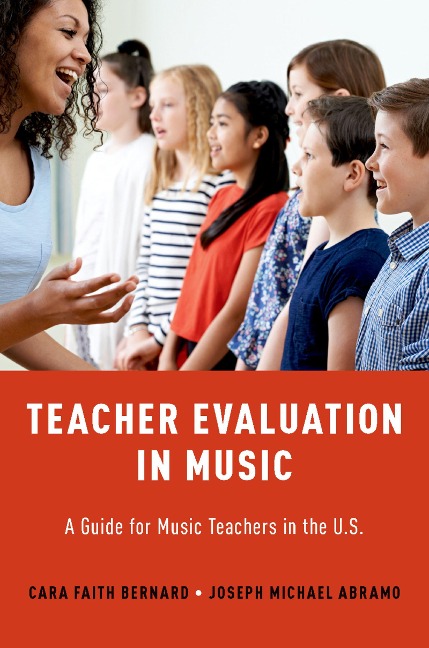
Teacher Evaluation in Music: A Guide for Music Teachers in the U. S. aims to help music teachers navigate the controversial terrain of teacher evaluation. Rather than entering the debate on policy divorced from practice, this book is intended as a pragmatic approach to help music teachers to thrive within teacher evaluation systems and as a way to improve practice. Using Shulman's concept of content knowledge, general pedagogical knowledge, and pedagogical content knowledge, this book strives to help music teachers find a balance between advocating for themselves and their programs and for using teacher evaluation to improve their teaching. The book covers history of policy and law of teacher evaluation and the competing uses of teacher evaluation to rate teachers or as a professional development tool. The descriptions of policies, laws, and competing uses are approached in a way to help music teachers use teacher evaluation for their benefit to grow as professionals. This book has chapters devoted to giving detailed and specific strategies in key areas that research has suggested music teachers struggle to implement: questioning, literacy, differentiated instruction, and assessment. Complimenting these key areas are sample lesson plans which apply the strategies of questioning, differentiation, literacy, and assessment discussed in each chapter. These lessons serve as a resource and guide for teachers to develop their own lessons and improve their practice. The final chapter gives guidance on how music teachers may talk to administrators and evaluators to make teacher evaluation productive. Through these detailed descriptions of understanding teacher evaluation, talking to evaluators, and improving practice, music teachers may not just survive but thrive in these systems of accountability.
Cara Faith Bernard is Assistant Clinical Professor of Music Education at the University of Connecticut in the Neag School of Education, where she teaches courses in choral and elementary methods, curriculum, and supervises student teaching. Cara began her career as a high school music teacher in New York City, teaching chorus, general music, and piano. Her research areas include music teacher evaluation and policy, teacher education, urban music education, diversity, equity, and access. Joseph Michael Abramo is an Assistant Professor of Music Education in the Neag School of Education at the University of Connecticut, where he teaches undergraduate courses in instrumental methods and graduate courses in the theoretical foundations of music education and popular music and informal learning, and supervises student teachers. His areas of research include popular music, music teacher education, gender, cultural studies, race and multiculturalism, disability studies, poststructuralism, and constructivism.
Foreword by Susan Wharton Conkling Acknowledgements Introduction: Teacher Evaluation and Music Teachers Chapter 1: Teacher Evaluatoin: History, Policy, and Practice Chapter 2: Developing a Mindset to Succeed in Teacher Evaluation Systems Chapter 3: Questioning Chapter 4: Differentiation Chapter 5: Literacy Chapter 6: Assessment Chapter 7: Talking to Evaluators Postlude References Index
Dieses eBook wird im PDF-Format geliefert und ist mit einem Adobe Kopierschutz (DRM) versehen. Sie können dieses eBook mit allen Geräten lesen, die das PDF-Format und den Adobe Kopierschutz (DRM) unterstützen.
Zum Beispiel mit den folgenden Geräten:
• tolino Reader
Laden Sie das eBook direkt über den Reader-Shop auf dem tolino herunter oder übertragen Sie das eBook auf Ihren tolino mit einer kostenlosen Software wie beispielsweise Adobe Digital Editions.
• Sony Reader & andere eBook Reader
Laden Sie das eBook direkt über den Reader-Shop herunter oder übertragen Sie das eBook mit der kostenlosen Software Sony READER FOR PC/Mac oder Adobe Digital Editions auf ein Standard-Lesegeräte mit epub- und Adobe DRM-Unterstützung.
• Tablets & Smartphones
Möchten Sie dieses eBook auf Ihrem Smartphone oder Tablet lesen, finden Sie hier unsere kostenlose Lese-App für iPhone/iPad und Android Smartphone/Tablets.
• PC & Mac
Lesen Sie das eBook direkt nach dem Herunterladen mit einer kostenlosen Lesesoftware, beispielsweise Adobe Digital Editions, Sony READER FOR PC/Mac oder direkt über Ihre eBook-Bibliothek in Ihrem Konto unter „Meine eBooks“ - „online lesen“.
Schalten Sie das eBook mit Ihrer persönlichen Adobe ID auf bis zu sechs Geräten gleichzeitig frei.
Bitte beachten Sie, dass die Kindle-Geräte das Format nicht unterstützen und dieses eBook somit nicht auf Kindle-Geräten lesbar ist.