Und dann auf "Zum Home-Bildschirm [+]".

Stöbern
genialokal zum Startbildschirm hinzufügen
Installieren Sie die genialokal App auf Ihrem Startbildschirm für einen schnellen Zugriff und eine komfortable Nutzung.
Installieren Sie die genialokal App auf Ihrem Startbildschirm für einen schnellen Zugriff und eine komfortable Nutzung.
Ihr gewünschter Artikel ist in 0 Buchhandlungen vorrätig - wählen Sie hier eine Buchhandlung in Ihrer Nähe aus:

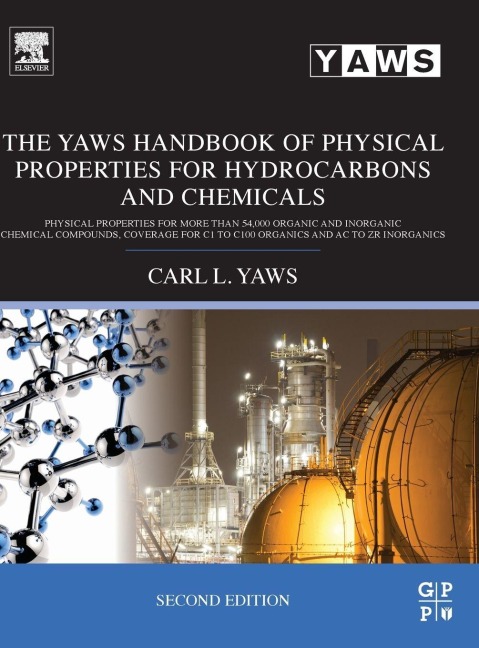
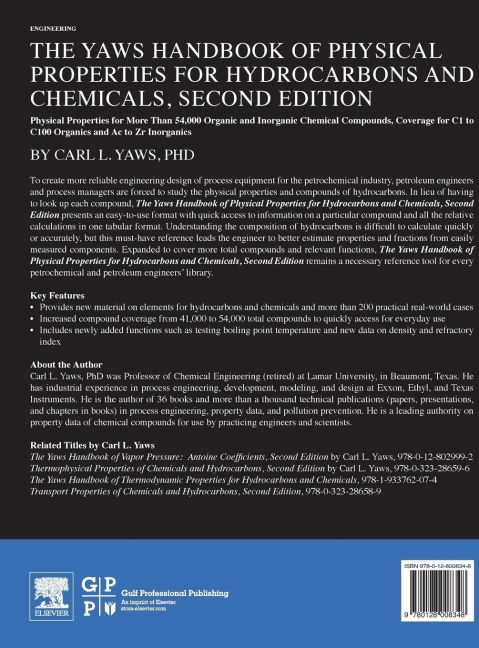
Refineries and petrochemical engineers today are accepting more unconventional feedstocks such as heavy oil and shale, causing unique challenges on the processing side of the business. To create more reliable engineering design of process equipment for the petrochemical industry, petroleum engineers and process managers are forced to study the physical properties and compounds of these particular hydrocarbons. Instead of looking up each compound's information, The Yaws Handbook of Physical Properties for Hydrocarbons and Chemicals, Second Edition presents an easy-to-use format with rapid access to search for the particular compound and understand all the complex calculations in one tabular format. Understanding the composition of hydrocarbons is not easy to calculate quickly or accurately, but this must-have reference leads the engineer to better estimated properties and fractions from easily measured components. Expanded to cover more total compounds and relevant functions, The Yaws Handbook of Physical Properties for Hydrocarbons and Chemicals, Second Edition remains a necessary reference tool for every petrochemical and petroleum engineers' library.
Carl L. Yaws, PhD was Professor of Chemical Engineering (retired) at Lamar University, in Beaumont, TX. He has industrial experience in process engineering, development, modeling, and design at Exxon, Ethyl, and Texas Instruments. He is the author of 36 books and more than 1,000 technical publications (papers, presentations, and chapters in books) in process engineering, property data, and pollution prevention. He is a leading authority on property data of chemical compounds for use by practicing engineers and scientists.
1. Physical Properties - Organic Compounds 2. Physical Properties - Inorganic Compounds3. Properties - Water4. Properties - Air