Und dann auf "Zum Home-Bildschirm [+]".

Stöbern
genialokal zum Startbildschirm hinzufügen
Installieren Sie die genialokal App auf Ihrem Startbildschirm für einen schnellen Zugriff und eine komfortable Nutzung.
Installieren Sie die genialokal App auf Ihrem Startbildschirm für einen schnellen Zugriff und eine komfortable Nutzung.
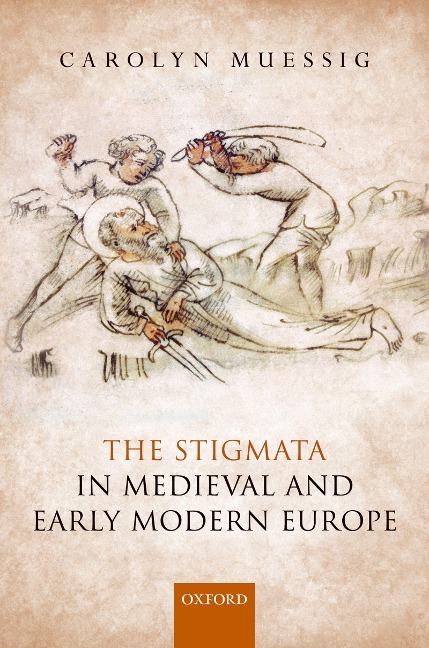
Francis of Assisi's reported reception of the stigmata on Mount La Verna in 1224 is almost universally considered to be the first documented account of an individual miraculously and physically receiving the five wounds of Christ. The early thirteenth-century appearance of this miracle, however, is not as unexpected as it first seems. Interpretations of Galatians 6:17--I bear the marks of the Lord Jesus Christ in my body--had been circulating since the early Middle Ages in biblical commentaries. These works perceived those with the stigmata as metaphorical representations of martyrs bearing the marks of persecution in order to spread the teaching of Christ in the face of resistance. By the seventh century, the meaning of Galatians 6:17 had been appropriated by bishops and priests as a sign or mark of Christ that they received invisibly at their ordination. Priests and bishops came to be compared to soldiers of Christ, who bore the brand (stigmata) of God on their bodies, just like Roman soldiers who were branded with the name of their emperor. By the early twelfth century, crusaders were said to bear the actual marks of the passion in death and even sometimes as they entered into battle. The Stigmata in Late Medieval and Early Modern Europe traces the birth and evolution of religious stigmata and particularly of stigmatic theology, as understood through the ensemble of theological discussions and devotional practices. Carolyn Muessig assesses the role stigmatics played in medieval and early modern religious culture, and the way their contemporaries reacted to them. The period studied covers the dominant discourse of stigmatic theology: that is, from Peter Damian's eleventh-century theological writings to 1630 when the papacy officially recognised the authenticity of Catherine of Siena's stigmata.
Carolyn Muessig is Professor of Medieval Religion and Co-Director at the Centre for Medieval Studies at the University of Bristol. She is a medievalist, specializing on the devotional practices and beliefs of late medieval Europe. Her interest in this area began during her studies for a BA in History from the State University of New York at Buffalo. Since 2001 she has been series co-editor (with George Ferzoco) of Routledge Studies in Medieval Religion and Culture. Her publications include A Companion to Catherine of Siena (co-edited with George Ferzoco and Beverly Mayne Kienzle; 2011), Envisaging Heaven in the Middle Age (co-edited with Ad Putter; 2007), and The Faces of Women in the Sermons of Jacques de Vitry (1999).
- List of Illustrations - Introduction: Christian Stigmatization - 1: Bearing the Stigmata: The Emergence of a Religious Ideal - 2: Francis of Assisi: A Paradigm Shift - 3: The mark of a saintly woman - 4: Expanding definitions and practices: a diversity of stigmatics, a diversity of responses - 5: The Reformation and Counter-Reformation: Feigners and Saints - Epilogue - Bibliography - Index
Dieses eBook wird im PDF-Format geliefert und ist mit einem Adobe Kopierschutz (DRM) versehen. Sie können dieses eBook mit allen Geräten lesen, die das PDF-Format und den Adobe Kopierschutz (DRM) unterstützen.
Zum Beispiel mit den folgenden Geräten:
• tolino Reader
Laden Sie das eBook direkt über den Reader-Shop auf dem tolino herunter oder übertragen Sie das eBook auf Ihren tolino mit einer kostenlosen Software wie beispielsweise Adobe Digital Editions.
• Sony Reader & andere eBook Reader
Laden Sie das eBook direkt über den Reader-Shop herunter oder übertragen Sie das eBook mit der kostenlosen Software Sony READER FOR PC/Mac oder Adobe Digital Editions auf ein Standard-Lesegeräte mit epub- und Adobe DRM-Unterstützung.
• Tablets & Smartphones
Möchten Sie dieses eBook auf Ihrem Smartphone oder Tablet lesen, finden Sie hier unsere kostenlose Lese-App für iPhone/iPad und Android Smartphone/Tablets.
• PC & Mac
Lesen Sie das eBook direkt nach dem Herunterladen mit einer kostenlosen Lesesoftware, beispielsweise Adobe Digital Editions, Sony READER FOR PC/Mac oder direkt über Ihre eBook-Bibliothek in Ihrem Konto unter „Meine eBooks“ - „online lesen“.
Schalten Sie das eBook mit Ihrer persönlichen Adobe ID auf bis zu sechs Geräten gleichzeitig frei.
Bitte beachten Sie, dass die Kindle-Geräte das Format nicht unterstützen und dieses eBook somit nicht auf Kindle-Geräten lesbar ist.