Und dann auf "Zum Home-Bildschirm [+]".

Stöbern
genialokal zum Startbildschirm hinzufügen
Installieren Sie die genialokal App auf Ihrem Startbildschirm für einen schnellen Zugriff und eine komfortable Nutzung.
Installieren Sie die genialokal App auf Ihrem Startbildschirm für einen schnellen Zugriff und eine komfortable Nutzung.
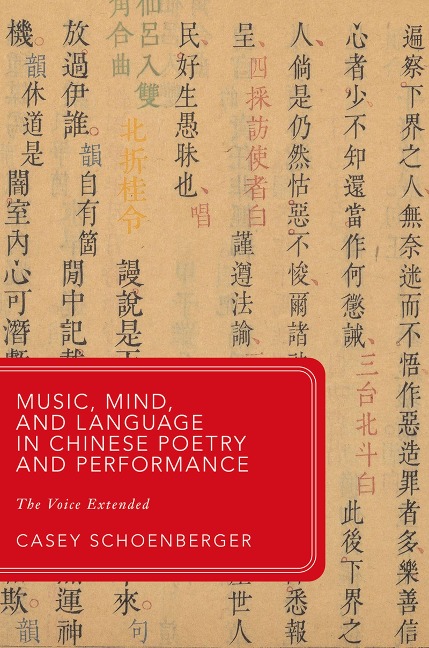
"Poetry puts intent into words; singing lengthens words"--this is one of the earliest Chinese comments on artistic expression. Poetic language extends the reach of a sentiment beyond the individual, and musicality extends the reach of poetic language, not only across a room, but across geography and generations. The "extended mind thesis" (EMT) views minds as extending beyond individual nervous systems to include material and social environments. Music, Mind, and Language in Chinese Poetry and Performance: The Voice Extended offers a comprehensive overview of the interwoven histories of traditional Chinese poetry and performing arts. It employs cognitive and quantitative methods such as EMT, and a database of over six thousand traditional melodies, to describe cyclical, continuous interactions between social minds and material artifacts. From the ancient Canon of Poetry to the song-lyrics (ci) of the late medieval period and the dramatic arias of Kun and Beijing operas, Casey Schoenberger introduces the rhythms, melodies, pronunciation, and grammatical stylistics of the major Chinese verse and performance traditions. In doing so, he gleans insights from cognitive neuroscience, digital humanities, musicology, and linguistics to explain not only the trajectory of Chinese arts, but also bigger phenomena, like vernacularisation and improvisation.
Casey Schoenberger completed a PhD in Chinese literature at Yale University in 2013. His research focuses on cognitive, comparative, digital, musicological, and linguistic approaches to East Asian literature and performing arts. He served for five years as Assistant Professor of Chinese Culture at the Hong Kong Polytechnic University, where he taught beginning and advanced courses for undergraduate and graduate students in English and in Mandarin. He is currently a lecturer in Rice University's Department of Transnational Asian Studies, where he teaches courses on East Asian literature and performing arts in a global context.
- Acknowledgments - List of Illustrations - Chinese Dynastic Periods - Note on Conventions - Introduction: Creative Cycles of the Extended Mind - 1: The Death of Rhythm - 2: The Birth of Melody - 3: Languages without Native Speakers - 4: Music without Composers - Coda: Lively Rhythms of Equal Lines, Ever-Present Past - Glossary and Abbreviations - Works Cited - Index
Dieses eBook wird im PDF-Format geliefert und ist mit einem Adobe Kopierschutz (DRM) versehen. Sie können dieses eBook mit allen Geräten lesen, die das PDF-Format und den Adobe Kopierschutz (DRM) unterstützen.
Zum Beispiel mit den folgenden Geräten:
• tolino Reader
Laden Sie das eBook direkt über den Reader-Shop auf dem tolino herunter oder übertragen Sie das eBook auf Ihren tolino mit einer kostenlosen Software wie beispielsweise Adobe Digital Editions.
• Sony Reader & andere eBook Reader
Laden Sie das eBook direkt über den Reader-Shop herunter oder übertragen Sie das eBook mit der kostenlosen Software Sony READER FOR PC/Mac oder Adobe Digital Editions auf ein Standard-Lesegeräte mit epub- und Adobe DRM-Unterstützung.
• Tablets & Smartphones
Möchten Sie dieses eBook auf Ihrem Smartphone oder Tablet lesen, finden Sie hier unsere kostenlose Lese-App für iPhone/iPad und Android Smartphone/Tablets.
• PC & Mac
Lesen Sie das eBook direkt nach dem Herunterladen mit einer kostenlosen Lesesoftware, beispielsweise Adobe Digital Editions, Sony READER FOR PC/Mac oder direkt über Ihre eBook-Bibliothek in Ihrem Konto unter „Meine eBooks“ - „online lesen“.
Schalten Sie das eBook mit Ihrer persönlichen Adobe ID auf bis zu sechs Geräten gleichzeitig frei.
Bitte beachten Sie, dass die Kindle-Geräte das Format nicht unterstützen und dieses eBook somit nicht auf Kindle-Geräten lesbar ist.