Und dann auf "Zum Home-Bildschirm [+]".

Stöbern
genialokal zum Startbildschirm hinzufügen
Installieren Sie die genialokal App auf Ihrem Startbildschirm für einen schnellen Zugriff und eine komfortable Nutzung.
Installieren Sie die genialokal App auf Ihrem Startbildschirm für einen schnellen Zugriff und eine komfortable Nutzung.
Ihr gewünschter Artikel ist in 0 Buchhandlungen vorrätig - wählen Sie hier eine Buchhandlung in Ihrer Nähe aus:

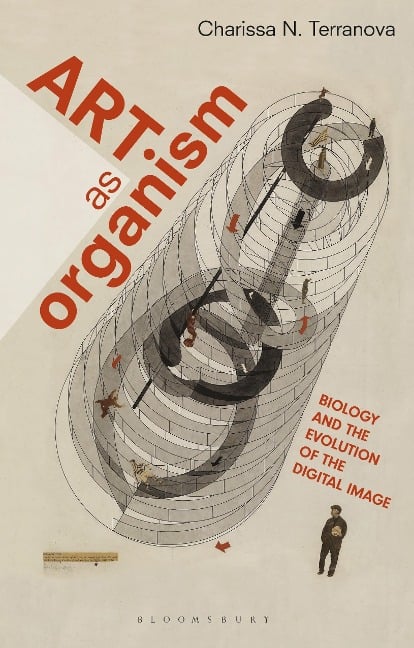
In this groundbreaking book, Charissa Terranova unearths a forgotten narrative of modernism, which charts the influence that biology, General Systems Theory and cybernetics had on art in the twentieth century. From kinetic and interactive art to early computer art and installations spanning an entire city, she shows that the digital image was a rich and expansive artistic medium of modernism. This book links the emergence of the digital image to the dispersion of biocentric aesthetic philosophies developed by Bauhaus pedagogue Laszlo Moholy-Nagy, from 1920s Berlin to the Massachusetts Institute of Technology in the 1970s. It uncovers seminal but overlooked references to biology, the organism, feedback loops, emotions and the Gestalt, along with an intricate genealogy of related thinkers across disciplines. Terranova interprets anew major art movements such as the Bauhaus, Op Art and Experiments in Art and Technology (E.A.T.), by referencing contemporary insights from architects, embryologists, electrical engineers and computer scientists, among others.This book reveals the complex connections between visual culture, science and technology that comprise the deep history of twentieth-century art.
Charissa N. Terranova is Margaret M. McDermott Distinguished Chair in Art and Aesthetic Studies and Professor of Art and Architectural History at the University of Texas at Dallas, USA. She researches the relationship between culture and science, focusing on the history of evolutionary theory and biology in art and architecture. She is author of Art as Organism: Biology and the Evolution of the Digital Image (2016) and Automotive Prosthetic: Technological Mediation and the Car in Conceptual Art (2014), and co-editor of The Routledge Companion to Biology in Art and Architecture (2016), and the Biotechne series with Meredith Tromble.
Preface Introduction - The Haptic Unconscious: László Moholy-Nagy's Organismic Aesthetics Chapter 1 - Bauhaus Biology: The Beginnings of Biofunctionalism Chapter 2 - Gyorgy Kepes and the Light image as Bio-Image: Pop Art-and-Science, Integration, and Distribution Chapter 3 - The Distributed Image of the City: The Collaboration between Gyorgy Kepes and Kevin Lynch Chapter 4 - Wet Perception: Op Art and New Tendencies, between the Gestalt and Ecological Psychology Chapter 5 - The Digital Image in Art: The Generative Turn, Computational and Biological