Und dann auf "Zum Home-Bildschirm [+]".

Stöbern
genialokal zum Startbildschirm hinzufügen
Installieren Sie die genialokal App auf Ihrem Startbildschirm für einen schnellen Zugriff und eine komfortable Nutzung.
Installieren Sie die genialokal App auf Ihrem Startbildschirm für einen schnellen Zugriff und eine komfortable Nutzung.


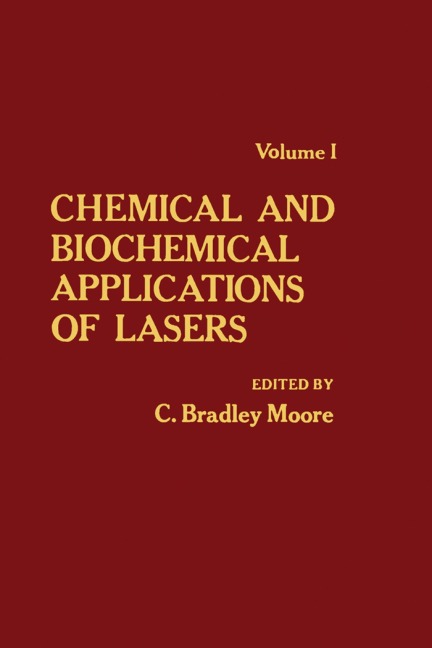
Chemical and Biochemical Applications of Lasers aims to give a general introduction to as well as an evaluation of the successful application of lasers in various areas, especially in the fields of chemistry and biochemistry. The book begins with a basic knowledge of general laser physics and the types of lasers, then moves on to more specific topics that include the Raman spectra of biological materials; laser spectroscopy of gas phase ions; and optical analogs of magnetic spectroscopy. The text also discusses the molecular beams; the energy flow in polyatomic molecules; and the different properties of molecules in relation to electronical excitation and quasi-electric light scattering. Studies of different chemical reactions are also included. The text is recommended for chemists, biochemists, and chemical physicists who want to know more about lasers and its applications to their respective fields. The book will also be helpful for those concerned with the chemical reactions lasers can bring about and for those who want to conduct further studies regarding laser uses.
List of ContributorsPreface1. Laser Sources Introduction I. General Laser Physics II. Commercial Gas Lasers III. Solid State Lasers IV. Dye Lasers V. Chemical and Molecular Lasers VI. Semiconductor Lasers VII. Nonlinear Operations References2. Raman Spectra of Biological Materials I. Introduction II. Vibrational Spectra III. Raman Spectra of Different Classes of Biological Materials IV. Resonance Raman Spectra of Biological Chromophores V. Concluding Remarks References3. Laser Spectroscopy of Gas Phase Ions I. Introduction II. Experimental Techniques III. Atomic Negative Ion Photodetachment IV. Molecular Negative Ion Photodetachment V. Multiphoton Photodetachment VI. Photodissociation of Positive Ions VII. Future Developments References4. Optical Analogs of Magnetic Resonance Spectroscopy I. Introduction II. The Classical Description of Nuclear Magnetic Resonance III. Geometric Representation of an Optical Two-Level System IV. Optical Nutation, Photon Echoes, and Other Coherent Optical Phenomena V. Double Resonance Spectroscopy VI. Other Applications VII. Future Possibilities References5. Molecular Beams I. Introduction II. Interaction of Light with a Beam III. Beam-Laser Accomplishments IV. Speculation V. Summary References6. Energy Flow in Polyatomic Molecules I. Introduction II. Infrared Laser-Induced Fluorescence III. Metastable Vibrational Species IV. Intermode Vibrational Energy Transfer V. Laser-Laser Double Resonance Techniques VI. Time-Resolved Thermal Lensing Techniques VII. Future Applications and Possibilities VIII. Conclusions References7. Stimulation of Chemical Reactions with Laser Radiation I. Introduction II. Photochemical Effect of Infrared Laser Radiation: Theoretical Aspects of the Problem III. Photochemical Effect of Infrared Laser Radiation: Experimental Results IV. Unsolved Problems and Potential Applications References8. Dynamic Properties of Electronically Excited Molecules I. Introduction II. Photophysical Processes III. Photochemical Processes References9. The Use of Quasi-Elastic Light Scattering for the Determination of the Collective Properties of Molecules I. Introduction II. Noble Gases and Spherical Top Molecules III. Anisotropic Molecules IV. Macromolecules and Optical Rotation References10. Kinetic Studies of Very Rapid Chemical Reactions in Solution I. Introduction II. The Laser Temperature-Jump Technique III. Summary of Some Systems Studied by the Raman Laser Temperature-Jump Apparatus IV. Future Laser Temperature-Jump Apparatus Improvements References11. Rapid Reactions in Photobiology I. General Introduction II. Photosynthesis III. Vision ReferencesAuthor IndexSubject Index