Und dann auf "Zum Home-Bildschirm [+]".

Stöbern
genialokal zum Startbildschirm hinzufügen
Installieren Sie die genialokal App auf Ihrem Startbildschirm für einen schnellen Zugriff und eine komfortable Nutzung.
Installieren Sie die genialokal App auf Ihrem Startbildschirm für einen schnellen Zugriff und eine komfortable Nutzung.
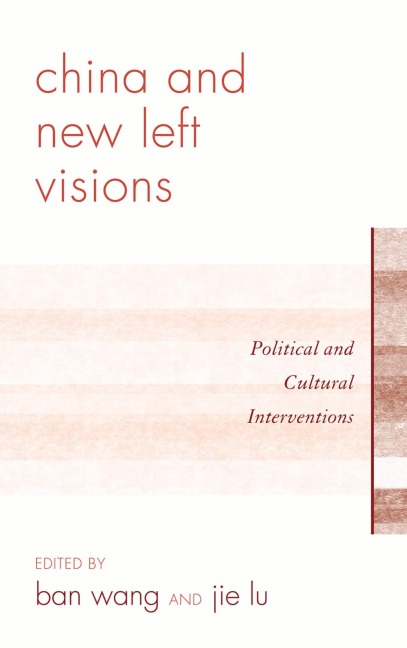
Against the dire consequences of China's market development, a new intellectual force of the New Left has come on the scene since the mid 1990s. New Left intellectuals debate the issues of social justice, distributive equality, markets, state intervention, the socialist legacy, and sustainable development. Against the neoliberal trends of free markets, liberal democracy, and consumerism, New Left critics launched a critique in hopes of seeking an alternative to global capitalism. This volume takes a comprehensive look at China's New Left in intellectual, cultural, and literary manifestations. The writers place the New Left within a global anti-hegemonic movement and the legacy of the Cold War. They discover grassroots literature that portrays the plight and resilience of the downtrodden and disadvantaged. With historical visions the writers also shed light on the present by drawing on the socialist past.
Ban Wang is the William Haas Professor in Chinese Studies at Stanford University and the Yangtze River Chair Professor at East China Normal University in Shanghai. He is the author of Illuminations from the Past: Trauma, Memory, and History in Modern Cinema (2004), and The Sublime Figure of History: Aesthetics and Politics in Twentieth Century China (1997). He edited Words and Their Stories: Essays on the Language of the Chinese Revolution (2010) and co-edited The Image of China in the American Classroom: Personal Reflections by Chinese Scholars in the US (2006), and Trauma and Cinema: Cross-Cultural Explorations (2004). He has published numerous articles in the fields of Chinese literature and film, aesthetics and comparative literature. Jie Lu is professor of Chinese studies & film studies at the University of the Pacific. She is the author of Dismantling Time: Chinese Literature in the Age of Globalization (2005) and has edited: China's Literature and Cultural Scenes at the Turn of the 21st Century (2008); "Writing against Spectacular Reality: Cultural Intervention in China and Taiwan," Journal of Contemporary China (2008); "New Literary and Culture Scene in Contemporary China," Journal of Contemporary China (2003 & 2004); and "Chinese Literature in the Post-Mao China," American Journal of Chinese Studies (1998).
Acknowledgments
Introduction: China and New Left Critique by Ban Wang and Jie Lu
Part I: Geopolitics and New Left Perspectives
1. Back to the Future: Contemporary China in the Perspective of Its Past, Circa 1980 by Arif Dirlik
2. The Geopolitics of the New Left in China by Lisa Rofel
3. The Battle for Chinese Discourse and the Rise of the Chinese New Left: Toward a Postcolonial Politics of Knowledge by Daniel Vukovich
4. What Is Political Theater?: A Critique of Performance Studies by Ban Wang
Part II: New Left Literature in China
5. Internationale as Specter: Na'er, "Subaltern Literature," and Contemporary China's "Left Bank" by Xueping Zhong
6. Constructing Agency: Challenges and Possibilities in Chinese New Left Literature by Jie Lu
7. Toward a New Leftist Ecocriticism in Postsocialist China: Reading the "Poetry of Migrant Workers" as Ecopoetry by Haomin Gong
8. The Rise of the Short-short Genre by Aili Mu
Part III: Rethinking Socialism and Market Reform
9. The Road to Revival: A "Red" Classic or a "Black" Revisionist Epic in Praise of a Postsocialist China by Xiaomei Chen
10. A New Narrative of Development in Chinese Television Media Representations of Africa
11. Redistribution of the Sensible in Neoliberal China: Real Estate, Cinema, and Aesthetics by Hai Ren
Dieses eBook wird im PDF-Format geliefert und ist mit einem Adobe Kopierschutz (DRM) versehen. Sie können dieses eBook mit allen Geräten lesen, die das PDF-Format und den Adobe Kopierschutz (DRM) unterstützen.
Zum Beispiel mit den folgenden Geräten:
• tolino Reader
Laden Sie das eBook direkt über den Reader-Shop auf dem tolino herunter oder übertragen Sie das eBook auf Ihren tolino mit einer kostenlosen Software wie beispielsweise Adobe Digital Editions.
• Sony Reader & andere eBook Reader
Laden Sie das eBook direkt über den Reader-Shop herunter oder übertragen Sie das eBook mit der kostenlosen Software Sony READER FOR PC/Mac oder Adobe Digital Editions auf ein Standard-Lesegeräte mit epub- und Adobe DRM-Unterstützung.
• Tablets & Smartphones
Möchten Sie dieses eBook auf Ihrem Smartphone oder Tablet lesen, finden Sie hier unsere kostenlose Lese-App für iPhone/iPad und Android Smartphone/Tablets.
• PC & Mac
Lesen Sie das eBook direkt nach dem Herunterladen mit einer kostenlosen Lesesoftware, beispielsweise Adobe Digital Editions, Sony READER FOR PC/Mac oder direkt über Ihre eBook-Bibliothek in Ihrem Konto unter „Meine eBooks“ - „online lesen“.
Schalten Sie das eBook mit Ihrer persönlichen Adobe ID auf bis zu sechs Geräten gleichzeitig frei.
Bitte beachten Sie, dass die Kindle-Geräte das Format nicht unterstützen und dieses eBook somit nicht auf Kindle-Geräten lesbar ist.