Und dann auf "Zum Home-Bildschirm [+]".

Stöbern
genialokal zum Startbildschirm hinzufügen
Installieren Sie die genialokal App auf Ihrem Startbildschirm für einen schnellen Zugriff und eine komfortable Nutzung.
Installieren Sie die genialokal App auf Ihrem Startbildschirm für einen schnellen Zugriff und eine komfortable Nutzung.
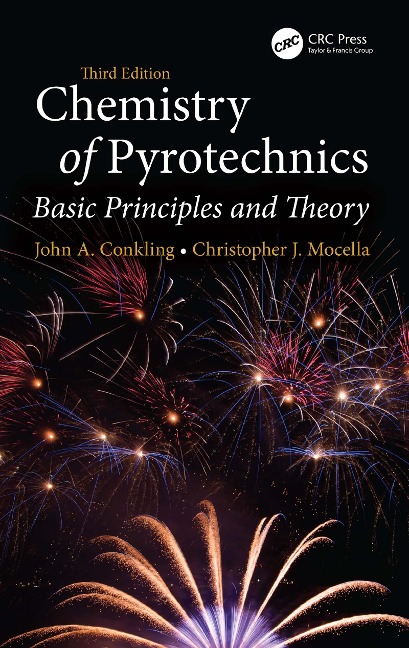
This book provides chemists with technical insight on pyrotechnics and explosives. It emphasizes basic chemical principles and practical, hands-on knowledge in the preparation of energetic materials. It examines the interactions between and adaptations of pyrotechnics to changing technology in areas such as obscuration science and low-signature flame emission. The updated third edition discusses chemical and pyrotechnic principles, components of high-energy materials, elements of ignition, propagation, and sensitivity. It offers heat compositions, including ignition mixes, delays, thermites, and propellants and investigates the production of smoke and sound as well as light and color.
Dr. John A. Conkling received in bachelor's of science degree from Washington College in Chestertown, MD in 1965 and his Ph.D. in chemistry from Johns Hopkins University in 1969. Dr. Conkling returned to Washington College as a chemistry professor and colleague of Dr. Joseph McLain, who at the time was studying energetic materials and pyrotechnics, which Dr. Conkling began to study for his career. As former executive director and technical director of the American Pyrotechnics Association, Dr. Conkling is widely regarded as one of the world's foremost experts in pyrotechnics. Dr. Conkling conducted The Summer Pyrotechnic Seminar at Washington College for 29 years and is the original author of Chemistry of Pyrotechnics: Basic Principles and Theory in 1985. Dr. Conkling retired from Washington College in 2012 and was awarded the Alumni Service Award in 2013. Dr. Conkling currently splits his time between Chestertown and Texas to be with his family. Chris Mocella received his bachelor's of science degree in chemistry from Washington College in Chestertown, MD in 2001, having studied as a research associate under Dr. John Conkling. Chris continued to work with Dr. Conkling at his Summer Pyrotechnics Seminar series and assisted with the second edition of the Chemistry of Pyrotechnics text. Following graduate studies in chemistry at the University of Virginia, Chris took a position as a chemist with the U.S. federal government where he continues his career today. Chris lives with his wife and son near Annapolis, MD.
Introduction. Basic Chemical Principles. Components of High-Energy Mixtures. Pyrotechnic Principles. Ignition and Propagation. Sensitivity. Heat Compositions. Color and Light Production. Smoke and Sound.
Dieses eBook wird im PDF-Format geliefert und ist mit einem Adobe Kopierschutz (DRM) versehen. Sie können dieses eBook mit allen Geräten lesen, die das PDF-Format und den Adobe Kopierschutz (DRM) unterstützen.
Zum Beispiel mit den folgenden Geräten:
• tolino Reader
Laden Sie das eBook direkt über den Reader-Shop auf dem tolino herunter oder übertragen Sie das eBook auf Ihren tolino mit einer kostenlosen Software wie beispielsweise Adobe Digital Editions.
• Sony Reader & andere eBook Reader
Laden Sie das eBook direkt über den Reader-Shop herunter oder übertragen Sie das eBook mit der kostenlosen Software Sony READER FOR PC/Mac oder Adobe Digital Editions auf ein Standard-Lesegeräte mit epub- und Adobe DRM-Unterstützung.
• Tablets & Smartphones
Möchten Sie dieses eBook auf Ihrem Smartphone oder Tablet lesen, finden Sie hier unsere kostenlose Lese-App für iPhone/iPad und Android Smartphone/Tablets.
• PC & Mac
Lesen Sie das eBook direkt nach dem Herunterladen mit einer kostenlosen Lesesoftware, beispielsweise Adobe Digital Editions, Sony READER FOR PC/Mac oder direkt über Ihre eBook-Bibliothek in Ihrem Konto unter „Meine eBooks“ - „online lesen“.
Schalten Sie das eBook mit Ihrer persönlichen Adobe ID auf bis zu sechs Geräten gleichzeitig frei.
Bitte beachten Sie, dass die Kindle-Geräte das Format nicht unterstützen und dieses eBook somit nicht auf Kindle-Geräten lesbar ist.