Und dann auf "Zum Home-Bildschirm [+]".

Stöbern
genialokal zum Startbildschirm hinzufügen
Installieren Sie die genialokal App auf Ihrem Startbildschirm für einen schnellen Zugriff und eine komfortable Nutzung.
Installieren Sie die genialokal App auf Ihrem Startbildschirm für einen schnellen Zugriff und eine komfortable Nutzung.
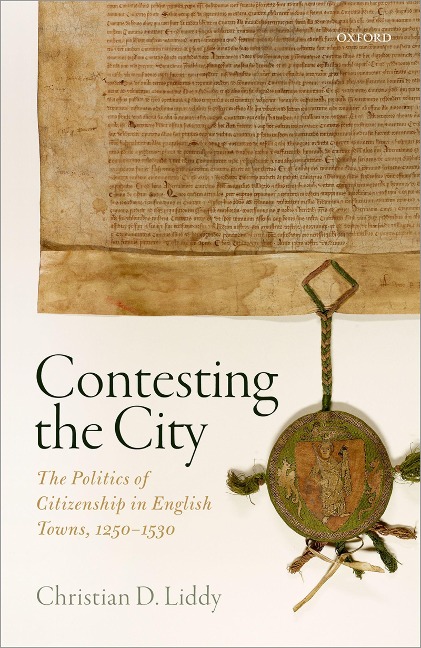
The political narrative of late medieval English towns is often reduced to the story of the gradual intensification of oligarchy, in which power was exercised and projected by an ever smaller ruling group over an increasingly subservient urban population. Contesting the City takes its inspiration not from English historiography, but from a more dynamic continental scholarship on towns in the southern Low Countries, Germany, and France. Its premise is that scholarly debate about urban oligarchy has obscured contemporary debate about urban citizenship. It identifies from the records of English towns a tradition of urban citizenship, which did not draw upon the intellectual legacy of classical models of the 'citizen'. This was a vernacular citizenship, which was not peculiar to England, but which was present elsewhere in late medieval Europe. It was a citizenship that was defined and created through action. There were multiple, and divergent, ideas about citizenship, which encouraged townspeople to make demands, to assert rights, and to resist authority. This volume exploits the rich archival sources of the five major towns in England - Bristol, Coventry, London, Norwich, and York - in order to present a new picture of town government and urban politics over three centuries. The power of urban governors was much more precarious than historians have imagined. Urban oligarchy could never prevail - whether ideologically or in practice - when there was never a single, fixed meaning of the citizen.
Christian D. Liddy has taught Medieval History at the University of Durham since 2002. His previous books are War, Politics and Finance in Late Medieval English Towns: Bristol, York and the Crown, 13501400 and The Bishopric of Durham in the Late Middle Ages: Lordship, Community and the Cult of St Cuthbert. He was the academic curator of Magna Carta and the Changing Face of Revolt, a major exhibition that was held in Durham in 2015 on the 800th anniversary of the charter and that explored the thin line between the citizen and the rebel.
- 1: Introduction - 2: Citizenship and Citizens - 3: Space: Boundaries - 4: Civic Time: Elections - 5: Communication: Sound and Sight - 6: Written Constitutions: Text and Object - 7: Conclusion
Dieses eBook wird im PDF-Format geliefert und ist mit einem Adobe Kopierschutz (DRM) versehen. Sie können dieses eBook mit allen Geräten lesen, die das PDF-Format und den Adobe Kopierschutz (DRM) unterstützen.
Zum Beispiel mit den folgenden Geräten:
• tolino Reader
Laden Sie das eBook direkt über den Reader-Shop auf dem tolino herunter oder übertragen Sie das eBook auf Ihren tolino mit einer kostenlosen Software wie beispielsweise Adobe Digital Editions.
• Sony Reader & andere eBook Reader
Laden Sie das eBook direkt über den Reader-Shop herunter oder übertragen Sie das eBook mit der kostenlosen Software Sony READER FOR PC/Mac oder Adobe Digital Editions auf ein Standard-Lesegeräte mit epub- und Adobe DRM-Unterstützung.
• Tablets & Smartphones
Möchten Sie dieses eBook auf Ihrem Smartphone oder Tablet lesen, finden Sie hier unsere kostenlose Lese-App für iPhone/iPad und Android Smartphone/Tablets.
• PC & Mac
Lesen Sie das eBook direkt nach dem Herunterladen mit einer kostenlosen Lesesoftware, beispielsweise Adobe Digital Editions, Sony READER FOR PC/Mac oder direkt über Ihre eBook-Bibliothek in Ihrem Konto unter „Meine eBooks“ - „online lesen“.
Schalten Sie das eBook mit Ihrer persönlichen Adobe ID auf bis zu sechs Geräten gleichzeitig frei.
Bitte beachten Sie, dass die Kindle-Geräte das Format nicht unterstützen und dieses eBook somit nicht auf Kindle-Geräten lesbar ist.