Und dann auf "Zum Home-Bildschirm [+]".

Stöbern
genialokal zum Startbildschirm hinzufügen
Installieren Sie die genialokal App auf Ihrem Startbildschirm für einen schnellen Zugriff und eine komfortable Nutzung.
Installieren Sie die genialokal App auf Ihrem Startbildschirm für einen schnellen Zugriff und eine komfortable Nutzung.

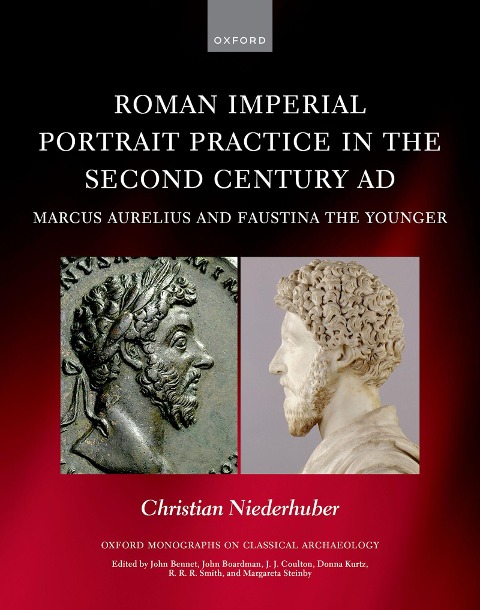
It has long been thought that imperial portrait types were officially commissioned to commemorate specific historical moments and that they were made available to both the mint and the marble workshops in Rome, assuming a close correspondence between portraits on coins and in the round. All of this, however, has never been clearly proven, nor has it been disproven by a close systematic examination of the evidence on a broad material basis by those scholars who have questioned it.
Through systematic case studies of Faustina the Younger's and Marcus Aurelius' portraits on coins and in sculpture, this book provides new insights into the functioning of the imperial image in Rome in the second century AD that move a difficult, much-discussed subject forward decisively. The new evidence presented here has made it necessary to adjust the established model; more flexibility is needed to describe the processes and practices behind the phenomenon of 'repeated' imperial portraits and how the imperial portrait worked in the mint of Rome and in the metropolitan marble workshops.
Christian Niederhuber, Lincoln College, University of Oxford
- 1: Introduction: Aims and Methods - 2: Faustina: Imperial Coins and Medallions - 3: Faustina: Marble Portraits - 4: Faustina: Discussion - 5: Marcus Aurelius: Imperial Coins and Medallions - 6: Marcus Aurelius: Marble Portraits - 7: Marcus Aurelius: Discussion - 8: Organization of the Mint of Rome and System of Production - 9: Metropolitan Marble Technology and Marble Workshops - 10: Imperial Portrait Practice: Norms and Models in the Second Century - 11: Conclusion - Appendix: Portrait Lists of Faustina and Marcus - Illustrations