Und dann auf "Zum Home-Bildschirm [+]".

Stöbern
genialokal zum Startbildschirm hinzufügen
Installieren Sie die genialokal App auf Ihrem Startbildschirm für einen schnellen Zugriff und eine komfortable Nutzung.
Installieren Sie die genialokal App auf Ihrem Startbildschirm für einen schnellen Zugriff und eine komfortable Nutzung.
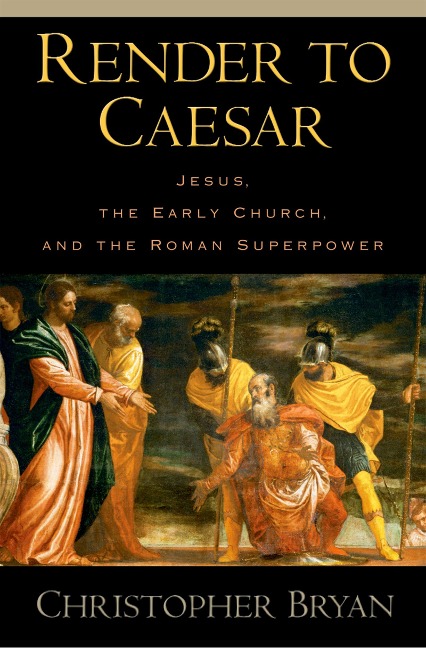
At the end of the 20th century, "postcolonialism" described the effort to understand the experience of those who had lived under colonial rule. This kind of thinking has inevitably brought about a reexamination of the rise of Christianity, which took place under Roman colonial rule. How did Rome look from the viewpoint of an ordinary Galilean in the first century of the Christian era? What should this mean for our own understanding of and relationship to Jesus of Nazareth? In the past, Jesus was often "depoliticized," treated as a religious teacher imparting timeless truths for all people. Now, however, many scholars see Jesus as a political leader whose goal was independence from Roman rule so that the people could renew their traditional way of life under the rule of God. In Render to Caesar, Christopher Bryan reexamines the attitude of the early Church toward imperial Rome. Choosing a middle road, he asserts that Jesus and the early Christians did indeed have a critique of the Roman superpower -- a critique that was broadly in line with the entire biblical and prophetic tradition. One cannot worship the biblical God, the God of Israel, he argues, and not be concerned about justice in the here and now. On the other hand, the biblical tradition does not challenge human power structures by attempting to dismantle them or replace them with other power structures. Instead, Jesus' message consistently confronts such structures with the truth about their origin and purpose. Their origin is that God permits them. Their purpose is to promote God's peace and justice. Power is understood as a gift from God, a gift that it is to be used to serve God's will and a gift that can be taken away by God when misused. Render to Caesar transforms our understanding of early Christians and their relationship to Rome and demonstrates how Jesus' teaching continues to challenge those who live under structures of government quite different from those that would have been envisaged by the authors of the New Testament.
Christopher Bryan is the C. K. Benedict Professor of New Testament at the School of Theology, University of the South.
Dieses eBook wird im PDF-Format geliefert und ist mit einem Adobe Kopierschutz (DRM) versehen. Sie können dieses eBook mit allen Geräten lesen, die das PDF-Format und den Adobe Kopierschutz (DRM) unterstützen.
Zum Beispiel mit den folgenden Geräten:
• tolino Reader
Laden Sie das eBook direkt über den Reader-Shop auf dem tolino herunter oder übertragen Sie das eBook auf Ihren tolino mit einer kostenlosen Software wie beispielsweise Adobe Digital Editions.
• Sony Reader & andere eBook Reader
Laden Sie das eBook direkt über den Reader-Shop herunter oder übertragen Sie das eBook mit der kostenlosen Software Sony READER FOR PC/Mac oder Adobe Digital Editions auf ein Standard-Lesegeräte mit epub- und Adobe DRM-Unterstützung.
• Tablets & Smartphones
Möchten Sie dieses eBook auf Ihrem Smartphone oder Tablet lesen, finden Sie hier unsere kostenlose Lese-App für iPhone/iPad und Android Smartphone/Tablets.
• PC & Mac
Lesen Sie das eBook direkt nach dem Herunterladen mit einer kostenlosen Lesesoftware, beispielsweise Adobe Digital Editions, Sony READER FOR PC/Mac oder direkt über Ihre eBook-Bibliothek in Ihrem Konto unter „Meine eBooks“ - „online lesen“.
Schalten Sie das eBook mit Ihrer persönlichen Adobe ID auf bis zu sechs Geräten gleichzeitig frei.
Bitte beachten Sie, dass die Kindle-Geräte das Format nicht unterstützen und dieses eBook somit nicht auf Kindle-Geräten lesbar ist.