Und dann auf "Zum Home-Bildschirm [+]".

Stöbern
genialokal zum Startbildschirm hinzufügen
Installieren Sie die genialokal App auf Ihrem Startbildschirm für einen schnellen Zugriff und eine komfortable Nutzung.
Installieren Sie die genialokal App auf Ihrem Startbildschirm für einen schnellen Zugriff und eine komfortable Nutzung.
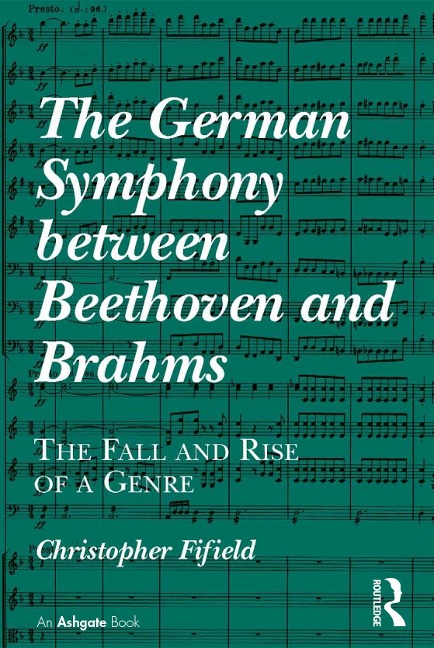
It was Carl Dahlhaus who coined the phrase 'dead time' to describe the state of the symphony between Schumann and Brahms. Christopher Fifield argues that many of the symphonies dismissed by Dahlhaus made worthy contributions to the genre. He traces the root of the problem further back to Beethoven's ninth symphony, a work which then proceeded to intimidate symphonists who followed in its composer's footsteps, including Schubert, Mendelssohn and Schumann. In 1824 Beethoven set a standard that then had to rise in response to more demanding expectations from both audiences and the musical press. Christopher Fifield, who has a conductor's intimacy with the repertory, looks in turn at the five decades between the mid-1820s and mid-1870s. He deals only with non-programmatic works, leaving the programme symphony to travel its own route to the symphonic poem. Composers who lead to Brahms (himself a reluctant symphonist until the age of 43 in 1876) are frequently dismissed as epigones of Beethoven, Mendelssohn and Schumann but by investigating their symphonies, Fifield reveals their respective brands of originality, even their own possible influence upon Brahms himself and in so doing, shines a light into a half-century of neglected nineteenth century German symphonic music.
Christopher Fifield is a conductor and music historian with particular interest in British and German nineteenth century orchestral music and opera. His pioneering books include biographies of Max Bruch and Hans Richter, Letters and Diaries of Kathleen Ferrier and a history of Ibbs & Tillett.
Contents: Preface; Introduction; The German symphony in the 1830s; The German symphony in the 1840s; Leipzig, its Gewandhaus and conservatoire; The German symphony in the 1850s; The German symphony in the 1860s; The German symphony 1870-1876; Select bibliography; Select discography; Index.
Dieses eBook wird im PDF-Format geliefert und ist mit einem Adobe Kopierschutz (DRM) versehen. Sie können dieses eBook mit allen Geräten lesen, die das PDF-Format und den Adobe Kopierschutz (DRM) unterstützen.
Zum Beispiel mit den folgenden Geräten:
• tolino Reader
Laden Sie das eBook direkt über den Reader-Shop auf dem tolino herunter oder übertragen Sie das eBook auf Ihren tolino mit einer kostenlosen Software wie beispielsweise Adobe Digital Editions.
• Sony Reader & andere eBook Reader
Laden Sie das eBook direkt über den Reader-Shop herunter oder übertragen Sie das eBook mit der kostenlosen Software Sony READER FOR PC/Mac oder Adobe Digital Editions auf ein Standard-Lesegeräte mit epub- und Adobe DRM-Unterstützung.
• Tablets & Smartphones
Möchten Sie dieses eBook auf Ihrem Smartphone oder Tablet lesen, finden Sie hier unsere kostenlose Lese-App für iPhone/iPad und Android Smartphone/Tablets.
• PC & Mac
Lesen Sie das eBook direkt nach dem Herunterladen mit einer kostenlosen Lesesoftware, beispielsweise Adobe Digital Editions, Sony READER FOR PC/Mac oder direkt über Ihre eBook-Bibliothek in Ihrem Konto unter „Meine eBooks“ - „online lesen“.
Schalten Sie das eBook mit Ihrer persönlichen Adobe ID auf bis zu sechs Geräten gleichzeitig frei.
Bitte beachten Sie, dass die Kindle-Geräte das Format nicht unterstützen und dieses eBook somit nicht auf Kindle-Geräten lesbar ist.