Und dann auf "Zum Home-Bildschirm [+]".

Stöbern
genialokal zum Startbildschirm hinzufügen
Installieren Sie die genialokal App auf Ihrem Startbildschirm für einen schnellen Zugriff und eine komfortable Nutzung.
Installieren Sie die genialokal App auf Ihrem Startbildschirm für einen schnellen Zugriff und eine komfortable Nutzung.
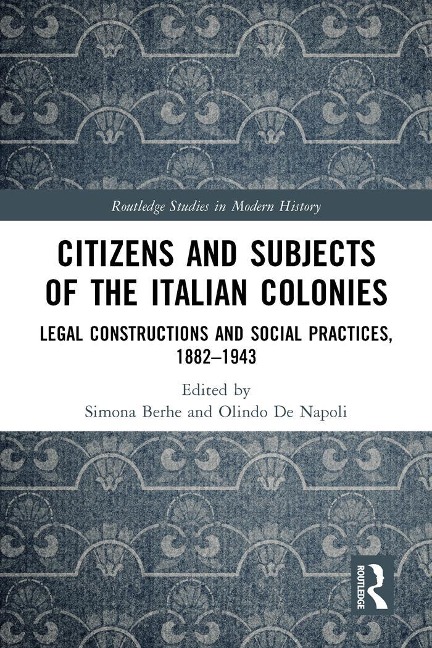
This is the first book on Italian colonialism that specifically deals with the question of citizenship/subjecthood. Such a topic is crucial for understanding both Italian imperial rule and the complex dynamics of the different colonial societies where several actors, like notables, political leaders, minorities, etc., were involved. The chapters gathered in the book constitute an unprecedented account of a heterogeneous geographical area. The cases of Eritrea, Libya, Dodecanese, Ethiopia, and Albania confirm that citizenship and subjecthood in the colonial context were ductile political tools, which were structured according to the orientations of the Metropole and the challenges that came from the colonial societies, often swinging between submission, cooptation to the colonial power, and resistance. On one hand, the book offers an account of the different policies of citizenship implemented in the Italian colonies, in particular the construction of gradated forms of citizenship, the repression and expulsion of dissidents, the systems of endearment of local people and cooptation of the elites, and the racialization of legal status. On the other, it deals with the various answers coming from the local populations in terms of resistance, negotiation, and construction of social identity.
Simona Berhe is a Postdoctoral Fellow at the University of Bologna. Olindo De Napoli is Associate Professor in Modern History at the University of Naples Federico II.
Part 1: Legal Constructions 1. Between Governmentality and Indeterminacy: The Birth of the Legal Category of Subjecthood (1882-1909) 2. Subjecthood, Citizenship, Autonomy, Independence?: Legal Status and National Claims in the First Decade of Italian Occupation in Libya (1911-1920) 3. The Allure of Citizenship: Subjects, Citizens, and Special Citizens in the Fascist Empire 4. The System of Differences: Justice and Citizenship in Libya (1911-1922) 5. Forms of Legal Membership Between Theory and Practice: The Activity of the Consiglio Superiore Coloniale 6. An Italian Nationality for the Levant: Citizenship in the Aegean from the Ottoman to the Fascist Empire (1912-36) 7. The Status of Albanians Under Italian Occupation (1939-1943) Part 2: Social Practices 8. Rights, Mobility and Identity: Colonial Citizenship in Libya in the Twenties 9. Orphanages and Citizenship. Abandoned Italo-Eritreans Accessing Italian Citizenship 10. No More Greeks: Contrasting Identities in the Italian Dodecanese 11. Stateless Armenians in Ethiopia Under Fascist Occupation (1936-1941): Foreignness and Integration, From Local to Colonial Subject. Afterword: Citizenship and Subjecthood, Empire and Nation
Dieses eBook wird im PDF-Format geliefert und ist mit einem Adobe Kopierschutz (DRM) versehen. Sie können dieses eBook mit allen Geräten lesen, die das PDF-Format und den Adobe Kopierschutz (DRM) unterstützen.
Zum Beispiel mit den folgenden Geräten:
• tolino Reader
Laden Sie das eBook direkt über den Reader-Shop auf dem tolino herunter oder übertragen Sie das eBook auf Ihren tolino mit einer kostenlosen Software wie beispielsweise Adobe Digital Editions.
• Sony Reader & andere eBook Reader
Laden Sie das eBook direkt über den Reader-Shop herunter oder übertragen Sie das eBook mit der kostenlosen Software Sony READER FOR PC/Mac oder Adobe Digital Editions auf ein Standard-Lesegeräte mit epub- und Adobe DRM-Unterstützung.
• Tablets & Smartphones
Möchten Sie dieses eBook auf Ihrem Smartphone oder Tablet lesen, finden Sie hier unsere kostenlose Lese-App für iPhone/iPad und Android Smartphone/Tablets.
• PC & Mac
Lesen Sie das eBook direkt nach dem Herunterladen mit einer kostenlosen Lesesoftware, beispielsweise Adobe Digital Editions, Sony READER FOR PC/Mac oder direkt über Ihre eBook-Bibliothek in Ihrem Konto unter „Meine eBooks“ - „online lesen“.
Schalten Sie das eBook mit Ihrer persönlichen Adobe ID auf bis zu sechs Geräten gleichzeitig frei.
Bitte beachten Sie, dass die Kindle-Geräte das Format nicht unterstützen und dieses eBook somit nicht auf Kindle-Geräten lesbar ist.