Und dann auf "Zum Home-Bildschirm [+]".

Stöbern
genialokal zum Startbildschirm hinzufügen
Installieren Sie die genialokal App auf Ihrem Startbildschirm für einen schnellen Zugriff und eine komfortable Nutzung.
Installieren Sie die genialokal App auf Ihrem Startbildschirm für einen schnellen Zugriff und eine komfortable Nutzung.

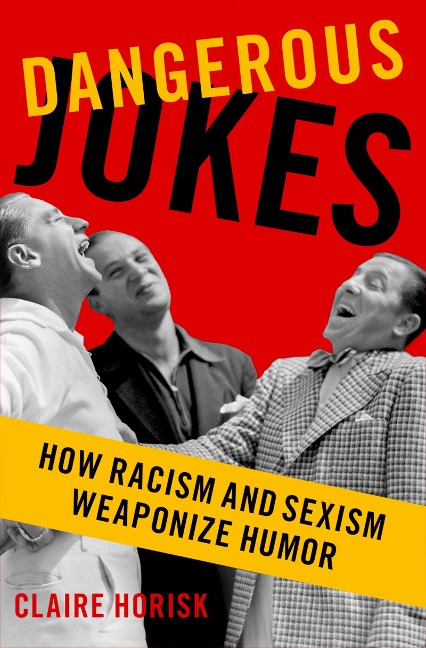
People often get away with belittling others if they frame their speech as jokes-speech that would be condemned if stated seriously. "It's just a joke," they say. But what is different or special about joking? And if jokes about lawyers and politicians are morally acceptable, then what is wrong with joking about race or gender? Furthermore, if we may joke about a politician's shirts, may we joke about his weight? People who are targeted by demeaning jokes feel their impact but may not be able to pinpoint where the harm lies. Dangerous Jokes develops a novel, well-researched, and compelling argument that lays bare the power of demeaning jokes in ordinary conversations. Claire Horisk draws on her expertise in philosophy of language and on evidence from sociology, law and cognitive science to explain how the element of humor-so often used as a defence-makes jokes more potent than regular speech in communicating prejudice and reinforcing social hierarchies. She addresses the morality of telling, being amused by, and laughing at, derogatory jokes, and she gives a new account of listening that addresses the morality of listening to demeaning speech. She leaves us with no illusions about whether "it's just a joke" is an excuse for demeaning humor.
Claire Horisk is an Associate Professor of Philosophy at the University of Missouri, specializing in philosophy of language. Her current research focuses on how language shapes society. She is the author of Dangerous Jokes: How Racism and Sexism Weaponize Humor (OUP). Her published work also includes articles about the nature of truth, theories of meaning, contextualism, and animal communication.
Preface 1. Why joking matters 2. The popular wisdom about jokes 3. Is the popular wisdom supported by science? 4. Crossing a line 5. How do jokes communicate ideas? 6. Humor and hostility 7. Joking remarks and joking intentions 8. Listener culpability 9. Finding derogatory jokes amusing 10. Laughing at derogatory jokes 11. The racist uncle, and other awkward situations 12. Joking and power Postscript: Some practical advice