Und dann auf "Zum Home-Bildschirm [+]".

Stöbern
genialokal zum Startbildschirm hinzufügen
Installieren Sie die genialokal App auf Ihrem Startbildschirm für einen schnellen Zugriff und eine komfortable Nutzung.
Installieren Sie die genialokal App auf Ihrem Startbildschirm für einen schnellen Zugriff und eine komfortable Nutzung.

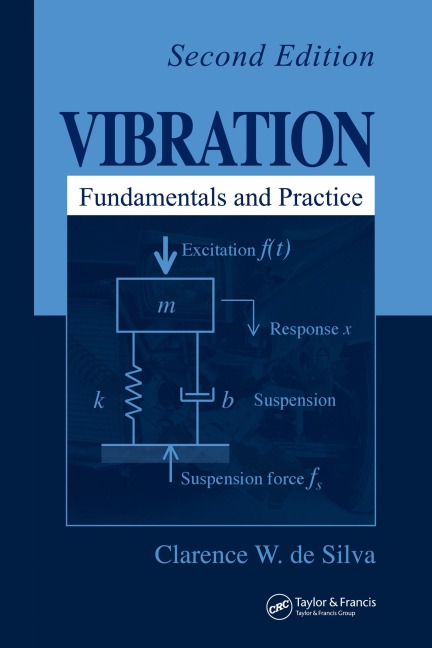
Maintaining the outstanding features and practical approach that led the bestselling first edition to become a standard textbook in engineering classrooms worldwide, Clarence de Silva's Vibration: Fundamentals and Practice, Second Edition remains a solid instructional tool for modeling, analyzing, simulating, measuring, monitoring, testing, controlling, and designing for vibration in engineering systems. It condenses the author's distinguished and extensive experience into an easy-to-use, highly practical text that prepares students for real problems in a variety of engineering fields. What's New in the Second Edition?- A new chapter on human response to vibration, with practical considerations - Expanded and updated material on vibration monitoring and diagnosis - Enhanced section on vibration control, updated with the latest techniques and methodologies - New worked examples and end-of-chapter problems. - Incorporates software tools, including LabVIEW(TM), SIMULINK®, MATLAB®, the LabVIEW Sound and Vibration Toolbox, and the MATLAB Control Systems Toolbox - Enhanced worked examples and new solutions using MATLAB and SIMULINK The new chapter on human response to vibration examines representation of vibration detection and perception by humans as well as specifications and regulatory guidelines for human vibration environments. Remaining an indispensable text for advanced undergraduate and graduate students, Vibration: Fundamentals and Practice, Second Edition builds a unique and in-depth understanding of vibration on a sound framework of practical tools and applications.
Vibration Engineering. Time Response. Frequency Response. Vibration Signal Analysis. Modal Analysis. Distributed-Parameter Systems. Vibration Damping. Vibration Instrumentation. Signal Conditioning and Modification. Vibration Testing and Human Response. Experimental Modal Analysis. Vibration Design and Control. Appendix A: Dynamic Models and Analogies. Appendix B: Newtonian and Lagrangian Mechanics. Appendix C: Review of Linear Algebra. Appendix D: Laplace Transform. Appendix E: Digital Fourier Analysis and FFT. Appendix F: Software Tools. Appendix G: Reliability Considerations for Multi-Component Units. Index.