Und dann auf "Zum Home-Bildschirm [+]".

Stöbern
genialokal zum Startbildschirm hinzufügen
Installieren Sie die genialokal App auf Ihrem Startbildschirm für einen schnellen Zugriff und eine komfortable Nutzung.
Installieren Sie die genialokal App auf Ihrem Startbildschirm für einen schnellen Zugriff und eine komfortable Nutzung.
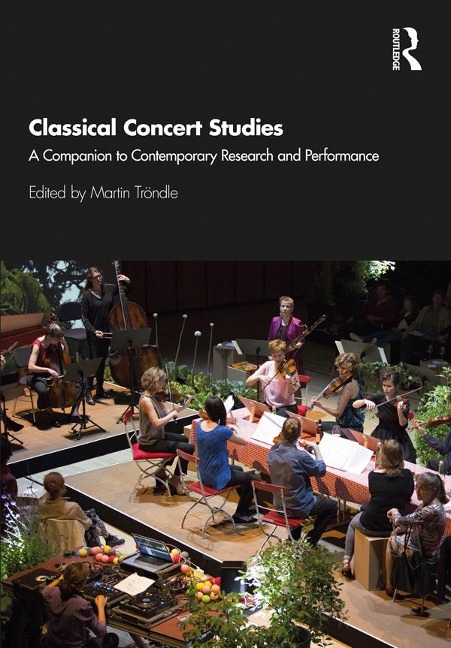
Classical Concert Studies: A Companion to Contemporary Research and Performance is a landmark publication that maps out a new interdisciplinary field of Concert Studies, offering fresh ways of understanding the classical music concert in the twenty-first century. It brings together essays, research articles, and case studies from scholars and music professionals including musicians, music managers, and concert designers. Gathering both historical and contemporary cases, the contributors draw on approaches from sociology, ethnology, musicology, cultural studies, and other disciplines to create a rich portrait of the classical concert's past, present, and future. Based on two earlier volumes published in German under the title Das Konzert (The Concert), and with a selection of new chapters written for the English edition, this companion enables students, researchers, and practitioners in the classical and contemporary music fields to understand this emerging field of research, go beyond traditional disciplinary boundaries and methodologies, and spark a renaissance for the classical concert.
Martin Tröndle is the WÜRTH Chair of Cultural Production at Zeppelin University, Germany, and a principal investigator of ECR-Experimental Concert Research, a project that investigates aesthetic experience in the classical concert. He is also Co-Editor-in-Chief of the peer-reviewed Journal of Cultural Management and Cultural Policy.
List of figures List of tables Acknowledgements List of contributors Concert Studies I. The Concert as an Event 1. A Concert Theory 2. Music as Text, Music as Performance 3. 4'33" The Concert as a Performative Moment 4. The Discovery of Listening in the Concert 5. Between Formalization and Exaggeration: An Ethnomusicological Perspective 6. Concert Formats: Liturgy-Ritual-Power? II. Programs, Formats, and Media 7. From Program Leaflets to Listening Apps: A Brief History of Guided Listening 8. Space, Light, Proximity: Aspects of Historical Performance Practice 9. Preludes, Fantasias, and Collages: Improvisation, a Forgotten Art in the Classical Concert 10. Concert Design: Form Follows Function 11. Musical Curator and Concert Director 12. The Yellow Lounge Reinvents the Concert Forum 13. Strategies for the Production of Presence III. Space-Sound-Instruments 14. Noise and Sound: The Historicity and Sociability of the Senses 15. From Sound to Noise: The History of Hearing in the Nineteenth and Early Twentieth Centuries 16. The Soundscape of Vienna: Pictorial Essay 17. The Cultural Dimensions of Atmospheres: Sociological Observations of the resonanzraum in Hamburg 18. A Sociological Reflection on the Concert Venue 19. Cinema for the Ears: Technical Developments in Acoustics and Loudspeaker Systems 20. Digital Encore: Virtualization, Live Coding, and New Interfaces IV. The Audience and the Musicians 21. Between Audience Decline and Audience Development: Perspectives on the Professional Musician, Music Education, and Cultural Policy 22. Musical, Social, and Moral Dilemmas: Investigating Audience Motivations to Attend Concerts 23. Studying Music . . . And Then What? 24. "Playing Concerts Is Not Enough": On the Identity of the Deutsche Kammerphilharmonie Bremen 25. Women in Music Culture: A History of (Non-)Participation? 26. The Konzerthaus Berlin: A Concert Hall in Transition 27. Audience Development and Engagement V. Economy and Policy 28. The Influence of Economic Variables in the Concert Industry 29. Roll Over Beethoven . . .: Notes on Concerts under Conditions of the Culture Industry 30. The Dematerialization of Music: How Streaming Technology Impacts Music Production and Consumption 31. The "New Classic" 32. Actors in the Classical Music Business: A Media Discourse Analysis VI. Concert Research 33. A Manifesto of Concert Culture 34. Concerto21: A Didactic Introduction for Concert Development 35. The Researching Orchestra: Innovative Collaborations between Symphonic Orchestras and Knowledge Institutions 36. The Classical Concert as an Object of Empirical Aesthetics Index
Dieses eBook wird im PDF-Format geliefert und ist mit einem Adobe Kopierschutz (DRM) versehen. Sie können dieses eBook mit allen Geräten lesen, die das PDF-Format und den Adobe Kopierschutz (DRM) unterstützen.
Zum Beispiel mit den folgenden Geräten:
• tolino Reader
Laden Sie das eBook direkt über den Reader-Shop auf dem tolino herunter oder übertragen Sie das eBook auf Ihren tolino mit einer kostenlosen Software wie beispielsweise Adobe Digital Editions.
• Sony Reader & andere eBook Reader
Laden Sie das eBook direkt über den Reader-Shop herunter oder übertragen Sie das eBook mit der kostenlosen Software Sony READER FOR PC/Mac oder Adobe Digital Editions auf ein Standard-Lesegeräte mit epub- und Adobe DRM-Unterstützung.
• Tablets & Smartphones
Möchten Sie dieses eBook auf Ihrem Smartphone oder Tablet lesen, finden Sie hier unsere kostenlose Lese-App für iPhone/iPad und Android Smartphone/Tablets.
• PC & Mac
Lesen Sie das eBook direkt nach dem Herunterladen mit einer kostenlosen Lesesoftware, beispielsweise Adobe Digital Editions, Sony READER FOR PC/Mac oder direkt über Ihre eBook-Bibliothek in Ihrem Konto unter „Meine eBooks“ - „online lesen“.
Schalten Sie das eBook mit Ihrer persönlichen Adobe ID auf bis zu sechs Geräten gleichzeitig frei.
Bitte beachten Sie, dass die Kindle-Geräte das Format nicht unterstützen und dieses eBook somit nicht auf Kindle-Geräten lesbar ist.