Und dann auf "Zum Home-Bildschirm [+]".

Stöbern
genialokal zum Startbildschirm hinzufügen
Installieren Sie die genialokal App auf Ihrem Startbildschirm für einen schnellen Zugriff und eine komfortable Nutzung.
Installieren Sie die genialokal App auf Ihrem Startbildschirm für einen schnellen Zugriff und eine komfortable Nutzung.
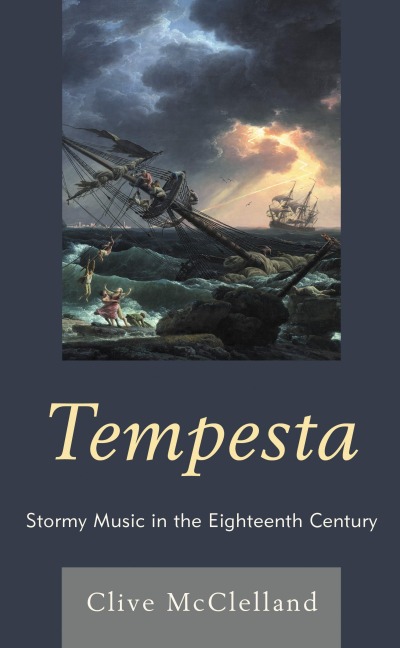
Tempesta is a term coined in this book applying to music that exhibits agitated or violent characteristics in order to evoke terror and chaos, involving ideas like rapid scale passages, driving rhythmic figurations, strong accents, full textures, and robust instrumentation including prominent brass and timpani. Music of this type was used for storm scenes, which in operas of the 17th and 18th centuries are almost invariably of supernatural origin, and other frightening experiences such as pursuit, madness, and rage.
This 'stormy' music formed the ingredients of a particular style in the later 18th century that scholars in recent decades have referred to as Sturm und Drang, implying a relationship to German literature which I believe is unhelpful and misleading. Haydn's so-called Sturm und Drang symphonies exhibit characteristics that are no different to his depictions of storms in his operas and sacred music, and there is no evidence of Haydn suffering some kind of personal crisis, or even of him responding to the 'spirit of the age'. He was simply exploring the expressive possibilities of the style for dramatic/rhetorical effect. Scholars have been dissatisfied with the term for some time, but no-one has previously suggested an alternative. The term tempesta therefore applies to all manifestations of this kind of music, a label that acknowledges the 'stormy' origins of the style, but which also recognizes that it functions as a counterpart to ombra.
Tempesta contributed enormously to the continued popularity of operas on supernatural subjects, and quickly migrated towards sacred music and even instrumental music, where it became part of the topical discourse. The music does not merely represent the supernatural, it instills an emotional response in the listener. Awe and terror had already been identified as sources of the sublime, notably by Edmund Burke (predating the German literary Sturm und Drang), and the latter half of the century saw the rise of Gothic literature. The supernatural remained popular in theaters and opera houses, and special music that could produce an emotional response of such magnitude was a powerful tool in the composer's expressive armory.
Clive McClelland is associate professor of music at the University of Leeds, West Yorkshire
Chapter 1 Tempesta Music in Context
Chapter 2 Tonality (Opera)
Chapter 3 Harmony and Line (Opera)
Chapter 4 Tempo and Rhythm (Opera)
Chapter 5 Texture, Dynamics and Instrumentation (Opera)
Chapter 6 Case Studies in Opera
Chapter 7 Tempesta in Sacred Music
Chapter 8 Tempesta in Instrumental Music
Chapter 9 Towards Romanticism
Dieses eBook wird im PDF-Format geliefert und ist mit einem Adobe Kopierschutz (DRM) versehen. Sie können dieses eBook mit allen Geräten lesen, die das PDF-Format und den Adobe Kopierschutz (DRM) unterstützen.
Zum Beispiel mit den folgenden Geräten:
• tolino Reader
Laden Sie das eBook direkt über den Reader-Shop auf dem tolino herunter oder übertragen Sie das eBook auf Ihren tolino mit einer kostenlosen Software wie beispielsweise Adobe Digital Editions.
• Sony Reader & andere eBook Reader
Laden Sie das eBook direkt über den Reader-Shop herunter oder übertragen Sie das eBook mit der kostenlosen Software Sony READER FOR PC/Mac oder Adobe Digital Editions auf ein Standard-Lesegeräte mit epub- und Adobe DRM-Unterstützung.
• Tablets & Smartphones
Möchten Sie dieses eBook auf Ihrem Smartphone oder Tablet lesen, finden Sie hier unsere kostenlose Lese-App für iPhone/iPad und Android Smartphone/Tablets.
• PC & Mac
Lesen Sie das eBook direkt nach dem Herunterladen mit einer kostenlosen Lesesoftware, beispielsweise Adobe Digital Editions, Sony READER FOR PC/Mac oder direkt über Ihre eBook-Bibliothek in Ihrem Konto unter „Meine eBooks“ - „online lesen“.
Schalten Sie das eBook mit Ihrer persönlichen Adobe ID auf bis zu sechs Geräten gleichzeitig frei.
Bitte beachten Sie, dass die Kindle-Geräte das Format nicht unterstützen und dieses eBook somit nicht auf Kindle-Geräten lesbar ist.