Und dann auf "Zum Home-Bildschirm [+]".

Stöbern
genialokal zum Startbildschirm hinzufügen
Installieren Sie die genialokal App auf Ihrem Startbildschirm für einen schnellen Zugriff und eine komfortable Nutzung.
Installieren Sie die genialokal App auf Ihrem Startbildschirm für einen schnellen Zugriff und eine komfortable Nutzung.
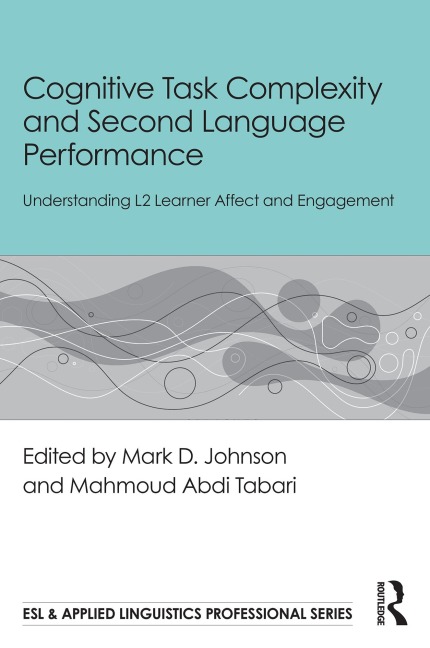
Cognitive Task Complexity and Second Language Performance provides an overview of research focusing on the effects of cognitive task complexity (CTC) on second language (L2) performance. The edited volume brings together renowned scholars in the field who present data-driven insights into the intricate relationships between CTC and L2 performance, drawing on a combination of empirical studies and theoretical analyses. Each section summarizes the intersection of task complexity frameworks and models of second language production; synthesizes critical issues and research findings; and moves beyond the routine discussion of task complexity features and models of speaking, extending the discussion to the interface of task complexity features and (a) learner engagement, (b) virtual interaction, and (c) corpus linguistics. It also delves into the interface of CTC and technology, exploring how digital tools and resources can enhance task complexity and ultimately impact L2 performance. Overall, this edited volume not only consolidates the existing research on CTC and L2 performance but also highlights areas that require further investigation. In charting a course for future research and pedagogy, the book is a valuable resource for students, scholars, researchers, and practitioners seeking to deepen their understanding of CTC and its impact on second language acquisition.
Mark D. Johnson is Associate Professor of TESOL and Applied Linguistics in the Department of English at East Carolina University, where he teaches linguistics and TESOL classes. His research focuses on cognition in second language writing. Mahmoud Abdi Tabari is Teaching Assistant Professor of TESOL and Writing Studies in the Department of English at the University of Nevada, Reno (UNR). His research focuses on second language acquisition, second language writing, and task-based language teaching.
Contents Part I: Background: CTC and the Skills Chapter 1: A Brief History of Cognition in L2 Performance Mark D. Johnson and Mahmoud Abdi Tabari Chapter 2: The Role of Task Complexity in Speech Production and Dialogue Models Ana-María Nuevo Chapter 3: A Methodological Review of the Research on Task Complexity in Second Language Oral Production Hao Lin and Shaofeng Li Chapter 4: New Insights: Modeling Second Language Writing Integrating Cognitive Task Complexity Ting Sophia Xu and Lawrence Jun Zhang Chapter 5: Writing: Critical Issues Jookyoung Jung and Honglan Wang Part II: CTC and the Learner Chapter 6: Learner Engagement: Theoretical Perspectives Daniel O. Jackson Chapter 7: Learner Engagement: Critical Issues Ágnes Albert Chapter 8: Emotions and Task Complexity: Proposing a Theoretical Framework and Setting a Research Agenda Chengchen Li Part III: CTC and Technology Chapter 9: Virtual Interaction Nicole Ziegler and Ayano Kawasaki Chapter 10: Task Complexity and Collaborative Writing in a Virtual Environment Meixiu Zhang Chapter 11: Corpus Linguistics Yuanheng (Arthur) Wang and Xiaofei Lu Part IV: Future Directions and Conclusion Chapter 12: Future Directions: A Methodological Synthesis of Cognitive Task Complexity Research Rebecca Adams Chapter 13: Conclusion: Cognitive Task Complexity-Past, Present, and Future Mahmoud Abdi Tabari and Mark D. Johnson
Dieses eBook wird im PDF-Format geliefert und ist mit einem Adobe Kopierschutz (DRM) versehen. Sie können dieses eBook mit allen Geräten lesen, die das PDF-Format und den Adobe Kopierschutz (DRM) unterstützen.
Zum Beispiel mit den folgenden Geräten:
• tolino Reader
Laden Sie das eBook direkt über den Reader-Shop auf dem tolino herunter oder übertragen Sie das eBook auf Ihren tolino mit einer kostenlosen Software wie beispielsweise Adobe Digital Editions.
• Sony Reader & andere eBook Reader
Laden Sie das eBook direkt über den Reader-Shop herunter oder übertragen Sie das eBook mit der kostenlosen Software Sony READER FOR PC/Mac oder Adobe Digital Editions auf ein Standard-Lesegeräte mit epub- und Adobe DRM-Unterstützung.
• Tablets & Smartphones
Möchten Sie dieses eBook auf Ihrem Smartphone oder Tablet lesen, finden Sie hier unsere kostenlose Lese-App für iPhone/iPad und Android Smartphone/Tablets.
• PC & Mac
Lesen Sie das eBook direkt nach dem Herunterladen mit einer kostenlosen Lesesoftware, beispielsweise Adobe Digital Editions, Sony READER FOR PC/Mac oder direkt über Ihre eBook-Bibliothek in Ihrem Konto unter „Meine eBooks“ - „online lesen“.
Schalten Sie das eBook mit Ihrer persönlichen Adobe ID auf bis zu sechs Geräten gleichzeitig frei.
Bitte beachten Sie, dass die Kindle-Geräte das Format nicht unterstützen und dieses eBook somit nicht auf Kindle-Geräten lesbar ist.