Und dann auf "Zum Home-Bildschirm [+]".

Stöbern
genialokal zum Startbildschirm hinzufügen
Installieren Sie die genialokal App auf Ihrem Startbildschirm für einen schnellen Zugriff und eine komfortable Nutzung.
Installieren Sie die genialokal App auf Ihrem Startbildschirm für einen schnellen Zugriff und eine komfortable Nutzung.
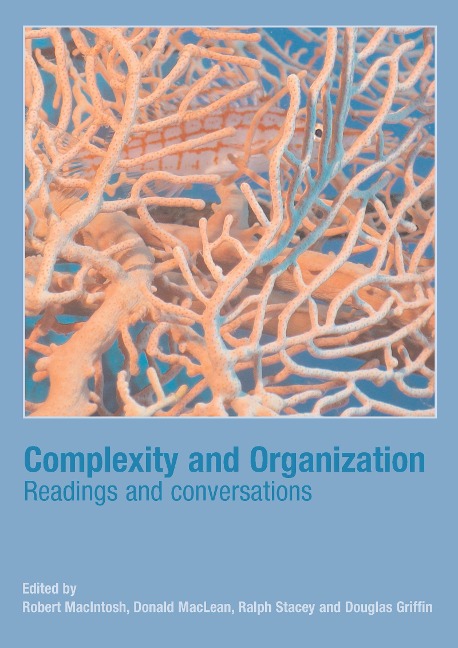
In the past decade, complexity-based thinking has exerted an increasing, yet somewhat controversial authority over management theory and practice. This has in some part been due to the influence of a number of high-profile articles and the not inconsiderable hype which has accompanied them. Another feature of the subject's development has been the diversity of the origins of the thinking and the claims which have been made for it in terms of managerial and organizational implications. Complexity and Organization is the first text to bring this thinking together, presenting some of the most influential writing in the field, showing how the subject has developed and how it continues to influence managerial thinking. Seminal contributions to the field have been brought together in a single accessible volume, allowing readers to access what might otherwise appear a very diverse body of literature. Moreover, the editors, who represent some of the leading thinkers and writers in this field, have combined these readings with a unique commentary, indicating not only the importance of the papers but teasing out the subtle but significant differences and similarities between them. These commentaries take the form of a discussion between the editors, debating the contribution that each paper has made to the field and the influence it has had on management thinking.
Robert MacIntosh began his academic career as a researcher at the University of Strathclyde and completed his PhD in engineering before moving to a post in the Business School at the University of Glasgow. Donald MacLean is Senior Research Fellow at the University of Glasgow. He is a faculty member of the Complexity and Management Centre of the University of Hertfordshire, a member of the faculty of the Institute of Directors in Scotland and an associate of the Glasgow Centre for Population Health. Ralph Stacey is Professor of Management and Director of the Complexity and Management Centre at the Business School of the University of Hertfordshire. Douglas Griffin is Associate Director of the Complexity and Management Centre at the Business School of the University of Hertfordshire. He is also an independent consultant.
Introduction Section 1: Chaos Theory and Dissipative Structures 1. Chaos Theory and Strategy 2. Conditioned Emergence 3. Surfing the Edge of Chaos 5. The Science of Complexity 6. Leadership and the New Sciences Editors' Discussion of the Papers in Section 1 Section 2: Categorizing Complexity 7. Evolving Complexity in Social Science 8. Speaking of Complexity in Management Theory and Practice 9. Emergence Editors' Discussion of the Papers in Section 2 Section 3: Complexity in Social Settings 10. From Complexity Science to Complex Thinking 11. Learning as the Activity of Interdependent People 12. Complex Thinking Editors' Discussion of the Papers in Section 3. Concluding Remarks
Dieses eBook wird im PDF-Format geliefert und ist mit einem Adobe Kopierschutz (DRM) versehen. Sie können dieses eBook mit allen Geräten lesen, die das PDF-Format und den Adobe Kopierschutz (DRM) unterstützen.
Zum Beispiel mit den folgenden Geräten:
• tolino Reader
Laden Sie das eBook direkt über den Reader-Shop auf dem tolino herunter oder übertragen Sie das eBook auf Ihren tolino mit einer kostenlosen Software wie beispielsweise Adobe Digital Editions.
• Sony Reader & andere eBook Reader
Laden Sie das eBook direkt über den Reader-Shop herunter oder übertragen Sie das eBook mit der kostenlosen Software Sony READER FOR PC/Mac oder Adobe Digital Editions auf ein Standard-Lesegeräte mit epub- und Adobe DRM-Unterstützung.
• Tablets & Smartphones
Möchten Sie dieses eBook auf Ihrem Smartphone oder Tablet lesen, finden Sie hier unsere kostenlose Lese-App für iPhone/iPad und Android Smartphone/Tablets.
• PC & Mac
Lesen Sie das eBook direkt nach dem Herunterladen mit einer kostenlosen Lesesoftware, beispielsweise Adobe Digital Editions, Sony READER FOR PC/Mac oder direkt über Ihre eBook-Bibliothek in Ihrem Konto unter „Meine eBooks“ - „online lesen“.
Schalten Sie das eBook mit Ihrer persönlichen Adobe ID auf bis zu sechs Geräten gleichzeitig frei.
Bitte beachten Sie, dass die Kindle-Geräte das Format nicht unterstützen und dieses eBook somit nicht auf Kindle-Geräten lesbar ist.