Und dann auf "Zum Home-Bildschirm [+]".

Stöbern
genialokal zum Startbildschirm hinzufügen
Installieren Sie die genialokal App auf Ihrem Startbildschirm für einen schnellen Zugriff und eine komfortable Nutzung.
Installieren Sie die genialokal App auf Ihrem Startbildschirm für einen schnellen Zugriff und eine komfortable Nutzung.
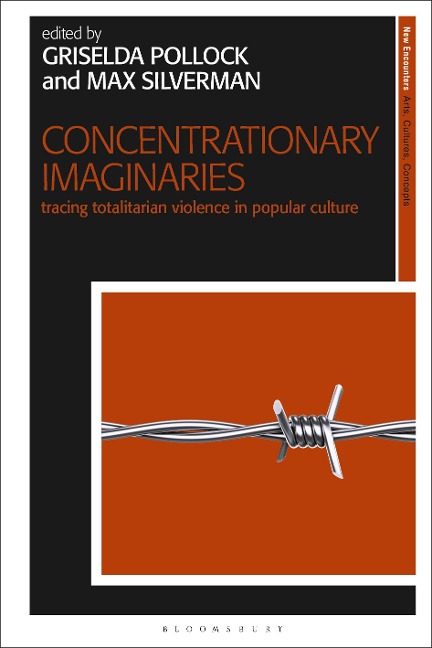
In 1945, French political prisoners returning from the concentration camps of Germany coined the phrase 'the concentrationary universe' to describe the camps as a terrible political experiment in the destruction of the human. This book shows how the unacknowledged legacy of a totalitarian mentality has seeped into the deepest recesses of everyday popular culture. It asks if the concentrationary now infests our cultural imaginary, normalizing what was once considered horrific and exceptional by transforming into entertainment violations of human life. Drawing on the political philosophy of Hannah Arendt and the analyses of violence by Agamben, Virilio, Lacoue-Labarthe and Nancy, it also offers close readings of films by Cavani and Haneke that identify and critically expose such an imaginary and, hence, contest its lingering force.
Griselda Pollock is Professor of Social and Critical Histories of Art and Director of the Centre for Cultural Analysis, Theory and History at the University of Leeds. Her publications include Visual Politics of Psychoanalysis: Art and the Image in Post-Traumatic Cultures (2013). Pollock is Series Editor of Bloomsbury's New Encounters Series.
Max Silverman is Professor of Modern French Studies at the University of Leeds. His publications include Palimpsestic Memory: the Holocaust and Colonialism in French and Francophone Fiction and Film (2013).
Griselda Pollock and Max Silverman are joint authors of Concentrationary Cinema: Aesthetics as Political Resistance in Alain Resnais's 'Night and Fog', which won the Kraszna-Krausz Award for Best Book on the Moving Image, 2011. They are also joint editors of Concentrationary Memories: Totalitarian Terror and Cultural Resistance, the first of three volumes on the Concentrationary in New Encounters Series, of which Concentrationary Imaginaries is the second to be published.
List of Illustrations
Acknowledgements
Series Preface: Concentrationary Memories: The Politics of Representation, Griselda Pollock and Max Silverman
Introduction
A Concentrationary Imaginary?, Griselda Pollock
Part I. Thinking
1. Framing Horror, Adriana Cavarero
2. Between Realism and Fiction: Arendt and Levi on Concentrationary Imaginaries, Olivia Guaraldo
3. Totality, Convergence, Synchronization, Ian James
Part II. Desire
4. Wrap me up in Sadist Knots: Representations of Sadism-From Naziploitation to Torture Porn, Aaron Kerner
5. Redemption or Transformation: Blasphemy and the Concentrationary Imaginary in Liliana Cavani's The Night Porter (1974), Griselda Pollock
Part III. Camp
6. Seep and Creep: the Concentrationary Imaginary in Martin Scorsese's Shutter Island (2010), Benjamin Hannavy Cousen
7. Haneke and the Camps, Max Silverman
8. Spec(tac)ularizing 'Campness': Nikita and La Femme Nikita the Series, Brenda Hollweg
Notes
Bibliography
Notes on Contributors
Index
Dieses eBook wird im PDF-Format geliefert und ist mit einem Adobe Kopierschutz (DRM) versehen. Sie können dieses eBook mit allen Geräten lesen, die das PDF-Format und den Adobe Kopierschutz (DRM) unterstützen.
Zum Beispiel mit den folgenden Geräten:
• tolino Reader
Laden Sie das eBook direkt über den Reader-Shop auf dem tolino herunter oder übertragen Sie das eBook auf Ihren tolino mit einer kostenlosen Software wie beispielsweise Adobe Digital Editions.
• Sony Reader & andere eBook Reader
Laden Sie das eBook direkt über den Reader-Shop herunter oder übertragen Sie das eBook mit der kostenlosen Software Sony READER FOR PC/Mac oder Adobe Digital Editions auf ein Standard-Lesegeräte mit epub- und Adobe DRM-Unterstützung.
• Tablets & Smartphones
Möchten Sie dieses eBook auf Ihrem Smartphone oder Tablet lesen, finden Sie hier unsere kostenlose Lese-App für iPhone/iPad und Android Smartphone/Tablets.
• PC & Mac
Lesen Sie das eBook direkt nach dem Herunterladen mit einer kostenlosen Lesesoftware, beispielsweise Adobe Digital Editions, Sony READER FOR PC/Mac oder direkt über Ihre eBook-Bibliothek in Ihrem Konto unter „Meine eBooks“ - „online lesen“.
Schalten Sie das eBook mit Ihrer persönlichen Adobe ID auf bis zu sechs Geräten gleichzeitig frei.
Bitte beachten Sie, dass die Kindle-Geräte das Format nicht unterstützen und dieses eBook somit nicht auf Kindle-Geräten lesbar ist.