Und dann auf "Zum Home-Bildschirm [+]".

Stöbern
genialokal zum Startbildschirm hinzufügen
Installieren Sie die genialokal App auf Ihrem Startbildschirm für einen schnellen Zugriff und eine komfortable Nutzung.
Installieren Sie die genialokal App auf Ihrem Startbildschirm für einen schnellen Zugriff und eine komfortable Nutzung.
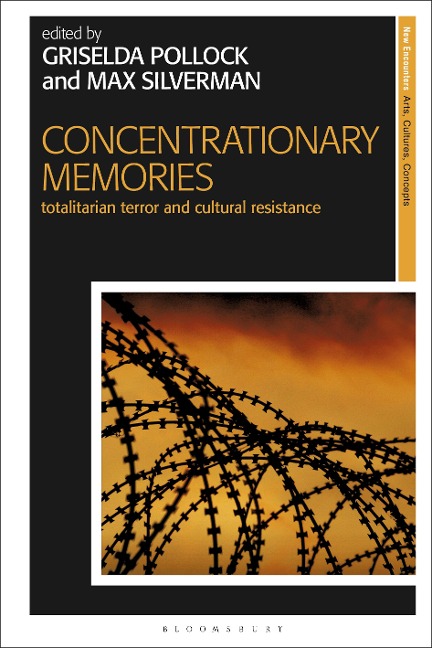
Concentrationary Memories has, as its premise , the idea at the heart of Alain Resnais's film Night and Fog (1955) that the concentrationary plague unleashed on the world by the Nazis in the 1930s and 1940s is not simply confined to one place and one time but is now a permanent presence shadowing modern life. It further suggests that memory (and, indeed art in general) must be invoked to show this haunting of the present by this menacing past so that we can read for the signs of terror and counter its deformation of the human.
Through working with political and cultural theory on readings of film, art, photographic and literary practices, Concentrationary Memories analyses different cultural responses to concentrationary terror in different sites in the post-war period, ranging from Auschwitz to Argentina. These readings show how those involved in the cultural production of memories of the horror of totalitarianism sought to find forms, languages and image systems which could make sense of and resist the post-war condition in which, as Hannah Arendt famously stated 'everything is possible' and 'human beings as human beings become superfluous.' Authors include Nicholas Chare, Isabelle de le Court, Thomas Elsaesser, Benjamin Hannavy Cousen, Matthew John, Claire Launchbury, Sylvie Lindeperg, Laura Malosetti Costa, Griselda Pollock, Max Silverman, Glenn Sujo, Annette Wieviorka and John Wolfe Ackerman.
Griselda Pollock is Professor of Social and Critical Histories of Art and Director of the Centre for Cultural Analysis, Theory and History at the University of Leeds, UK. She is Editor, with Anthony Bryant, of "Digital and Other Virtualities: Renegotiating the Image" and of "Visual Politics of Psychoanalysis: Art and the Image in Post-Traumatic Cultures" (both I.B. Tauris) and is Series Editor of Tauris' "New Encounters" Series. Max Silverman is Professor of Modern French Studies at the University of Leeds. His recent publications include "Palimpsestic Memory: the Holocaust and Colonialism in French and Francophone Fiction and Film" (Berghahn, 2013). Griselda Pollock and Max Silverman are joint authors of "Concentrationary Cinema: Aesthetics as Political Resistance in Alain Resnais's 'Night and Fog', " which won the Kraszna-Krausz Award for Best Book on the Moving Image, 2011.
Concentrationary Memories Series Preface
Griselda Pollock & Max Silverman
Table of Contents
List of Illustrations
Acknowledgements
Introduction
The Politics of Memory: From Concentrationary Memory to Concentrationary Memories
Griselda Pollock & Max Silverman:
Part 1: Theorising the Political Space and Beyond
Chapter 1 The Memory of Politics: Hannah Arendt, Carl Schmitt and the Possibility of Encounter
John Wolfe Ackerman
Part 2: Mediations of Memory
Chapter 2 Migration and Motif: the (Parapractic) Memories of an Image
Thomas Elsaesser
Chapter 3 The Two Stages of the Eichmann Trial
Sylvie Lindeperg & Annette Wieviorka
Chapter 4 Brushing the Film Against the Grain: Locating Jean Cayrol's Lazarean Figure in Alain Resnais's Muriel ou le temps d'un retour
Matthew John
Part 3: Camp Visions
Chapter 5 Symbol Re-formation: Concentrationary Memory in Charlotte Delbo's Auschwitz and After
Nicholas Chare
Chapter 6 A New Visual Structure for the Unthinkable: The Surrealist Aesthetic and the Concentrationary Sublime in Lee Miller's Photographs of Buchenwald and Dachau
Isabelle de le Court
Chapter 7 Muselmann: a distilled image of the Lager?
Glenn Sujo
Chapter 8 Nameless before the Concentrationary Void: Charlotte Salomon's Leben? oder Theater? 1941-42 after Gurs
Griselda Pollock
Part 4: Beyond the Limits
Chapter 9 Animated Memory: Ari Folman's Waltz with Bashir
Claire Launchbury
Chapter 10 Isn't this where...? Projections on Pink Floyd The Wall: Tracing the Concentrationary Image
Benjamin Hannavy Cousen
Chapter 11 Memory Work in Argentina 1976-2006
Laura Malosetti Costa
Notes on Contributors
Bibliography
Index
Dieses eBook wird im PDF-Format geliefert und ist mit einem Adobe Kopierschutz (DRM) versehen. Sie können dieses eBook mit allen Geräten lesen, die das PDF-Format und den Adobe Kopierschutz (DRM) unterstützen.
Zum Beispiel mit den folgenden Geräten:
• tolino Reader
Laden Sie das eBook direkt über den Reader-Shop auf dem tolino herunter oder übertragen Sie das eBook auf Ihren tolino mit einer kostenlosen Software wie beispielsweise Adobe Digital Editions.
• Sony Reader & andere eBook Reader
Laden Sie das eBook direkt über den Reader-Shop herunter oder übertragen Sie das eBook mit der kostenlosen Software Sony READER FOR PC/Mac oder Adobe Digital Editions auf ein Standard-Lesegeräte mit epub- und Adobe DRM-Unterstützung.
• Tablets & Smartphones
Möchten Sie dieses eBook auf Ihrem Smartphone oder Tablet lesen, finden Sie hier unsere kostenlose Lese-App für iPhone/iPad und Android Smartphone/Tablets.
• PC & Mac
Lesen Sie das eBook direkt nach dem Herunterladen mit einer kostenlosen Lesesoftware, beispielsweise Adobe Digital Editions, Sony READER FOR PC/Mac oder direkt über Ihre eBook-Bibliothek in Ihrem Konto unter „Meine eBooks“ - „online lesen“.
Schalten Sie das eBook mit Ihrer persönlichen Adobe ID auf bis zu sechs Geräten gleichzeitig frei.
Bitte beachten Sie, dass die Kindle-Geräte das Format nicht unterstützen und dieses eBook somit nicht auf Kindle-Geräten lesbar ist.