Und dann auf "Zum Home-Bildschirm [+]".

Stöbern
genialokal zum Startbildschirm hinzufügen
Installieren Sie die genialokal App auf Ihrem Startbildschirm für einen schnellen Zugriff und eine komfortable Nutzung.
Installieren Sie die genialokal App auf Ihrem Startbildschirm für einen schnellen Zugriff und eine komfortable Nutzung.
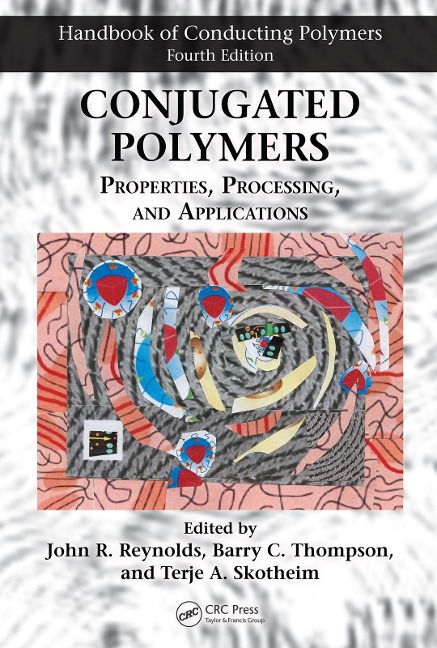
This book covers properties, processing, and applications of conducting polymers. It discusses properties and characterization, including photophysics and transport. It then moves to processing and morphology of conducting polymers, covering such topics as printing, thermal processing, morphology evolution, conducting polymer composites, thin films
Terje A. Skotheim is the founder of Lightsense and has a successful record in developing new technologies and launching new products in fields as diverse as advanced lithium-sulfur batteries, MEMS devices, photovoltaic cells, and biosensors, through several startups. His research interests have spanned across several disciplines in materials science, including conducting polymers, semiconductors, ion conductors and diamond-like carbon. He has held research positions and co-founded companies in Europe and the US, and was head of the conducting polymer group at DOE's Brookhaven National Laboratory before launching his career as an entrepreneur. He received his B.S. in physics from the Massachusetts Institute Technology and his Ph.D. in physics from the University of California at Berkeley. John R. Reynolds, a native Californian, obtained his B.S. in Chemistry at San Jose State University (1979) followed by his M.S. (1982) and Ph.D. (1984) in Polymer Science and Engineering at the University of Massachusetts. He became interested in the field of conducting and electroactive polymers through a position with the IBM Research Laboratories in the late 1970s. After developing his own research effort at The University of Texas at Arlington (1984-1991), he moved to the University of Florida where he was a Professor of Chemistry and Associate Director of the Center for Macromolecular Science and Engineering until Spring 2012, when his group moved to Georgia Tech where he is a Professor of Chemistry and Biochemistry, and Materials Science and Engineering. He serves as Director of the Georgia Tech Polymer Network (GTPN) and is a member of the Center for Organic Photonics and Electronics (COPE) management team. Barry C. Thompson was born in Milwaukee, Wisconsin in 1977 and moved to Gallipolis, Ohio at a young age, where he attended elementary and high school. Barry then attended the University of Rio Grande in Rio Grande, Ohio, where he m
Properties and Characterization of Conjugated Polymers. Photophysics. Conducting Polymers. Transport in Conjugated Polymers. Thermoelectrics. Electrochemistry of Conducting Polymers. Electrochromic Polymers. Mechanical Properties of Conjugated Polymers. Photorefractive Polymers. Optoelectronic Polymers. Processing and Morphology of Conjugated Polymers. Printing. Thermal Processing. Morphology Evolution. Conducting Polymer Composites. Oligomer Based Film Structure. Thin Film Structure. Soft X-ray Structural Characterization (RoXS). OFET Applications. Polymers for Organic Photovoltaics. Organic Photovoltaics Architecture. Organic Photovoltaics. Applications of Conjugated Polymers. Conjugated Polymer Sensors. Electrochromic Polymer Devices. Electronic Skin. Electrochemical Devices. Bio- Applications. Redox Active Polymers. Supercapacitors. Actuators and Artificial Muscles. Industrial Status of PEDVT. Aerospace Applications.
Dieses eBook wird im PDF-Format geliefert und ist mit einem Adobe Kopierschutz (DRM) versehen. Sie können dieses eBook mit allen Geräten lesen, die das PDF-Format und den Adobe Kopierschutz (DRM) unterstützen.
Zum Beispiel mit den folgenden Geräten:
• tolino Reader
Laden Sie das eBook direkt über den Reader-Shop auf dem tolino herunter oder übertragen Sie das eBook auf Ihren tolino mit einer kostenlosen Software wie beispielsweise Adobe Digital Editions.
• Sony Reader & andere eBook Reader
Laden Sie das eBook direkt über den Reader-Shop herunter oder übertragen Sie das eBook mit der kostenlosen Software Sony READER FOR PC/Mac oder Adobe Digital Editions auf ein Standard-Lesegeräte mit epub- und Adobe DRM-Unterstützung.
• Tablets & Smartphones
Möchten Sie dieses eBook auf Ihrem Smartphone oder Tablet lesen, finden Sie hier unsere kostenlose Lese-App für iPhone/iPad und Android Smartphone/Tablets.
• PC & Mac
Lesen Sie das eBook direkt nach dem Herunterladen mit einer kostenlosen Lesesoftware, beispielsweise Adobe Digital Editions, Sony READER FOR PC/Mac oder direkt über Ihre eBook-Bibliothek in Ihrem Konto unter „Meine eBooks“ - „online lesen“.
Schalten Sie das eBook mit Ihrer persönlichen Adobe ID auf bis zu sechs Geräten gleichzeitig frei.
Bitte beachten Sie, dass die Kindle-Geräte das Format nicht unterstützen und dieses eBook somit nicht auf Kindle-Geräten lesbar ist.