Und dann auf "Zum Home-Bildschirm [+]".

Stöbern
genialokal zum Startbildschirm hinzufügen
Installieren Sie die genialokal App auf Ihrem Startbildschirm für einen schnellen Zugriff und eine komfortable Nutzung.
Installieren Sie die genialokal App auf Ihrem Startbildschirm für einen schnellen Zugriff und eine komfortable Nutzung.
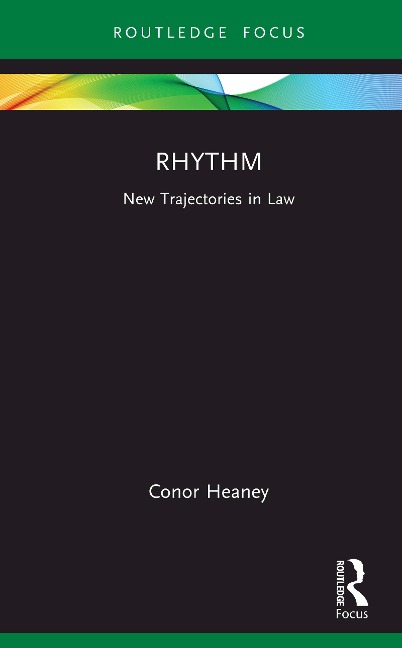
This book analyses the conceptual and concrete relationships between rhythm and law. Rhythm is the unfolding of ordered and regulated movement. Law operates through the ordering and regulation of movement. Adopting a 'rhythmanalytical' perspective - which treats natural and social phenomena in terms of their rhythms, repetitions, motions, and movements - this book offers an account of how legal institutions and practices can be theorised and explained in terms of rhythm. It demonstrates how the category of rhythm has jurisprudential significance, from how Plato envisaged the functioning of the city-state, to the operation of the common law, as well as in our relationship to contemporary digital technology. In music, rhythm 'orders' the movement of sound, binding together the motions and vibrations of sound in such a way that is neither pure noise nor pure mechanics. In this way, rhythm can be deployed as a concept in the analysis of one of the central purposes of legal institutions and practices: to order the movements of bodies, whether the bodies of citizens in everyday life or of prisoners in rituals of punishment. This book engages with the mutual intersections and points of illumination between rhythm and law, such as ritual, measure, order, and change. This book is an experimental rhythmanalysis of law, offering conceptual and methodological starting points, as well as proposing directions that could be deployed in future research. It is aimed primarily at legal scholars intrigued by rhythmanalysis and rhythmanalysts more generally. This book will also be of interest to those in the fields of philosophy, political and legal theory, sociology, and other social sciences.
Conor Heaney is Lecturer in Legal Theory / Law & Society in the Law School, University of Strathclyde, Glasgow, UK.
Introduction. the clock, the monastery, & the prison time-table 1. rhythm as object & principle 2. cosmological & nomological order 3. the law of time & the temporalities of law-making Conclusion. repeat to fade
Dieses eBook wird im PDF-Format geliefert und ist mit einem Adobe Kopierschutz (DRM) versehen. Sie können dieses eBook mit allen Geräten lesen, die das PDF-Format und den Adobe Kopierschutz (DRM) unterstützen.
Zum Beispiel mit den folgenden Geräten:
• tolino Reader
Laden Sie das eBook direkt über den Reader-Shop auf dem tolino herunter oder übertragen Sie das eBook auf Ihren tolino mit einer kostenlosen Software wie beispielsweise Adobe Digital Editions.
• Sony Reader & andere eBook Reader
Laden Sie das eBook direkt über den Reader-Shop herunter oder übertragen Sie das eBook mit der kostenlosen Software Sony READER FOR PC/Mac oder Adobe Digital Editions auf ein Standard-Lesegeräte mit epub- und Adobe DRM-Unterstützung.
• Tablets & Smartphones
Möchten Sie dieses eBook auf Ihrem Smartphone oder Tablet lesen, finden Sie hier unsere kostenlose Lese-App für iPhone/iPad und Android Smartphone/Tablets.
• PC & Mac
Lesen Sie das eBook direkt nach dem Herunterladen mit einer kostenlosen Lesesoftware, beispielsweise Adobe Digital Editions, Sony READER FOR PC/Mac oder direkt über Ihre eBook-Bibliothek in Ihrem Konto unter „Meine eBooks“ - „online lesen“.
Schalten Sie das eBook mit Ihrer persönlichen Adobe ID auf bis zu sechs Geräten gleichzeitig frei.
Bitte beachten Sie, dass die Kindle-Geräte das Format nicht unterstützen und dieses eBook somit nicht auf Kindle-Geräten lesbar ist.