Und dann auf "Zum Home-Bildschirm [+]".

Stöbern
genialokal zum Startbildschirm hinzufügen
Installieren Sie die genialokal App auf Ihrem Startbildschirm für einen schnellen Zugriff und eine komfortable Nutzung.
Installieren Sie die genialokal App auf Ihrem Startbildschirm für einen schnellen Zugriff und eine komfortable Nutzung.
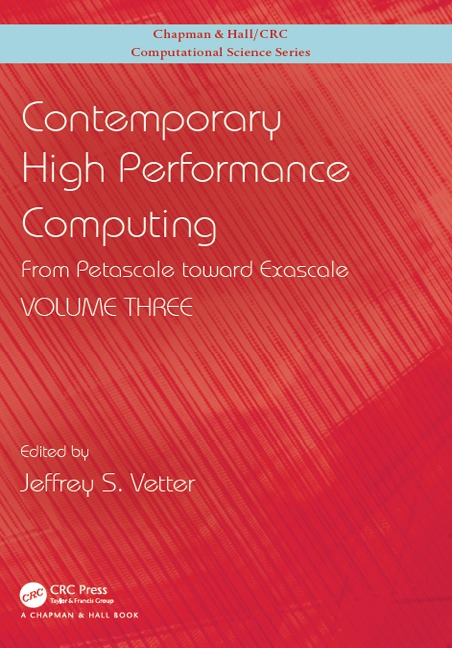
Contemporary High Performance Computing: From Petascale toward Exascale, Volume 3 focuses on the ecosystems surrounding the world's leading centers for high performance computing (HPC). It covers many of the important factors involved in each ecosystem: computer architectures, software, applications, facilities, and sponsors. This third volume will be a continuation of the two previous volumes, and will include other HPC ecosystems using the same chapter outline: description of a flagship system, major application workloads, facilities, and sponsors. Features: - Describes many prominent, international systems in HPC from 2015 through 2017 including each system's hardware and software architecture - Covers facilities for each system including power and cooling - Presents application workloads for each site - Discusses historic and projected trends in technology and applications - Includes contributions from leading experts Designed for researchers and students in high performance computing, computational science, and related areas, this book provides a valuable guide to the state-of-the art research, trends, and resources in the world of HPC.
Jeffrey S. Vetter, Ph.D., is a Distinguished R&D Staff Member, and the founding group leader of the Future Technologies Group in the Computer Science and Mathematics Division of Oak Ridge National Laboratory. Vetter also holds a joint appointment at the Electrical Engineering and Computer Science Department of the University of Tennessee-Knoxville. From 2005 through 2015, Vetter held a Joint position at Georgia Institute of Technology, where, from 2009 to 2015, he was the Principal Investigator of the NSF Track 2D Experimental Computing XSEDE Facility, named Keeneland, for large scale heterogeneous computing using graphics processors, and the Director of the NVIDIA CUDA Center of Excellence.
1. Australian Government Bureau of Meteorology 2. Theta and Mira at Argonne National Laboratory 3. Enabling HPC Applications on a Cray XC40 with Manycore CPUs 4. The Mont-Blanc Prototype 5. Chameleon 6. CSCS and the Piz Daint System 7. Facility Best Practices 8. Jetstream 9. Modular Supercomputing architecture: from idea to production 10. SuperMUC at LRZ 11. The NERSC Cori HPC System 12. Lomonosov-2 13. Electra 14. Bridges: Converging HPC, AI, and Big Data for Enabling Discovery 15. Stampede at TACC 16. Oakforest-PACS 17. CHPC in South Africa
Dieses eBook wird im PDF-Format geliefert und ist mit einem Adobe Kopierschutz (DRM) versehen. Sie können dieses eBook mit allen Geräten lesen, die das PDF-Format und den Adobe Kopierschutz (DRM) unterstützen.
Zum Beispiel mit den folgenden Geräten:
• tolino Reader
Laden Sie das eBook direkt über den Reader-Shop auf dem tolino herunter oder übertragen Sie das eBook auf Ihren tolino mit einer kostenlosen Software wie beispielsweise Adobe Digital Editions.
• Sony Reader & andere eBook Reader
Laden Sie das eBook direkt über den Reader-Shop herunter oder übertragen Sie das eBook mit der kostenlosen Software Sony READER FOR PC/Mac oder Adobe Digital Editions auf ein Standard-Lesegeräte mit epub- und Adobe DRM-Unterstützung.
• Tablets & Smartphones
Möchten Sie dieses eBook auf Ihrem Smartphone oder Tablet lesen, finden Sie hier unsere kostenlose Lese-App für iPhone/iPad und Android Smartphone/Tablets.
• PC & Mac
Lesen Sie das eBook direkt nach dem Herunterladen mit einer kostenlosen Lesesoftware, beispielsweise Adobe Digital Editions, Sony READER FOR PC/Mac oder direkt über Ihre eBook-Bibliothek in Ihrem Konto unter „Meine eBooks“ - „online lesen“.
Schalten Sie das eBook mit Ihrer persönlichen Adobe ID auf bis zu sechs Geräten gleichzeitig frei.
Bitte beachten Sie, dass die Kindle-Geräte das Format nicht unterstützen und dieses eBook somit nicht auf Kindle-Geräten lesbar ist.