Und dann auf "Zum Home-Bildschirm [+]".

Stöbern
genialokal zum Startbildschirm hinzufügen
Installieren Sie die genialokal App auf Ihrem Startbildschirm für einen schnellen Zugriff und eine komfortable Nutzung.
Installieren Sie die genialokal App auf Ihrem Startbildschirm für einen schnellen Zugriff und eine komfortable Nutzung.
Ihr gewünschter Artikel ist in 0 Buchhandlungen vorrätig - wählen Sie hier eine Buchhandlung in Ihrer Nähe aus:

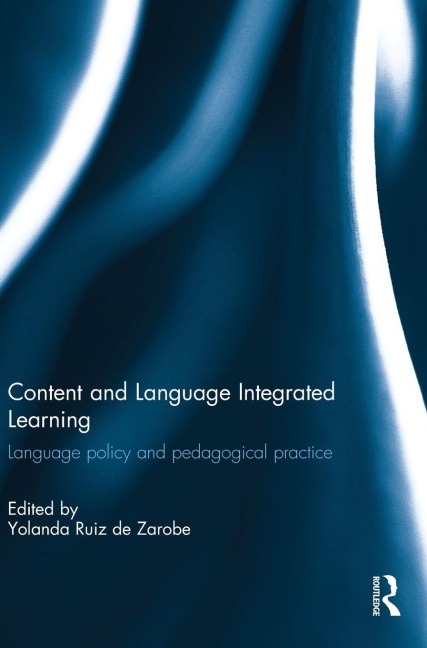
This book explores some of the recent research undertaken on Content and Language Integrated Learning (CLIL). It offers an overview of several European contexts, describing experiences that could be extrapolated to many other communities worldwide. Contributions focus on issues related to language policy, moving from high-level policymaking to grassroots decisions, but all of them encompassing the major changes that can be recognized in education, which also evidence the shifts in society and economic life that have taken place in Europe in the last decades. This book was originally published as a special issue of the International Journal of Bilingual Education and Bilingualism.
Yolanda Ruiz de Zarobe is Associate Professor in Language and Applied Linguistics at the University of the Basque Country, UPV/EHU, Spain. Her research focuses on the acquisition of English as a second and a third language, multilingualism, and Content and Language Integrated Learning (CLIL). Her work has appeared in books, edited books and international journals.
Introduction - CLIL implementation: from policy-makers to individual initiatives 1. Listening to learners: an investigation into 'successful learning' across CLIL contexts 2. The power of beliefs: lay theories and their influence on the implementation of CLIL programmes 3. CLIL in junior vocational secondary education: challenges and opportunities for teaching and learning 4. CLIL in Sweden - why does it not work? A metaperspective on CLIL across contexts in Europe 5. Curricular models of CLIL education in Poland 6. Learning to become a CLIL teacher: teaching, reflection and professional development 7. How CLIL can provide a pragmatic means to renovate science education - even in a sub-optimally bilingual context 8. Genre-based curricula: multilingual academic literacy in content and language integrated learning 9. Discussion: towards an educational perspective in CLIL language policy and pedagogical practice