Und dann auf "Zum Home-Bildschirm [+]".

Stöbern
genialokal zum Startbildschirm hinzufügen
Installieren Sie die genialokal App auf Ihrem Startbildschirm für einen schnellen Zugriff und eine komfortable Nutzung.
Installieren Sie die genialokal App auf Ihrem Startbildschirm für einen schnellen Zugriff und eine komfortable Nutzung.
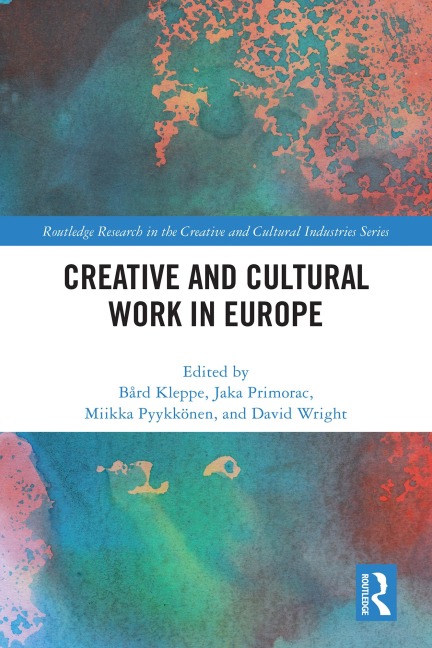
This book gathers evidence and case studies from various parts of Europe and across the different sectors that comprise the creative industries, including the visual and performing arts, popular music, the platform economy, and film. The creative economy has been lauded by national and regional governments for its job-creating potential, even though the jobs created might be insecure or poorly paid. This edited collection emerges from a research network examining this contradiction. It gathers empirical material and case studies across European creative sectors to explore how creative work is perceived by both workers and policymakers, and how these understandings shape practical worker support. The volume brings together renowned European experts from cultural sociology, cultural studies, and creative labour research. Combining cross-national writing teams with focused national case studies, it provides comprehensive insights into diverse creative economies across Europe. Addressing the tension between the creative economy's promise and workers' lived experiences, it examines how cultural and economic policies intersect with social inequalities, determining who can access and thrive in creative careers. The research reveals both the challenges facing creative workers and emerging strategies for creating more equitable opportunities. Through analysis of macro-level policy frameworks alongside micro-level worker experiences, this book offers nuanced perspectives and examines the structural factors that shape the conditions of creative work. With insights from renowned European experts, Creative and Cultural Work in Europe will be of value to those studying and researching cultural policy, labour studies, and the creative industries more broadly.
Bård Kleppe works as a research professor at the Telemark Research Institute. He has conducted several research projects on cultural policy, artists' working conditions, and the creative sector. Jaka Primorac works as a scientific advisor at the Institute for Development and International Relations (IRMO), Zagreb, with research interests in the field of cultural and creative industries, cultural labour, cultural policy and digital culture. Miikka Pyykkönen is Professor of Cultural Policy in the Department of Social Sciences and Philosophy, University of Jyväskylä. He specializes in cultural policy, creative economy, and ethnopolitics, but his research interests also cover entrepreneurship, cultural participation of youth, government and governance, and social theory. David Wright is an associate professor in the Centre for Cultural and Media Policy Studies at the University of Warwick, where he teaches and researches cultural policy and cultural work.
1. Introduction: Approaching Creative and Cultural Work in Europe Part I: The Precarious Present of Creative and Cultural Work 2. Measuring Matters: Mapping Cultural and Creative Work in Europe 3. Creativity and the 'Work' of Art: Visual Artists' Perspectives 4. On the Heterogeneity of Creative Work: Exploring Effects of the COVID-19 Pandemic on Cultural Workers in the Balkans 5. Closing the Gap? Gender Differences in Norwegian Artists' Work and Income 6. Patterns in Artists' Careers: Adapting to Uncertainty, Opportunity, and Socio- Economic Constraints 7. "Oh My God, What Have I Done All Day?": Challenges of Measuring the Value of Creative Work Part II: Challenges for Policy: Changing the Conditions of Creative and Cultural Work 8. Barcelona Creation Factories: Improving the Support for Creative Work through an Innovative Cultural Policy 9. Welfare Policy as Cultural Policy in the UK: From Enterprise Allowance to Universal Credit 10. Building Creative Careers through Working Relations: The Case of the Norwegian Artist Assistant Scheme 11. From Precarity to Security? How Can Cultural Policies Tackle the Challenging Working Conditions of Creative Self- Employees in Europe? 12. The Trajectory of Film Work as Precarious Project Work: From Organization of Associated Labour, through Semi- Permanent Workgroups, to Gig Jobs 13. The Creative Middle Class: Between Neoliberalism and Commonism Part III: Contested Futures of Creative and Cultural Work 14. How to Move Things with Unions? Labour Organizing of Art Workers in the Post- Yugoslav Context 15. Creative Labour as Platform Work: Structural Inequalities and Digital Peripheries 16. Universal Basic Income and the Future of (Creative) Work 17. Ecologically Sustainable Creative Work? Rethinking Cultural Policies and Practices of Creative Work in the Wake of Green Transition 18. Navigating Symbolic Boundaries: Migrants' Artistic Practices and the Struggle for Recognition 19. Conclusion: Supporting Creative and Cultural Work in Europe