Und dann auf "Zum Home-Bildschirm [+]".

Stöbern
genialokal zum Startbildschirm hinzufügen
Installieren Sie die genialokal App auf Ihrem Startbildschirm für einen schnellen Zugriff und eine komfortable Nutzung.
Installieren Sie die genialokal App auf Ihrem Startbildschirm für einen schnellen Zugriff und eine komfortable Nutzung.
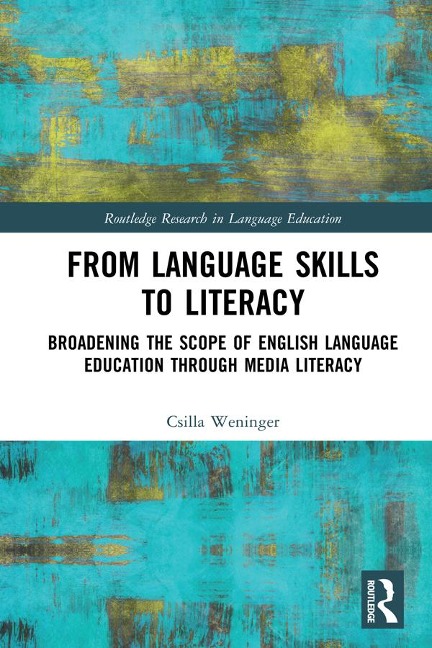
The narrowing of English language education curriculum in many contexts has negatively impacted classroom teaching and learning. High-stakes standardized testing, scripted curricula, and the commodification of English have converged to challenge socially meaningful classroom literacy instruction that promotes holistic development. Although in different ways, these factors have shaped the teaching of English as both first and second language. How can English educators respond? This book argues that the first step is to take account of the broader policy, political and cultural landscape and to identify the key constraints affecting teachers, students and parents. These will set the broad parameters for developing local pedagogic approaches, while still recognizing the constraints that actively push against them. Using Singapore English language teaching as a case study, this book illustrates how this process can unfold, and how media literacy principles were vernacularized to design English classroom pedagogies that stretched the bounds of what is acceptable and possible in the local context.
Csilla Weninger is associate professor in the department of English Language and Literature at the National Institute of Education, Singapore. Her research examines the imprint and impact of political and institutional ideologies on the conduct of schooling, including its material dimensions such as textbooks as well as everyday pedagogies. Her publications have appeared, among others, in Teaching and Teacher Education, Discourse, TESOL Quarterly, Linguistics and Education, and ELT Journal.
List of figures List of tables List of appendices Acknowledgments Chapter 1: Introduction Chapter 2: English language and literacy education: A historical overview Chapter 3: Media literacy: Key ideas and connections to English literacy education Chapter 4: Challenges to a literacy approach to teaching English Chapter 5: Bridging theory, curriculum and pedagogy: Developing a framework for media literacy through English Chapter 6: A contextual look at the media literacy dimensions in pedagogic practice Chapter 7: Developing and implementing the media literacy unit in Eastridge Secondary School Chapter 8: The question of authenticity: Students' experiences with school media/literacy education Chapter 9: Conclusion Appendix Index
Dieses eBook wird im PDF-Format geliefert und ist mit einem Adobe Kopierschutz (DRM) versehen. Sie können dieses eBook mit allen Geräten lesen, die das PDF-Format und den Adobe Kopierschutz (DRM) unterstützen.
Zum Beispiel mit den folgenden Geräten:
• tolino Reader
Laden Sie das eBook direkt über den Reader-Shop auf dem tolino herunter oder übertragen Sie das eBook auf Ihren tolino mit einer kostenlosen Software wie beispielsweise Adobe Digital Editions.
• Sony Reader & andere eBook Reader
Laden Sie das eBook direkt über den Reader-Shop herunter oder übertragen Sie das eBook mit der kostenlosen Software Sony READER FOR PC/Mac oder Adobe Digital Editions auf ein Standard-Lesegeräte mit epub- und Adobe DRM-Unterstützung.
• Tablets & Smartphones
Möchten Sie dieses eBook auf Ihrem Smartphone oder Tablet lesen, finden Sie hier unsere kostenlose Lese-App für iPhone/iPad und Android Smartphone/Tablets.
• PC & Mac
Lesen Sie das eBook direkt nach dem Herunterladen mit einer kostenlosen Lesesoftware, beispielsweise Adobe Digital Editions, Sony READER FOR PC/Mac oder direkt über Ihre eBook-Bibliothek in Ihrem Konto unter „Meine eBooks“ - „online lesen“.
Schalten Sie das eBook mit Ihrer persönlichen Adobe ID auf bis zu sechs Geräten gleichzeitig frei.
Bitte beachten Sie, dass die Kindle-Geräte das Format nicht unterstützen und dieses eBook somit nicht auf Kindle-Geräten lesbar ist.