Und dann auf "Zum Home-Bildschirm [+]".

Stöbern
genialokal zum Startbildschirm hinzufügen
Installieren Sie die genialokal App auf Ihrem Startbildschirm für einen schnellen Zugriff und eine komfortable Nutzung.
Installieren Sie die genialokal App auf Ihrem Startbildschirm für einen schnellen Zugriff und eine komfortable Nutzung.
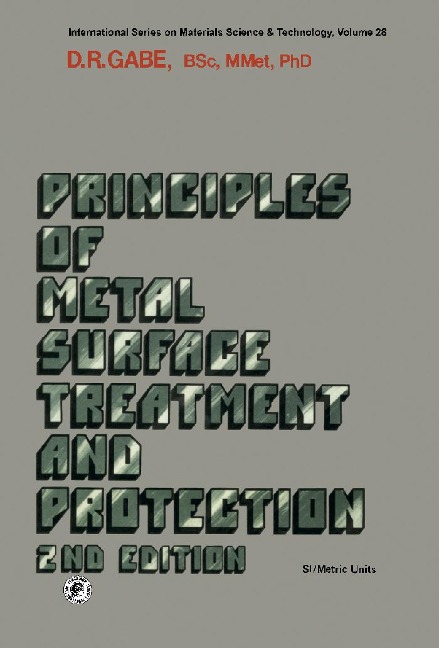
Principles of Metal Surface Treatment and Protection deals with the principles of metal surface treatment and protection. Topics covered range from electrodeposition and hot dip coating to diffusion and non-metallic coatings, as well as oxide and conversion coatings. The theory of corrosion protection is also discussed. Comprised of eight chapters, this volume begins with an overview of the corrosion of metals and the scope of protection against corrosion, followed by a detailed treatment of electrodeposition. The discussion then turns to the principles of hot dipping as a coating method; the formation of a diffusion coating; and the role of a non-metallic coating in corrosion protection. Subsequent chapters focus on the protection of oxide films against corrosion by means of anodizing, phosphatizing, and the use of tin free steel; testing and selection of a particular coating for corrosion resistance applications; and the theory of corrosion protection. This book is intended for metal-finishing scientists and students of metallurgy and metal finishing.
Preface to the Second EditionPreface to the First Edition1. The Scope of Protection 1.1. Introduction 1.2. Coating Application 1.3. Basic Physical Chemistry 1.3.1. Electrode Potentials 1.3.2. Faraday's Laws 1.3.3. Polarization 1.3.4. Surface Chemistry 1.3.5. Electrophoresis 1.4. Competitive Protection Methods 1.5. Surface Preparation2. Electrodeposition 2.1. Technology and Control 2.1.1. Plant and Materials 2.1.2. Control 2.1.3. Anode Characteristics 2.1.4. Surface Preparation 2.2. Electroplating Systems 2.3. Properties and Applications of Electrodeposits 2.4. Alloy Electrodeposition 2.5. Theory of Electrodeposition 2.6. Non-aqueous and Electroless Deposition 2.6.1. Fused Salts 2.6.2. Organic Solvents 2.6.3. Electroless Plating 2.7. Plating on Plastics 2.8. Electrophoretic Deposition 2.9. Electrodeposited Composites3. Hot Dip Coating 3.1. Principles 3.2. Surface Preparation 3.3. Batch Coating Processes 3.4. Continuous Coating Processes 3.5. Coating Properties and Application4. Diffusion Coatings 4.1. Principles 4.2. Cementation 4.3. Cladding 4.4. Vacuum Deposition 4.5. Vapour Deposition-Pyrolysis 4.6. Sprayed Metal Coatings 4.7. Structure of Diffusion Coatings 4.8. Case Hardening5. Non-Metallic Coatings 5.1. Introduction 5.2. Paint Formulation 5.3. Paint Coating Systems 5.4. Lacquers 5.5. Plastic Coatings 5.6. Rubbers and Elastomers 5.7. Vitreous Enamels 5.8. Temporary Protective Coatings6. Oxide and Conversion Coatings 6.1. Introduction 6.2. Anodizing 6.3. Chromating 6.3.1. Aluminium 6.3.2. Magnesium 6.3.3. Tin 6.3.4. Zinc and Cadmium 6.3.5. Copper and Silver 6.4. Phosphating 6.4.1. Phosphate Conversion Coatings 6.4.2. Phosphate Etch Primers 6.5. Tin Free Steel7. Testing and Selection 7.1. Introduction 7.2. Metallurgical Tests 7.3. Chemical Tests 7.3.1. Composition of Coating 7.3.2. Coating Thickness Determination 7.3.3. Porosity Measurement 7.3.4. Corrosion Tests 7.4. Specifications 7.5. Selection of Coating 7.6. Coating Protection Examples8. Theory of Corrosion Protection 8.1. Introduction 8.2. Polarization Diagrams 8.3. Simple Coating Protection 8.4. Polarity Reversals 8.5. Metallography of Coating CorrosionAppendix: Economic Assessment of Protective SystemsReferencesIndex