Und dann auf "Zum Home-Bildschirm [+]".

Stöbern
genialokal zum Startbildschirm hinzufügen
Installieren Sie die genialokal App auf Ihrem Startbildschirm für einen schnellen Zugriff und eine komfortable Nutzung.
Installieren Sie die genialokal App auf Ihrem Startbildschirm für einen schnellen Zugriff und eine komfortable Nutzung.
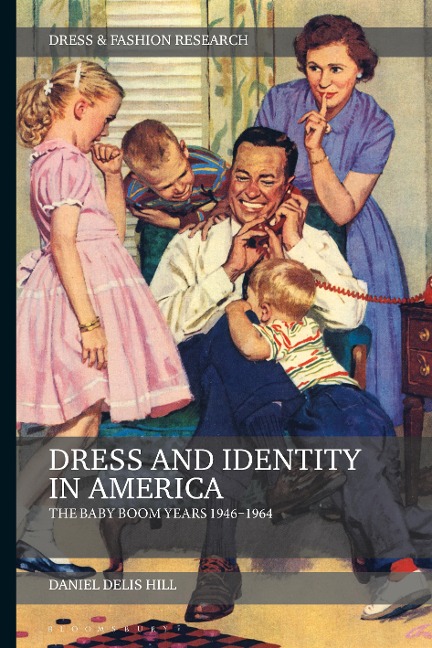
Dress and Identity in America is an examination of the conservatism and materialism that swept across the country in the late 1940s through the 1950s-a backlash to the wartime tumult, privations, and social upheavals of the Second World War.
The study looks at how American men sought to recapture a masculine identity from a generation earlier, that of the stoic patriarch, breadwinner, and dutiful father, and in the process, became the men in the gray flannel suits who were complacently conventional and conformist. Parallel to that is a look at how American women, who had donned pants and went to work in wartime munitions factories or joined services like the WACS and WAVES, were now expected to stay at home as housewives and mothers, dressed in cinched, ultrafeminine New Look fashions.
As the Space Age dawned, their baby boom children rejected the conventions of their elders and experimented with their own ideas of identity and dress in an emerging era of counterculture revolutions.
Daniel Delis Hill is an independent fashion historian. He is the author of Peacock Revolution (Bloomsbury, 2018). He has contributed to the Berg Encyclopedia of World Dress and Fashion and the American National Biography (Oxford University), and has taught fashion history at the University of the Incarnate Word, Texas, USA.
Preface
1. The Man in the Gray Flannel Suit: Growing Up
Sociocultural legacies from his childhood
American manhood during World War II
Civilian dress and identity during the Second World War
Conclusion
2. The Man in the Gray Flannel Suit: The Postwar Years
Masculine identity in transition
The GI Bill of Rights
Postwar marriage
Masculine identity in suburbia
Fatherhood in the baby boom era
TV dads of the 1950s
Conclusion
3. The Man in the Gray Flannel Suit: Crisis in Masculinity
The feminization of American manhood
Conformity and Cold War masculine identity
The stress of success
Noncomformist Beats, beatniks and bikers
Playboys
"Lavender Lads"
Conclusion
4. Men's Dress from Ivy League to Continental to Mod
Ivy League style
Continental suits
Accessories
Sportswear
The dichotomy of desexualized dress and erotic masculine styles
The British Invasion: from the London Line to mod
Conclusion
5. Ethnic Men's Identity and Dress
The zoot suit
The social significance and cultural meaning of the zoot suit
The zoot suit riots
Soul style in the 1960s
Conclusion
6. Women of the Baby Boom Era: Lessons of Youth
Feminine role models and expectations
American women during World War II
Sociocultural changes for women during World War II
Conclusion
7. Women's Identities in the Baby Boom Years
Marriage reunions at the end of the war
Postwar newlyweds
Postwar marriage: not happily ever after
Postwar suburban wives
Motherhood in the baby boom era
TV wives and mothers of the baby boom era
Working women of the baby boom era
Feminism in the baby boom era
Conclusion
8. Women's Fashions of the Baby Boom Era
The New Look
Mod and the miniskirt
Women's accessories of the baby boom years
Decade of "miracle fabrics"
Conclusion
9. Baby Boom Children
An era of children
Gender role socialization
A new consumer demographic
Children's dress
Standardization of children's sizes and textile regulations
Children's body modifications
Conclusion
End Notes
Bibliography
Index
Dieses eBook wird im PDF-Format geliefert und ist mit einem Adobe Kopierschutz (DRM) versehen. Sie können dieses eBook mit allen Geräten lesen, die das PDF-Format und den Adobe Kopierschutz (DRM) unterstützen.
Zum Beispiel mit den folgenden Geräten:
• tolino Reader
Laden Sie das eBook direkt über den Reader-Shop auf dem tolino herunter oder übertragen Sie das eBook auf Ihren tolino mit einer kostenlosen Software wie beispielsweise Adobe Digital Editions.
• Sony Reader & andere eBook Reader
Laden Sie das eBook direkt über den Reader-Shop herunter oder übertragen Sie das eBook mit der kostenlosen Software Sony READER FOR PC/Mac oder Adobe Digital Editions auf ein Standard-Lesegeräte mit epub- und Adobe DRM-Unterstützung.
• Tablets & Smartphones
Möchten Sie dieses eBook auf Ihrem Smartphone oder Tablet lesen, finden Sie hier unsere kostenlose Lese-App für iPhone/iPad und Android Smartphone/Tablets.
• PC & Mac
Lesen Sie das eBook direkt nach dem Herunterladen mit einer kostenlosen Lesesoftware, beispielsweise Adobe Digital Editions, Sony READER FOR PC/Mac oder direkt über Ihre eBook-Bibliothek in Ihrem Konto unter „Meine eBooks“ - „online lesen“.
Schalten Sie das eBook mit Ihrer persönlichen Adobe ID auf bis zu sechs Geräten gleichzeitig frei.
Bitte beachten Sie, dass die Kindle-Geräte das Format nicht unterstützen und dieses eBook somit nicht auf Kindle-Geräten lesbar ist.