Und dann auf "Zum Home-Bildschirm [+]".

Stöbern
genialokal zum Startbildschirm hinzufügen
Installieren Sie die genialokal App auf Ihrem Startbildschirm für einen schnellen Zugriff und eine komfortable Nutzung.
Installieren Sie die genialokal App auf Ihrem Startbildschirm für einen schnellen Zugriff und eine komfortable Nutzung.
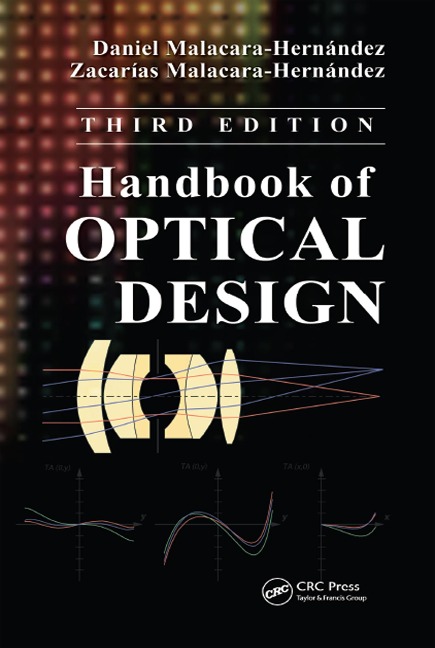
Handbook of Optical Design, Third Edition covers the fundamental principles of geometric optics and their application to lens design in one volume. It incorporates classic aspects of lens design along with important modern methods, tools, and instruments, including contemporary astronomical telescopes, Gaussian beams, and computer lens design. Written by respected researchers, the book has been extensively classroom-tested and developed in their lens design courses. This well-illustrated handbook clearly and concisely explains the intricacies of optical system design and evaluation. It also discusses component selection, optimization, and integration for the development of effective optical apparatus. The authors analyze the performance of a wide range of optical materials, components, and systems, from simple magnifiers to complex lenses used in photography, ophthalmology, telescopes, microscopes, and projection systems. Throughout, the book includes a wealth of design examples, illustrations, and equations, most of which are derived from basic principles. Appendices supply additional background information. What's New in This Edition - Improved figures, including 32 now in color - Updates throughout, reflecting advances in the field - New material on Buchdahl high-order aberrations - Expanded and improved coverage of the calculation of wavefront aberrations based on optical path - An updated list of optical materials in the appendix - A clearer, more detailed description of primary aberrations - References to important new publications - Optical system design examples updated to include newly available glasses - 25 new design examples This comprehensive book combines basic theory and practical details for the design of optical systems. It is an invaluable reference for optical students as well as scientists and engineers working with optical instrumentation.
Daniel Malacara-Hernández is a professor and researcher at Centro de Investigaciones en Optica in Leon, Mexico. Zacarías Malacara-Hernández is a researcher at Centro de Investigaciones en Optica in Leon, Mexico.
Geometrical Optics Principles. Thin Lenses and Spherical Mirrors. Systems of Several Lenses and Thick Lenses. Chromatic Aberrations. Spherical Aberration. Monochromatic Off-Axis Aberrations. Aberration Polynomials and High-Order Aberrations. Computer Evaluation of Optical Systems. Diffraction in Optical Systems. Prisms. Basic Optical Systems and Simple Photographic Lenses. Complex Photographic Lenses. The Human Eye and Ophthalmic Lenses. Astronomical Telescopes. Visual Systems and Afocal Systems. Microscopes. Projection Systems. Lens Design Optimization. Appendices. Index.
Dieses eBook wird im PDF-Format geliefert und ist mit einem Adobe Kopierschutz (DRM) versehen. Sie können dieses eBook mit allen Geräten lesen, die das PDF-Format und den Adobe Kopierschutz (DRM) unterstützen.
Zum Beispiel mit den folgenden Geräten:
• tolino Reader
Laden Sie das eBook direkt über den Reader-Shop auf dem tolino herunter oder übertragen Sie das eBook auf Ihren tolino mit einer kostenlosen Software wie beispielsweise Adobe Digital Editions.
• Sony Reader & andere eBook Reader
Laden Sie das eBook direkt über den Reader-Shop herunter oder übertragen Sie das eBook mit der kostenlosen Software Sony READER FOR PC/Mac oder Adobe Digital Editions auf ein Standard-Lesegeräte mit epub- und Adobe DRM-Unterstützung.
• Tablets & Smartphones
Möchten Sie dieses eBook auf Ihrem Smartphone oder Tablet lesen, finden Sie hier unsere kostenlose Lese-App für iPhone/iPad und Android Smartphone/Tablets.
• PC & Mac
Lesen Sie das eBook direkt nach dem Herunterladen mit einer kostenlosen Lesesoftware, beispielsweise Adobe Digital Editions, Sony READER FOR PC/Mac oder direkt über Ihre eBook-Bibliothek in Ihrem Konto unter „Meine eBooks“ - „online lesen“.
Schalten Sie das eBook mit Ihrer persönlichen Adobe ID auf bis zu sechs Geräten gleichzeitig frei.
Bitte beachten Sie, dass die Kindle-Geräte das Format nicht unterstützen und dieses eBook somit nicht auf Kindle-Geräten lesbar ist.