Und dann auf "Zum Home-Bildschirm [+]".

Stöbern
genialokal zum Startbildschirm hinzufügen
Installieren Sie die genialokal App auf Ihrem Startbildschirm für einen schnellen Zugriff und eine komfortable Nutzung.
Installieren Sie die genialokal App auf Ihrem Startbildschirm für einen schnellen Zugriff und eine komfortable Nutzung.
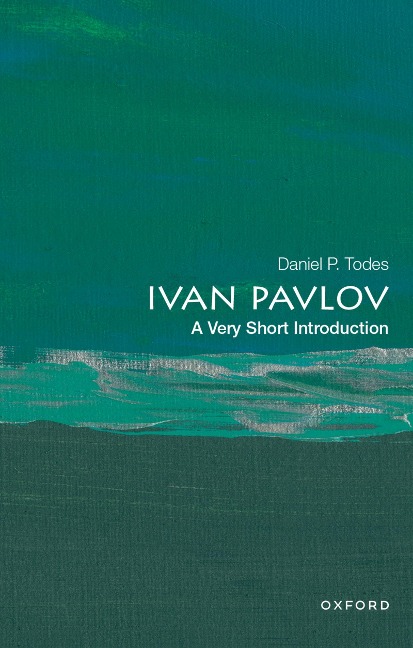
In this book, Daniel P. Todes provides concise introduction to the life and science of the great Russian physiologist Ivan Pavlov (1849-1936). Todes weaves together Pavlov's life, values, context, and science by focusing upon his quest to understand the psyche and the "torments of our consciousness". This introduction follows the origins and maturation of Pavlov's quest from his early life in a priestly family in provincial Riazan, to his struggles and late professional success in the glittering capital of St. Petersburg, through the cataclysmic destruction of his world during the Bolshevik seizure of power and civil war of 1917-1921, to the rebuilding of his life in his 70s as a "prosperous dissident" during the Leninist 1920s, and his success and personal torments in 1929-1936 during the industrialization, cultural revolution, and terror of Stalin times.
Beyond a basic biography, Todes devotes particular attention to Pavlov's Nobel Prize-winning research on digestion (1891-1903) and his iconic studies of conditional reflexes and higher nervous activity (1903-1936), as well as his experiments with dogs. Fundamentally reinterpreting Pavlov's famous research on conditional reflexes, Todes shows that Pavlov was not a behaviorist, did not use a bell, and was uninterested in training dogs. The Russian scientist sought to explain not merely external behaviors, but the emotional and intellectual life of animals and humans. Furthermore, this iconic "objectivist" was a profoundly anthropomorphic thinker whose science was suffused with his own experiences and values. Exploring the two unpublished manuscripts upon which Pavlov was working when he died, Todes shows the importance of his little-known experiments on chimps and explores his final thoughts about the relationship of science, Christianity, and Bolshevism.
Daniel P. Todes is Professor Emeritus of History of Medicine at John Hopkins University. His research concerns the relationship of scientific ideas to the context in which they are generated, and the history of science and medicine in Russia. He is the author of Darwin Without Malthus: The Struggle for Existence in Russian Evolutionary Thought and three previous books about Pavlov: Pavlov's Physiology Factory: Experiment, Interpretation, Laboratory Enterprise; a short biography for young adults: Ivan Pavlov: Exploring the Animal Machine; and the first archive-based scholarly biography in any language, Ivan Pavlov: A Russian Life in Science. His research has been supported by the National Endowment for the Humanities, the National Science Foundation, Fulbright-Hays, the International Research and Exchanges Board, and the John Simon Guggenheim Memorial Foundation.
List of illustrations Chapter 1. Winter at Koltushi Chapter 2. Certainty: Religious and Scientific Chapter 3. The Haunted Factory Chapter 4. Pavlov's Quest Chapter 5. Come the Bolsheviks Chapter 6. Nervous Types Chapter 7. Year of Climaxes Chapter 8. Final Reflections Chapter 9. Epilogue References Further Reading Index
Dieses eBook wird im PDF-Format geliefert und ist mit einem Adobe Kopierschutz (DRM) versehen. Sie können dieses eBook mit allen Geräten lesen, die das PDF-Format und den Adobe Kopierschutz (DRM) unterstützen.
Zum Beispiel mit den folgenden Geräten:
• tolino Reader
Laden Sie das eBook direkt über den Reader-Shop auf dem tolino herunter oder übertragen Sie das eBook auf Ihren tolino mit einer kostenlosen Software wie beispielsweise Adobe Digital Editions.
• Sony Reader & andere eBook Reader
Laden Sie das eBook direkt über den Reader-Shop herunter oder übertragen Sie das eBook mit der kostenlosen Software Sony READER FOR PC/Mac oder Adobe Digital Editions auf ein Standard-Lesegeräte mit epub- und Adobe DRM-Unterstützung.
• Tablets & Smartphones
Möchten Sie dieses eBook auf Ihrem Smartphone oder Tablet lesen, finden Sie hier unsere kostenlose Lese-App für iPhone/iPad und Android Smartphone/Tablets.
• PC & Mac
Lesen Sie das eBook direkt nach dem Herunterladen mit einer kostenlosen Lesesoftware, beispielsweise Adobe Digital Editions, Sony READER FOR PC/Mac oder direkt über Ihre eBook-Bibliothek in Ihrem Konto unter „Meine eBooks“ - „online lesen“.
Schalten Sie das eBook mit Ihrer persönlichen Adobe ID auf bis zu sechs Geräten gleichzeitig frei.
Bitte beachten Sie, dass die Kindle-Geräte das Format nicht unterstützen und dieses eBook somit nicht auf Kindle-Geräten lesbar ist.