Und dann auf "Zum Home-Bildschirm [+]".

Stöbern
genialokal zum Startbildschirm hinzufügen
Installieren Sie die genialokal App auf Ihrem Startbildschirm für einen schnellen Zugriff und eine komfortable Nutzung.
Installieren Sie die genialokal App auf Ihrem Startbildschirm für einen schnellen Zugriff und eine komfortable Nutzung.
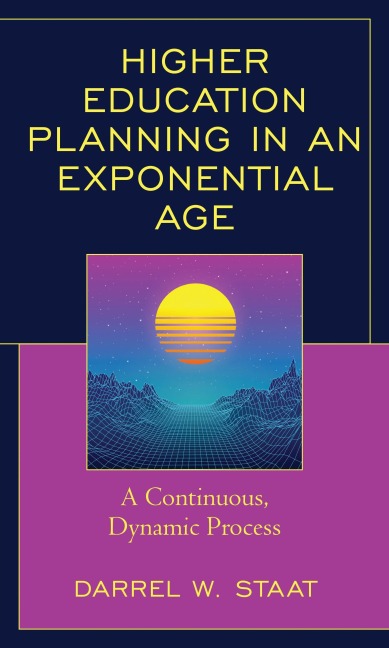
This book fulfills a need for planning in higher education due to the impending impact of ten twenty-first century technologies: 3D printing, artificial intelligence, autonomous vehicles, bitcoin/blockchain, genome development: agricultural, genome: medical, internet of things, nanotechnology, personal robot, and quantum computing. Each of these technologies develop in a two-stage manner: Stage 1, Linear, and Stage 2, Exponential.
Uber and Airbnb are excellent examples that developed for a short time in Stage 1, a step-by-step manner, before then reaching Stage 2, where they accelerated with exponential velocity. Both were able to accomplish rapid development through the use of digital support. The ten technologies listed above are all currently developing in Stage 1; however, each will reach Stage 2, and when they do, they will have powerful impacts on community colleges and universities. Their extremely rapid development in the second stage could take higher education by storm if the leaders, faculty, and staff are not prepared for them.
This book presents ARPAC, a planning method to successfully deal with the impact of these technologies. This planning method is critical for the future viability and success of community colleges and universities.
Darrel W. Staat is past president of two community colleges in Maine (founding president of one) and one community college in Virginia. He also served as president of the South Carolina Technical College System. He is now professor and coordinator of the EdD Higher Education Executive Leadership Program at Wingate University in North Carolina.
Preface
Acknowledgments
Introduction
Chapter 1. Toboggan Theory
Chapter 2. Higher Education at the Precipice
Chapter 3. Technological Impact on Higher Education
Chapter 4. Mission and Vision
Chapter 5. ARPAC: A Strategic Planning Process
Chapter 6.ARPAC Step 1: Awareness
Chapter 7.ARPAC Step 2: Research
Chapter 8.ARPAC Step 3: Planning
Chapter 9.ARPAC Step 4: Action
Chapter 10.ARPAC Step 5: Caring
Chapter 11. Toward A Successful Future
Epilogue
Appendix
References
About the Author
Dieses eBook wird im PDF-Format geliefert und ist mit einem Adobe Kopierschutz (DRM) versehen. Sie können dieses eBook mit allen Geräten lesen, die das PDF-Format und den Adobe Kopierschutz (DRM) unterstützen.
Zum Beispiel mit den folgenden Geräten:
• tolino Reader
Laden Sie das eBook direkt über den Reader-Shop auf dem tolino herunter oder übertragen Sie das eBook auf Ihren tolino mit einer kostenlosen Software wie beispielsweise Adobe Digital Editions.
• Sony Reader & andere eBook Reader
Laden Sie das eBook direkt über den Reader-Shop herunter oder übertragen Sie das eBook mit der kostenlosen Software Sony READER FOR PC/Mac oder Adobe Digital Editions auf ein Standard-Lesegeräte mit epub- und Adobe DRM-Unterstützung.
• Tablets & Smartphones
Möchten Sie dieses eBook auf Ihrem Smartphone oder Tablet lesen, finden Sie hier unsere kostenlose Lese-App für iPhone/iPad und Android Smartphone/Tablets.
• PC & Mac
Lesen Sie das eBook direkt nach dem Herunterladen mit einer kostenlosen Lesesoftware, beispielsweise Adobe Digital Editions, Sony READER FOR PC/Mac oder direkt über Ihre eBook-Bibliothek in Ihrem Konto unter „Meine eBooks“ - „online lesen“.
Schalten Sie das eBook mit Ihrer persönlichen Adobe ID auf bis zu sechs Geräten gleichzeitig frei.
Bitte beachten Sie, dass die Kindle-Geräte das Format nicht unterstützen und dieses eBook somit nicht auf Kindle-Geräten lesbar ist.