Und dann auf "Zum Home-Bildschirm [+]".

Stöbern
genialokal zum Startbildschirm hinzufügen
Installieren Sie die genialokal App auf Ihrem Startbildschirm für einen schnellen Zugriff und eine komfortable Nutzung.
Installieren Sie die genialokal App auf Ihrem Startbildschirm für einen schnellen Zugriff und eine komfortable Nutzung.
Ihr gewünschter Artikel ist in 0 Buchhandlungen vorrätig - wählen Sie hier eine Buchhandlung in Ihrer Nähe aus:

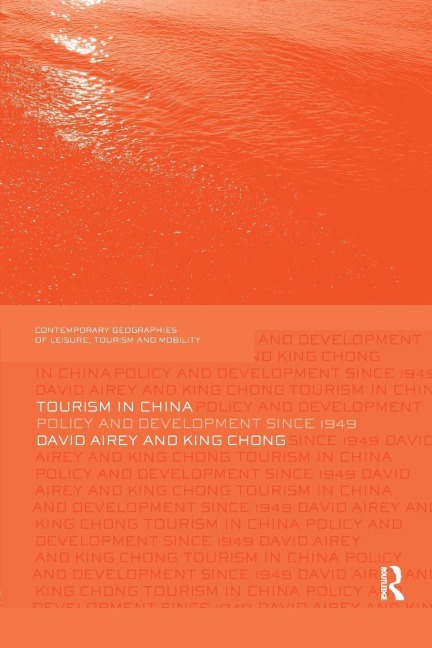

This is the first book to set the development of tourism in China since 1949 in its policy context. Underpinned by a strong conceptual framework, this systematic study of China contributes to an in-depth understanding of how public policy-making for tourism works and how it affects the development of tourism in the real world. The text explores tourism policy during three distinct leadership periods since creation of the People's Republic of China in 1949. The attitudes and values of leaders and central government agencies towards tourism are considered, as well as the interactions of ideological orthodoxies, socioeconomic conditions and institutions in their influence on national policy-making and tourism development. A separate chapter is devoted to policy-making in Hong Kong and Macau, as well as Taiwan. Drawing on China's experience over 60 years the book concludes with both theoretical and practical implications for tourism policy-making.
David Airey is Professor of Tourism Management at the University of Surrey, UK. King Chong is Project Fellow at the Public Policy Research Institute, Hong Kong Polytechnic University, China.
Part 1: Theoretical and Contextural Background 1. Introduction 2. Context, History and Overview 3. The Conceptual Framework Part 2: Tourism Development and Policy Making in China from 1949 4. Changing National Models of China From 1949 5. Tourism Politics in Mao Zedong's Era 6. The National Policy-Makers 7. Deng Xiaoping's Era: A Period of Change 8. The Collective Leadership Era Part 3: Four Particular Regions of China 9. Tourism Policy Issues in Four Particular Regions Part 4: Theoretical and Practical Implications 10. Theoretical Implications 11. Experiences and Lessons