Und dann auf "Zum Home-Bildschirm [+]".

Stöbern
genialokal zum Startbildschirm hinzufügen
Installieren Sie die genialokal App auf Ihrem Startbildschirm für einen schnellen Zugriff und eine komfortable Nutzung.
Installieren Sie die genialokal App auf Ihrem Startbildschirm für einen schnellen Zugriff und eine komfortable Nutzung.
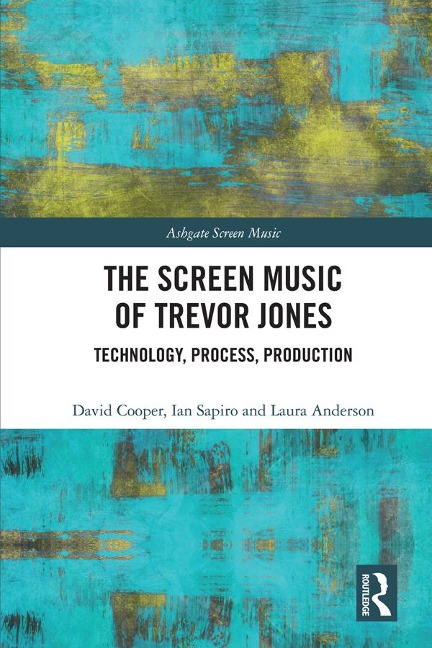
The first significant publication devoted entirely to Trevor Jones's work, The Screen Music of Trevor Jones: Technology, Process, Production, investigates the key phases of his career within the context of developments in the British and global screen-music industries. This book draws on the direct testimony of the composer and members of his team as well as making use of the full range of archival materials held in the University of Leeds's unique Trevor Jones Archive, which was digitized with support from the Arts and Humanities Research Council. Through a comprehensive series of chapters covering Jones's early career to his recent projects, this book demonstrates how Jones has been active in an industry that has experienced a prolonged period of major technological change, including the switchover from analogue to digital production and post-production techniques, and developments in computer software for score production and sound recording/editing. This is a valuable study for scholars, researchers and professionals in the areas of film music, film-score production and audio-visual media.
David Cooper is Emeritus Professor of Music at the University of Leeds. He has published extensively on film music (especially that of Bernard Herrmann, Trevor Jones and Michael Nyman), the music of Béla Bartók and the traditional music of Ireland. His outputs include volumes on Herrmann's scores for the films Vertigo and The Ghost and Mrs Muir; a major biography of Bartók and a study of the latter's Concerto for Orchestra; and the monograph The Musical Traditions of Northern Ireland and Its Diaspora. He was principal investigator of the AHRC-funded project 'The Professional Career and Output of Trevor Jones'. Ian Sapiro is Associate Professor of Music at the University of Leeds. His monograph, Scoring the Score, is the first academic study of screen-music orchestration and orchestrators, and he has published on a range of screen-music and musical-theatre subjects. Outputs include a volume on Eshkeri's score for Stardust and publications on John Williams's orchestration, the film adaptations of Les Misérables and Annie, British 'rock operas' and Michael Nyman's Greenaway scores, and he is currently working on a critical edition of the Gershwin musical Girl Crazy. He was co-investigator on the AHRC-funded project 'The Professional Career and Output of Trevor Jones'. Laura Anderson is an Irish Research Council Post-Doctoral Fellow at Maynooth University, where her project 'Disruptive Soundscapes' offers a new view of avant-garde post-war French film sound design by examining its relationship with wider cultural developments. Between 2013 and 2016, Laura was the Post-Doctoral Research Fellow on the AHRC-funded project, 'The Professional Career and Output of Trevor Jones' at the University of Leeds. Other projects include publications on Jean Cocteau's engagement with music and sound in film; pre-existing music in Jean-Pierre Melville's Les Enfants terribles; John Williams's score for Angela's Ashes; and Brian Boydell's music for documentary film.
Part One: Jones's Early Career (1978-1987) 1. Musical Education and the National Film School 2. Breaking into the Industry Part Two: The 'Toolkit' Years (1987-1993) 3. Alan Parker and the Development of the Toolkit 4. Towards a Mainstream Sound Part Three: Mainstream Scoring (1993-2004) 5. Hollywood Blockbusters Part One 6. Hollywood Blockbusters Part Two 7. Music for Television Part Four: Recent Projects (2004-) 8. A Brief Foray into Video Games 9. Work in Diverse Areas of Screen Programming
Dieses eBook wird im PDF-Format geliefert und ist mit einem Adobe Kopierschutz (DRM) versehen. Sie können dieses eBook mit allen Geräten lesen, die das PDF-Format und den Adobe Kopierschutz (DRM) unterstützen.
Zum Beispiel mit den folgenden Geräten:
• tolino Reader
Laden Sie das eBook direkt über den Reader-Shop auf dem tolino herunter oder übertragen Sie das eBook auf Ihren tolino mit einer kostenlosen Software wie beispielsweise Adobe Digital Editions.
• Sony Reader & andere eBook Reader
Laden Sie das eBook direkt über den Reader-Shop herunter oder übertragen Sie das eBook mit der kostenlosen Software Sony READER FOR PC/Mac oder Adobe Digital Editions auf ein Standard-Lesegeräte mit epub- und Adobe DRM-Unterstützung.
• Tablets & Smartphones
Möchten Sie dieses eBook auf Ihrem Smartphone oder Tablet lesen, finden Sie hier unsere kostenlose Lese-App für iPhone/iPad und Android Smartphone/Tablets.
• PC & Mac
Lesen Sie das eBook direkt nach dem Herunterladen mit einer kostenlosen Lesesoftware, beispielsweise Adobe Digital Editions, Sony READER FOR PC/Mac oder direkt über Ihre eBook-Bibliothek in Ihrem Konto unter „Meine eBooks“ - „online lesen“.
Schalten Sie das eBook mit Ihrer persönlichen Adobe ID auf bis zu sechs Geräten gleichzeitig frei.
Bitte beachten Sie, dass die Kindle-Geräte das Format nicht unterstützen und dieses eBook somit nicht auf Kindle-Geräten lesbar ist.