Und dann auf "Zum Home-Bildschirm [+]".

Stöbern
genialokal zum Startbildschirm hinzufügen
Installieren Sie die genialokal App auf Ihrem Startbildschirm für einen schnellen Zugriff und eine komfortable Nutzung.
Installieren Sie die genialokal App auf Ihrem Startbildschirm für einen schnellen Zugriff und eine komfortable Nutzung.
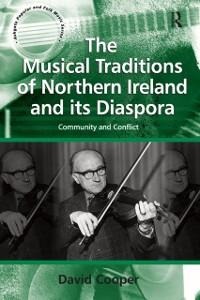
For at least two centuries, and arguably much longer, Ireland has exerted an important influence on the development of the traditional, popular and art musics of other regions, and in particular those of Britain and the United States. During the past decade or so, the traditional musics of the so-called Celtic regions have become a focus of international interest. The phenomenal success of shows such as Riverdance (which appeared in 1995, spawned from a 1994 Eurovision Song Contest interval act) brought Irish music and dance to a global audience and played a part in the further commoditization of Irish culture, including traditional music. However, there has been until now, relatively little serious musicological study of the traditional music of Northern Ireland. Northern Ireland remains a divided community in which traditional culture, in all its manifestations, is widely understood as a marker of religious affiliation and ethnic identity. Since the outbreak of the most recent 'troubles' around 1968, the borders between the communities have often been marked by music. For example, many in the Catholic, nationalist community, regard the music of Orange flute bands and Lambeg drums as a source of intimidation. Equally, many in the Protestant community have distanced themselves from Irish music as coming from a different ethnic tradition, and some have rejected tunes, styles and even instruments because of their association with the Catholic community and the Irish Republic. Of course, during the same period many other Protestants and Catholics have continued to perform in an apolitical context and often together, what in earlier times would simply have been regarded as folk or country music. With the increasing espousal of a discrete Ulster Scots tradition since the signing of the Belfast (or 'Good Friday') Agreement in 1998, the characteristics of the traditional music performed in Northern Ireland, and the place of Protestant musicians within popular Irish cult
David Cooper, Professor of Music and Technology in the School of Music and Dean of the Faculty of Performance, Visual Arts and Communications, University of Leeds.
Contents: Introduction; The geographical, historical and social construction of Northern Ireland; Song sources, traditions and ideologies; Performance practices in Northern Ireland; The process of collection, transcription and transmission; Music of the Northern Irish diaspora in America; Bibliography; Index.
Dieses eBook wird im PDF-Format geliefert und ist mit einem Adobe Kopierschutz (DRM) versehen. Sie können dieses eBook mit allen Geräten lesen, die das PDF-Format und den Adobe Kopierschutz (DRM) unterstützen.
Zum Beispiel mit den folgenden Geräten:
• tolino Reader
Laden Sie das eBook direkt über den Reader-Shop auf dem tolino herunter oder übertragen Sie das eBook auf Ihren tolino mit einer kostenlosen Software wie beispielsweise Adobe Digital Editions.
• Sony Reader & andere eBook Reader
Laden Sie das eBook direkt über den Reader-Shop herunter oder übertragen Sie das eBook mit der kostenlosen Software Sony READER FOR PC/Mac oder Adobe Digital Editions auf ein Standard-Lesegeräte mit epub- und Adobe DRM-Unterstützung.
• Tablets & Smartphones
Möchten Sie dieses eBook auf Ihrem Smartphone oder Tablet lesen, finden Sie hier unsere kostenlose Lese-App für iPhone/iPad und Android Smartphone/Tablets.
• PC & Mac
Lesen Sie das eBook direkt nach dem Herunterladen mit einer kostenlosen Lesesoftware, beispielsweise Adobe Digital Editions, Sony READER FOR PC/Mac oder direkt über Ihre eBook-Bibliothek in Ihrem Konto unter „Meine eBooks“ - „online lesen“.
Schalten Sie das eBook mit Ihrer persönlichen Adobe ID auf bis zu sechs Geräten gleichzeitig frei.
Bitte beachten Sie, dass die Kindle-Geräte das Format nicht unterstützen und dieses eBook somit nicht auf Kindle-Geräten lesbar ist.