Und dann auf "Zum Home-Bildschirm [+]".

Stöbern
genialokal zum Startbildschirm hinzufügen
Installieren Sie die genialokal App auf Ihrem Startbildschirm für einen schnellen Zugriff und eine komfortable Nutzung.
Installieren Sie die genialokal App auf Ihrem Startbildschirm für einen schnellen Zugriff und eine komfortable Nutzung.
Ihr gewünschter Artikel ist in 0 Buchhandlungen vorrätig - wählen Sie hier eine Buchhandlung in Ihrer Nähe aus:

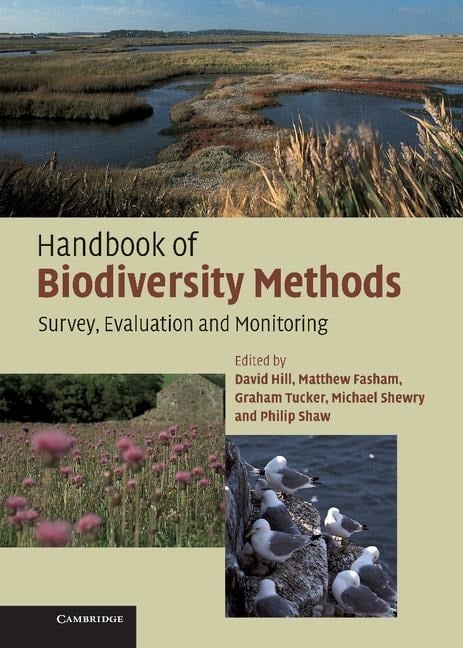
Biodiversity is recognized to be of global importance, yet species and habitats continue to be under increasing pressure from human-induced influences. Environmental concerns are high on the political agenda, driving increased legislation to protect the natural environment. The starting point for much of this legislation is the requirement for a comprehensive biodiversity audit. This Handbook provides standard procedures which will enable practitioners to better monitor the condition of the biodiversity resource, resulting in improved data upon which to base future policy decisions and actions.
David Hill is a distinguished New Zealand writer, best known for his award-winning novels for young people, which have been translated into several languages. Born in Napier, New Zealand, David studied at Victoria University of Wellington and became a high-school teacher, taking up writing full-time in 1982. David has published more than 40 titles over the past three decades, winning many awards.
In 2004 David was made a Member of the New Zealand Order of Merit and in 2005 he was awarded the Storylines Margaret Mahy Medal, acknowledging his significant contribution to children's literature in New Zealand.
Preface; Acknowledgements; Part I. Planning M. Fasham, G. Tucker, A. Bennett, T. Rich, M. Shewry, P. Shaw and M. Wade: 1. Introduction to Part 1; 2. Planning a programme; 3. Evaluation methods; Part II. Habitats G. Tucker, M. Fasham, T. Rich, M. Rebane, G. Peterken, F. McMeechan and R. Birnie: 4. Introduction to Part 2; 5. Habitat requirements and issues; 6. Methods for surveying habitats; 7. Surveying and monitoring management or environmental impacts; 8. Habitat conservation evaluation criteria; Part III. Species: 9. Introduction to Part 3; 10. General principles and methods for species M. Fasham and S. Mustoe; 11. Fungi R. Watling, M. Fasham and D. Dobson; 12. Lichens S. Davey, M. Fasham and D. Dobson; 13. Bryophytes G. Rothero, D. Dobson and M. Fasham; 14. Aquatic macrophytes and algae N. Stewart and M. Wade; 15. Vascular plants T. Rich, V. Hack and F. McMeechan; 16. Dragonflies and damselflies C. Plant, R. Sands and M. Fasham; 17. Butterflies C. Plant, R. Sands and M. Fasham; 18. Macromoths C. Plant, R. Sands and M. Fasham; 19. Other terrestrial invertebrates P. Dennis, C. Plant, R. Sands and M. Fasham; 20. Aquatic invertebrates P. Kerrison, T. Norman and M. Fasham; 21. Fish N. Giles, R. Sands and M. Fasham; 22. Amphibians D. Latham, E. Jones and M. Fasham; 23. Reptiles D. Latham, E. Jones and M. Fasham; 24. Birds S. Mustoe, D. Hill, D. Frost and G. Tucker; 25. Bats R. Stebbings, H. Mansfield and M. Fasham; 26. Other mammals A. Bennett, P. Ratcliffe, E. Jones, H. Mansfield and R. Sands; Acknowledgements; Glossary, Appendices; Recommended sources of further information; References; Index.